Sunday, July 19, 2026

Pentecost 8, Year A (2026)

Isaiah 44: 6–8 / Psalm 86: 11–17 / Romans 8: 12–25 / Matthew 13: 24–30, 36–43


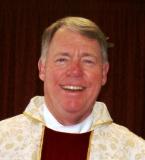
This is the written version of the homily give at Flohr’s Evangelical Lutheran Church (ELCA) in McKnightstown, Pennsylvania on Sunday, July 19, 2026 by Fr. Gene Tucker, Interim Pastor


“IT’S NOT A PERFECT WORLD”

(Homily text:  Matthew 13: 24–30, 36-43)

Recently, I was driving down a two-lane road with a double yellow line in the middle. A vehicle was tailgating me, almost to the point of making contact. (Apparently driving at the speed limit wasn’t good enough for them.) Then, suddenly, the vehicle pulls into the opposing lane, passing me in a No Passing Zone, and reaching a speed fifteen to twenty miles an hour above the speed limit. For good measure, as the passer speeds by, an arm appears out of the window…you can guess what happens next. As the vehicle passes by. my passenger in the right front seat, points energetically at the lawless driver and exclaims, “Smite the evildoer!”.

Indeed. “Smite all evildoers” who venture out onto the roads.

Wouldn’t it be a wonderful world if everyone obeyed the rules of the road? Wouldn’t it be a wonderful world if everyone drove courteously? Wouldn’t it be a wonderful world if there was no such thing as an aggressive driver?

Indeed it would be. Banish all those workers of roadway mischief, I say.

Wouldn’t be a wonderful world if everyone was attuned to the things of God? Wouldn’t it be a wonderful world if everyone sought out the mind of God? Wouldn’t it be a wonderful world if all causes of evil were banished?

Indeed, it would be a wonderful world. In fact, that is a vision of heaven: Eden restored.

Those who have sought the mind of God, down through time, have dreamed of such a world and such a state of relating to God.

The reality of what confronts us, day in and day out, is something else altogether: We live in a world where human beings, many of them, do not seek the things of God. We live in a world where people do bad things to one another, who seek to advance their welfare at the expense of others, like the speeding vehicle in that No Passing Zone.

Down through time, in the Old Testament period, as well as in the New Testament period, the response of many seekers after God has been to lament this state of affairs. Read the Psalms, and before long, those Psalms which ask God to punish evildoers will come across our vision.

God’s people, at certain times, have opted to withdraw from the wickedness of the unbelieving world in which we live.

Consider, for example, the beginnings of the monastic movement in the fourth century, as the Church ceased to be a hidden reality in society, only to become the official religion of the Roman Empire. As it did so, many who came into the Church continued to behave just as they had before they came into the Church. In response, some Christians were prompted to withdraw from society into cloistered communities of prayer, in order to preserve the soul of the Church.

In our own country, many attempts at creating a perfect, Christian world were attempted. Not far from us were the Ephrata Cloisters, for example. We also had the Shakers, and many other utopian, Christian communities.

Our Lord’s teaching, heard in the Parable of the Wheat and the Tares this morning, directs us in a different direction.[1]

Jesus tells us that we, as Christian believers, are to be present and active in a corrupt world that is in rebellion against God. We are not to be plucked up and removed from such a world and such a place.

To be truthful, perhaps many of us aren’t comfortable with such an idea, of the good in the world existing right alongside the bad.

But Jesus tells us that our presence, as God’s people in the world, brings value to that world. We are in the world to make a difference.

Which brings us to the work before the Church.

To the Church has been given the truths of the Kingdom of Heaven. The Church has value, to God and to the world around us, only to the extent that it maintains and adheres to those truths. Otherwise, it could begin to resemble the weeds in the field.

In our own time, this is, perhaps, the most critical issue before God’s people, the Church.

The question before us is: To what extent should the Church be influenced by the beliefs and practices of the secular society in which it finds itself? After all, the Church in various times and in various societal settings, has accommodated some aspects of the society in which it was situated. This is an old pattern, discernable down through time.

Perhaps the operating principle for the Church might be this one: The Church’s purpose is to introduce God to people, and to introduce people to God, and to nurture that relationship. Therefore, anything which dilutes the effectiveness of that central purpose must not be allowed to compromise the Church’s witness to the world.

Our purpose, as God’s people, is to show by what we do and by what we say what a godly life looks like. When we do this, then we bring value to the world, inviting others we come into contact with into such a relationship with the Lord.

Now, finally, for all those who long for God’s will and God’s way to prevail over all causes of evil and all ways that are in rebellion against God, Jesus assures us that the time will come when God will have the last, final and victorious word. In the meantime, we Christian believers are to labor in the world to prepare God’s way to that final, perfect state.

Thanks be to God.

AMEN.


[1]   It’s worth noting that the Lord provides an explicit explanation of the meaning and application of the parable, as was the case with last week’s parable, the Parable of the Sower. Perhaps the Lord wanted His disciples to understand the importance of this teaching clearly. 

Sunday, July 12, 2026

Pentecost 7, Year A (2026)

Isaiah 55: 10–13 / Psalm 65 / Romans 8: 1–11 / Matthew 13: 1–9, 18–23


This is the written version of the homily given at Flohr’s Evangelical Lutheran Church in McKnightstown, Pennsylvania on Sunday, July 12, 2026, by Fr. Gene Tucker, Interim Pastor.


“GOD, THE MASTER GARDENER”

(Homily text:  Matthew 13: 1–9, 18-23)


Why do some people get the truths of God, and the intensity of God’s love, while others don’t? Why is it that some people seem to respond wholeheartedly to God’s workings in their lives, only to grow cold to the things of God? Why is it that some people seem hard-hearted and totally unable/unwilling to hear God’s voice and God’s truths? And – for that matter – why do some people hear and receive the Word of God, and grow into living strong and fruitful lives in God?

Perhaps those questions occur to us from time to time, as we experience the varying responses that people have to the truth of the Good News (Gospel).

It’s entirely possible that those same questions also occurred to Jesus’ first hearers, as some seemed eager to hear and receive what He had to say, while others seemed oblivious to those things.

And, it’s entirely possible that the early Christian community among whom Matthew was working also asked those same questions.

In a sense, these questions, each of them having to do with the various responses and reactions that we human beings have to God’s initiatives and God’s love, are timeless truths. For I think we can safely say that the human heart is composed of the same sort of raw material that that heart has been made of since time immemorial. Absent God’s working and God’s intervention, the human heart will respond to God’s voice in much the same ways, down through time.

But God is the master gardener, whose wisdom has the ability to overcome the hardness of heart that our Lord Jesus describes in “The Parable of the Sower”. God’s Holy Spirit can loosen the soil of a hardened human heart, in order that the seed of divine truth can find root.

But perhaps we’ve getting ahead of ourselves a bit. We’d do well to take a few moments to look at the parable itself.

We’ve already noted that the questions that the parable seeks to address were probably very much on the minds of the early Christian community among whom Matthew was laboring. They may have asked why their family members didn’t respond to the truths of God as they are known in Jesus Christ. Or why some seemed eager to hear the Good News, but then didn’t continue to hear it.

The next thing we might notice is that our Lord provides a detailed explanation of the meaning and the application of the parable. (Such explanations aren’t always provided. But perhaps Jesus wanted His followers, down through time, to understand clearly the importance and the applicability of this parable.)[1]

Now then, let’s consider some of the aspects of the interaction of God’s working and the human heart, lessons that our Lord wants us to understand.

We might begin with soil in general, and with the soil of the human heart: Soil, all of it, must be prepared in order for seeds to find root. (Of course, we’re excluding from this comment concerns about weeds, which seem to grow in just about any soil condition we can imagine. But weeds aren’t useful, from the standpoint of being able to provide food for people.) But the truth is that the default condition of the human heart is to be opposed to the things of God. Moreover, the human heart has an inability to hear and receive those things, absent God’s intervention.

Fruitful, spiritual growth requires God’s preparatory work in order for good growth to take place. The Holy Spirit is the means by which the human heart is made ready to receive the Word of God. And, it’s important to notice that the work of the Spirit often takes place before we are aware of it. The technical term for the Holy Spirit’s advance work is Prevenient Grace.[2]

This wonderful parable contains some important implications for us, as Christian believers, and for those we come into contact with, as we live out the Gospel truths, and as we seek to show by our lives what a difference that a lively and loving relationship of the heart can mean to each and every person.

The first thing we might notice is that God, the One who is sowing the seed, is exceedingly generous in throwing the seed here and there. What farmer would do that? Sowing seed where there is little expectation of growth and a harvest? But God’s economy[3] isn’t like ours. God is quite willing to offer His love to each and every person.

Now, notice that there is an element of freedom of choice in God’s activity. We human beings can continue to spurn God’s workings. We can choose to allow our hearts to become hardened by the cares of life. This is, of course, a mystery: Why would God allow us to have the ability to choose, or to reject, His love? That’s as much a mystery as the truth that God is exceedingly generous in showering His love on people in every age and in every place.

Finally, the ability to hear and receive God’s workings is a gift of God. Here we come to yet another mystery: Why is it that the ability to hear, receive, understand and incorporate God’s truths is a gift, pure and simple?

Yet God’s moving in our lives and in our hearts is, ultimately, God’s initiative, which is intended to prompt a response in the human heart.

Come then, Holy Spirit, and enlighten with spiritual fire the inner longings of the human heart, that we may hear, receive and inwardly mark your truths, allowing them to be deeply implanted in our innermost being.

AMEN.


[1]   It would be good for us to notice that the chosen verses for our lectionary readings omit some verses in chapter thirteen of Matthew’s Gospel account. In those verses, Jesus’ disciples ask Him about the parable, and He responds by saying that not everyone is given the truths of the kingdom of heaven, but those original disciples have been gifted with the truths of God.

[2]   Prevenient Grace takes as its title the word “prevent”, whose original meaning was to “come before”.

[3]   Here I am using the term “economy” in the sense of assigning values to things (and people). 

Sunday, July 05, 2026

Pentecost 6, Year A (2026)

Zechariah 9:  9–12 / Psalm 145: 8–14 / Romans 7: 15–25a / Matthew 11: 16–19, 25–30


This is the written version of the homily give at Flohr’s Evangelical Lutheran Church in McKnightstown, Pennsylvania on Sunday, July 5, 20206 by Fr. Gene Tucker, Interim Pastor


“I CAN SEE IT FROM HERE, BUT I’M NOT THERE YET”

(Homily texts:  Romans 7: 15–25a)


Let’s ask ourselves some questions.

First of all, do I have a perfect past in my life, from the beginning up until now?

Secondly, do I have a forgiven past? That is to say, has God forgiven me for the ways in which I’ve fallen short of His perfect will for me?

Now then, I think the answer to the first question must surely be, “No”, none of us has a perfect past. I know for certain that I do not have a perfect past. In some ways or another, either big and noticeable ways, or in small and seemingly insignificant ways, all of us have managed to miss the mark (a classic definition of sin, by the way). We haven’t attained the heights of God’s perfection. It matters now whether our failings are – by human standards and human reckonings – big or small. In God’s eyes, all are failures.

The answer to the second question can surely be “Yes”, we can have a forgiven past, if we are willing to concede our own failings, and to ask for that forgiveness. Something happens when we come face-to-face with ourselves, and when we seek God’s forgiveness, and ask for God’s help to amend our lives and to endeavor to live – with the help of the Holy Spirit – a life that is pleasing to God.

Before we take a close look at St. Paul’s admission of his own spiritual condition, as we read it in our epistle reading for this morning, from his Letter to the Romans, chapter seven, we ought to note that Christians, in times past and even today, have wrestled with the issue of perfection. More properly, we ought to note that some Christians maintain that we can – with God’s help – attain to perfection in this life. In the area where we ministered for seven years, there was a clergy colleague who maintained we could, actually, attain to perfection in this life. When I heard what he thought, I went home and said, “What planet is he living on?” As we look back into Christian history, others have maintained that perfection is attainable. Of course, we ought to note that such attitudes are possible only when we close our eyes to the things in human nature we don’t want to see. If we do that, then things look pretty good. (So then, St. Augustine of Hippo’s assessment of the human condition is right on the mark. For he said that we human beings are so easily fooled.)

Paul, in the admission of his own spiritual condition that we hear this morning, says that his eyes are wide open to the entire scope of his life and his behavior. He says that he knows what God’s perfect will is, but he also says he can’t attain that level of perfection. He says there is a war going on inside of hum: His earthly and human characteristics are engaged in battle with his awareness of God’s will.

Isn’t this admission refreshing? Refreshing in the sense that such a hero of the faith as the Apostle Paul admits that he, along with the rest of us, wrestle with our fallen nature and God’s nature, which has been implanted within us at our baptisms.

Turns out, we’re all in the same spiritual boat, it seems.

Why is this so?

I think the answer lies in the origins of our sinful desires.

To see this more clearly, consider some of the Seven Deadly Sins.

Each of these are misuses of some naturally-occurring need within our natures, needs which ensure our wellbeing, and even our survival.

For example, avarice (an older word for “greed”) stems from our need to have enough of our basic needs met in order to ensure our survival.

For another example, gluttony is the misuse of our need to eat.

You see the pattern.

Well, of course, the reality is that these basic needs aren’t going to go away. We will continue to have our basic needs met. We will continue to have a need to eat. (Just to cite two examples.)

We are, therefore, between those things that – if misused – will ensure that we miss the mark of God’s holiness and righteousness, and God’s holy nature and God’s holy will.

That condition will continue so long as we are in this life.

What are we to do, then?

Perhaps the answer would be that, whenever we are tempted to forget God’s will and God’s ways, we might pray for God to intervene, to place Himself and His will between us and our temptations.

If we do that, then perhaps it’ll be easier for us to turn away from those things which separate us from God when they come around again, as they surely will. We get stronger, we get more proficient in saying “No” to those sorts of things. Be sure of this, however: We will continue to need the assistance of the Holy Spirit to be able to refine away those things that do not bring honor to God.

In the course of this life, whenever we experience a victory over sin, then we can join our voices to Paul’s and give glory to our Lord Jesus Christ, whose own victory over sin and death gives us the hope of victories over those same things.

AMEN.