Sunday, April 12, 2026

Easter 2, Year A (2026)

Acts 2:14a, 22–32 / Psalm 16 / I Peter 1:3–9 / John 20:19–31  


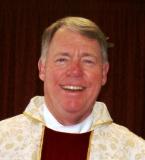
This is the written version of the homily given at Flohr’s Evangelical Lutheran Church (ELCA) in McKnightstown, Pennsylvania on Sunday, April 12, 2026, by Fr. Gene Tucker, Interim Pastor.


“PROOF OF THE RESURRECTION: SEEKING (AND FINDING) THE PROOF WE NEED”

(Homily text: John 20:19–31)

Each year, on the Second Sunday of Easter, we hear the account of our Lord Jesus Christ’s appearance to Thomas (yes, he who has come to be known as “Doubting Thomas”). In a very real sense, it is highly appropriate that we hear this account on this day, for it was on this day, the eighth day[1] after the Lord’s resurrection, that Jesus granted Thomas’ demands to be able to put his finger into the wounds on Jesus’ hands, and to thrust his hand into the Lord’s side.

The importance of this event underscores Thomas’ need, and ours, to know that the Lord really, truly, and in fact, was raised from the dead on Easter Sunday morning. Put another way, Jesus’ resurrected life was – and is – an actual fact, not the product of an ancient people’s religious imaginations, and not a fable promulgated by some highly fanatical followers of a dynamic teacher and leader. (I mention these two possibilities because – as many people contemplate the resurrection event - those who cannot accept it as an actual reality or fact often maintain those two possibilities to explain the biblical accounts.)

The Lord’s gift to Thomas underscores an essential outline of God’s ways of working with human beings. That plan unfolds in this way[2]: 1. A person comes to faith in God’s love, God’s power to change, and, perhaps most importantly, God’s ability to create and to re-create; 2. An encounter with God changes the person, fitting them out for God’s intentions, God’s call and God’s plan for their lives; and 3. The called/changed/outfitted person pursues God’s call and God’s will, putting faith into action.

The truth of this progression, when we think about Thomas’ situation, discloses the truth that, absent an encounter with the risen Lord, Thomas wasn’t prepared/outfitted/ready to do God’s will for his life. If Thomas had tried to do God’s work and will without that life-changing encounter, then he would be trying to do so on his own steam, not on God’s power.

What we’ve just said about Thomas state before his encounter with Jesus is the same truth we can apply to our own lives and our own situations: None of us is truly and completely ready and able to do God’s will for our lives, absent an encounter with the risen Lord, an encounter which leads us to faith in the reality of the Easter event as Holy Scripture informs us.

Thomas got the proof he demanded. Don’t most of us wish that we, too, had the same proof, the same encounter with the risen Lord? I think we do. No wonder that the Lord says to Thomas, “Have you come to believe because you have seen me? Blessed are those who have not seen, and yet have come to believe”. (Personally speaking, I’d like to think there’s an imaginary blank in that statement, one into which my name can be inserted…maybe you feel the same way.)

Absent that sort of physical proof, the demands that Thomas made to be able not only to see the risen Christ, but to touch Him, aren’t available to us today.

How then, do we get the proof we need? After all, faith needs some sort of a foundation in order for us to have something to work with as we come to believe in the reality of God’s power to change, to create, and to make all things new again.

Perhaps the proof is in Thomas’ life, post-Easter, and, as well, in the lives of the others who’d encountered the risen Lord.

Each one of them went out into the known world, carrying the Good News (Gospel) of God’s intervention in human history, made known in the sending of the person of Jesus Christ. In Thomas’ case, tradition tells us that he went as far as the subcontinent of India, carrying the Good News with him.

Each one of the original band of twelve Disciples who would soon become Apostles met a martyr’s death[3]. But even that possibility couldn’t shake their steadfast adherence to the truth that they had witnessed God’s power to preserve them for an eternity in God’s presence.

Today, proof of the reality of the resurrection event can be seen in altered and changed lives, lives which exhibit in some way or another that God’s power to make all things new has taken up residence in someone’s heart and mind.

So then, we pray for the Holy Spirit’s assistance, in order that we may come to believe and to know that Christ truly rose from the grave, a reality that continues to changes lives today.

AMEN.


[1]   Remember that, in the Bible, the number eight represents a new beginning. So the event that took place on this day was, for Thomas, a new beginning.

[2]   God’s way of working with people is much the same plan we can see elsewhere in life. For example, a person feels called to pursue some calling in life. The process of being able to fulfill that calling begins with an encounter with the reality of the calling, some way of knowing what the calling involves. Then, the person assesses their own ability to fulfill the calling. Then, the person receives the training and the skills needed (a new chapter in life, if you will).

[3]   Absent one, traditionally John.

Sunday, April 05, 2026

The Resurrection of our Lord Jesus Christ (Easter), Year A (2026)

Acts 10:34–43 / Psalm 118:1–2, 14–24 / Colossians 3:1–4 / John 20:1–18


This is the written version of the homily given at Flohr’s Evangelical Lutheran Church (ELCA) in McKnightstown, Pennsylvania on Sunday, April 5, 2026 by Fr. Gene Tucker, Interim Pastor.

“EASTER DAY:  BEWILDERMENT TURNED INTO JOY”

(Homily text: John 20:1–18)

It is the first day of the week, and the eleven disciples have greeted the new day with a restless and troubled night, for they are all looking at each other, and wondering if, and when, there might be a knock on the door of the place where they have been in hiding since last Thursday evening.

The knock they fear is one that might be delivered by the officer in charge of a detail of temple police and soldiers, who have come to arrest them, just as they had done to Jesus four days earlier.

They wait, but there is no knock. They are relieved, but only a little.

They know that the temple authorities wouldn’t hesitate to hand each one of them over to Pilate. They shudder at what would happen next.

The sun is beginning to come up, just a little.

Then, there is a knock on the door. It isn’t a loud one, but it’s still a knock. No one moves. They look at one another, fearful of what will happen next.

Then, there is another knock, followed by Mary Magdalene’s voice. Someone goes and opens the door, but only a little, for they are afraid that those who managed to get rid of Jesus the previous Friday may have used Mary to find their way to the eleven.

The minds of those eleven begin to spin….they knew what happened to those who wound up on Roman crosses: They were dead, completely and totally dead. Jesus was dead.

And now they had no idea what would become of the movement that was shaping around His movement.

Mary is almost out of breath. She says she’s been to the tomb, but it is empty. Peter and John bolt out of the room, seemingly unaware that they could be caught on their way to the tomb by the temple authorities. The confirm what Mary said.

Mary returns to the tomb, and a bit later, she returns and says, “I have seen the Lord!”.

Later on that same day, as ten of the eleven huddle in that locked room[1], and as they continue to wonder about the reports that Jesus had risen from the dead, suddenly the Lord appears in the room. He now is free of the limitations that normal human beings experience, for He comes into their midst, and says, “Do you have anything to eat?”[2] He eats in front of them, and invites them to touch Him.

The disciples’ heads continue to spin: That previous Friday, the Lord had seemed like a downtrodden and abused slave, slowly dying a criminal’s death. The sign that hung above His head was a cruel mockery, that sign that said, “The King of the Jews”. There is no glory for this king, only a downward movement into the depths of despair.

It had been quite a week for those first followers of Jesus: He had been hailed as the son of David eight days earlier. But on Thursday evening, He had been betrayed by Judas, and in a few short hours, had been convicted and sentenced to death by Pilate. The week had begun on a high note, but on Friday, it couldn’t have gotten any lower.

The highs and the lows that had happened that week seemed like some out-of-control emotional roller coaster.

Now, on that first day of the week, the eighth day, the Lord’s appearance among His chosen disciples confirms God’s power to create and to re-create. Christ is alive!. Death and hell have been conquered. Satan has been defeated.

The God who raised Jesus from the dead draws back the veil of his nature, showing us that God is one who seeks to love us, to serve us, and to lead us, redeem us, and renew us. All of these divine qualities inform one another.

This is, my friends, the divine mystery: That God is a God of love and mercy, a God of service and of servanthood, but also God of all power, might, majesty and awe.

That such a God would want to be in a personal, intense and loving relationship with each one of us, is another part of that divine and wonderful mystery.

Thanks be to God.

AMEN.


[1]   Remember that John tells us that Thomas was absent on Easter Sunday.

[2]   Luke 24:41 

Friday, April 03, 2026

Good Friday, Year A (2026)

Isaiah 52:13 – 53:12 / Hebrews 10:16–25 / John 18:1 – 19:42


This is the written version of the homily given at Flohr’s Evangelical Lutheran Church (ELCA) in McKnightstown, Pennsylvania on Good Friday, April 3, 2026, by Fr. Gene Tucker, Interim Pastor.


“MAKING SENSE OF GOOD FRIDAY”

(Homily texts: Isaiah 52:13 – 53:12 & John 18:1 – 19:42)

Since the beginning of Holy Week last Sunday, Palm Sunday, we’ve been looking at the events that took place during this most holy time of the year from the perspective of the ways in which our Lord Jesus Christ undertook to be a servant to all, and yet, to be Lord of all.

Now that we’ve arrived at Good Friday, this perspective will serve us well, as we examine our Lord’s death on a Roman cross. For it is in this sort of a death that we see the Lord’s self-emptying love for humanity. And yet, His lordship is also apparent (in more than just the posting of the sign which was placed above His head on the top of the cross, that sign which proclaimed “Jesus of Nazareth, King of the Jews”).

In truth, we cannot count the importance of the Good Friday events without keeping the Easter reality in view, for the events of Good Friday weren’t in that day time and place, all that unusual (victims dying on Roman crosses probably happened quite regularly…it’s even possible to imagine that there may have been regularly-scheduled days for crucifixions to take place). It is the Easter event that makes Good Friday important. The reverse is also true: It is the Good Friday event that makes the Easter event important.

That said, let’s attempt to keep our focus on the Good Friday sequence, and try not look ahead to Easter.

How, then, do we make sense of what happened to our Lord on Good Friday? What makes His death so important (and different from all other deaths of victims on Roman crosses)?

For answers to this question, I think we need to turn to theology to understand what happened to the relationship of God to humankind as the Lord’s lifeblood ebbed away.

Theology (which is, essentially, the study of God’s nature, and God’s interaction with human beings) can shed some light on the importance of Jesus’ death, and the benefits that flow from that death.

With this understanding in mind, let’s consider some of the ways in which the Christian faith has come to understand Good Friday in all of its importance, and in many of the ways in which its ramifications continue to reverberate in our hearts and minds today.

Here are some of the ways Christians have come to regard the importance of Jesus’ death:

Ransom: This is a view that is supported by Holy Scripture, for the word “ransom” appears in the New Testament in connection with Jesus’ sacrifice. (See Matthew 2028, Mark 10:45 and I Corinthians 6:20.)

These days, most people are familiar with the word “ransom” in connection with the word “ransomware”, which is a malicious attack on a computer system whereby someone manages to infect and corrupt a computer system. To free up the system, the attacker demands payment for the system to be unlocked.

In a similar way, Jesus’ death pays the price needed in order to free humanity from bondage to sin.[1]

Jesus’ death as an example:  This approach maintains that Jesus’ willingness to undergo such a horrific death shows us, by example, what true servanthood looks like.[2] (See I Peter 2:21 and I John 2:6 for scriptural support for this approach.)

Jesus’ death as the supreme example of God’s love:  Perhaps stemming from some of the Lord’s comments about the depth of love He has for those who come to Him in faith, this view understands Jesus’ death as the supreme example of the sort of love God has for each of us.[3] (Biblical references which support this view include Romans 5:8, II Corinthians 5:17–19, Philippians 2:5–11 and Colossians 4:24.)

The Penal Substitution Theory: This view maintains that each of us, as sinners, are required to pay the price for our sin. But we have nothing with which to pay the penalty. In our place, Jesus takes up and bears our sins on the cross, paying the penalty that was ours to pay. The Lord is able to do this because He is without sin, and is – therefore – free of the lack of resources with which to pay the penalty that is ours to bear.

A good example of this is the illustration of a person who is brought before a court. The judge pronounces the sentence and the amount of the fine. But the guilty person says they have nothing with which to pay the fine. So the judge steps down from the bench, removes his/her robe, and pays the fine for the convicted person.[4] Our Old Testament reading from Isaiah 52 supports this view.

(Additional scriptural support for this approach may be found in John 11:50-52, Romans 5:8–9, Titus 2:14 and I Peter 3:18.)

Human sin dishonors God, Jesus restores God’s rightful honor:  A view that came into prominence with St. Anselm, Archbishop of Canterbury (1033 – 1109), reflects the feudal society in which he lived. This understanding maintains that human rebelliousness dishonors God. Jesus’ death acknowledges this dishonor and restores a rightful relationship between God and humankind. (Biblical support for this view may be found in John 10:18.)

The examples given here aren’t the only understandings that have come to acceptance as the Church’s life continues through time.

A question which might linger in our own understanding, given the times in which we live, might be to ascertain which of the views outlined above would gain acceptance among people today, and especially among non-believers. My guess would be that many, if not most, people might say that Christ’s example of servanthood, and the example of His love, would be the most widely accepted views.

As we go about sharing the Good News (Gospel) of God in Christ with others, and especially with those we know who have not yet come to faith, it might be good for us to remember what meaning would resonate most readily with others as we share that Good News.

AMEN.


[1] The third century theologian, Origen (c.285 – c.253 AD), maintained this view.

[2]   Peter Abelard (1079 – 1142) was a key proponent of this view.

[3]   Peter Abelard also maintained this view, which, I think, is somewhat like the view that Jesus’ death is the best example we have of servanthood in action.

[4]   The sixteenth century reformer John Calvin (1509 – 1564) maintained this view. 

Thursday, April 02, 2026

Maundy Thursday, Year A (2026)

Exodus 12:1–14 / Psalm 116:1–2, 12–19 / I Corinthians 11:23–26 / John 13:1–17, 31b–35


This is the written version of the homily given at Flohr’s Evangelical Lutheran Church (ELCA) in McKnightstown, Pennsylvania on Thursday, April 2, 2026 by Fr. Gene Tucker, Interim Pastor.


“THE LORD WHO LEADS, ALSO SERVES”

(Homily text: John 13:1–17, 31b–35)

In this Holy Week, 2026, we’re looking at the major events that took place as Jesus made His way into Holy City of Jerusalem on Palm Sunday, and then as the Last Supper took place on Maundy Thursday, and as the Lord dies on Good Friday, and then as He rises from the dead on Easter Sunday; from the perspective of the ways in which our Lord Jesus Christ leads us, but also serves us.

Let’s retrace our steps by returning to the events of Palm Sunday.

On that day, we remarked earlier this week, that the Lord entered Jerusalem, riding on a donkey. No, not a white horse with sword held high, but on a donkey. A donkey – then as now – isn’t regarded as being a creature with much of a high estimation. Donkeys are working animals, used to carrying things. The manner of the Lord’s entry into the Holy City sets the stage (it seems to me) of the servanthood nature of His work for us and among us. But then, last Sunday, we also noted the importance of the greeting that awaited the Lord as He rode along the way into the city. The crowds shouted, “Hosanna to the son of David. Blessed is the one who comes in the name of the Lord”. Notice that the reference to Jesus as the son of David carries with it royal overtones, ones harkening back to the glorious days of King David, 1,000 years earlier. In that way, the crowds affirm (it seems to me) Jesus’ leadership.

Now, with the arrival of Maundy Thursday, we are ready to look at the account of the events that took place at the Last Supper, as we read them in John’s Gospel account.

(John, alone among the Gospel writers, reports on Jesus’ washing of the feet of His disciples. John doesn’t narrate the institution of the Lord’s Supper, as the other writers do, his interests lie elsewhere.)

The significance of the washing of feet might escape our notice, unless we remember how important that action was in the ancient world. The roads of the day, for the most part, were dirt. They were dusty in the dry seasons. Moreover, most people wore sandals of some sort, not shoes. So it was that their feet got dirty. Washing them was a task that was the business of slaves or of servants.[1]

For the Lord to remove His outer garments, and to wrap a towel around Himself, in order to wash His disciples’ feet, was an affront to the usual expectations of the society of the day. We can see this in Peter’s reaction to the Lord’s plan to wash his feet.

Washing feet was a lowly task. One reserved for persons who had either never had their own freedom, or who had lost it.[2]  If the foot-washer wasn’t a slave, but was a servant, we can still see that foot washing was reserved for persons for whom there were very limited possibilities in life. Such persons were at the bottom of the social pecking order.

Jesus places Himself among this bunch of people, somewhere near – or at – the bottom.

But then, it is also the Lord who institutes the Sacrament of His Body and Blood, the Eucharist, the Lord’s Supper, the Mass.

This holy meal supported the Lord’s disciples in that Passover meal, from which the Christian holy meal came forth.

The Lord continues to lead, but also to support, uphold and serve His disciples, in ages past and still today, with His presence in the bread and in the wine.

For to Christian believers, the Lord’s Supper reminds us of the Lord’s suffering and death (the celebration of the Eucharist is – at its heart – a bloodless sacrifice). For we believe and maintain that this holy meal is much more than a simple memorial of what the Lord did, and what He accomplished, in His death on Good Friday. No, for such Christian believers, the Eucharist means that the Lord is really present[3] in the bread and wine. We needn’t understand such a thing totally. The efficacious effects and benefits of this Sacrament aren’t dependent upon our ability to completely understand and grasp what’s going on as the Sacrament is celebrated and received. The Lord has taken care of the meaning, and also the blessing, of His presence among us and within us.

Thank you, therefore, gracious Lord, for leading us into this eternal and ongoing gift, the gift of your very self. Thank you, as well, for supporting and uplifting us, as you serve those who love you and claim you as Lord and Savior.

AMEN.


[1]   The Greek word we find in the New Testament, doulos, can mean either slave, or servant.

[2]   A Roman citizen could lose their citizenship if they’d been captured by bandits and were sold into slavery.

[3]   The idea that the Lord is present in the elements of the Holy Communion, or – as it is often characterized – in, under, around and through the bread and the wine, is often known as the Real Presence of the Lord. It is also known by a technical term, Consubstantiation. 

Sunday, March 29, 2026

The Sunday of the Passion (Palm Sunday), Year A (2026)

Matthew 21:1–11 / Isaiah 50:4–9a / Psalm 31:9–16 / Philippians 2:5–11 / Matthew 26:14 – 27:66


This is the written version of the homily given at Flohr’s Evangelical Lutheran Church (ELCA) in McKnightstown, Pennsylvania on Sunday, March 29, 2026 by Fr. Gene Tucker, Interim Pastor.


“FOLLOWING A SERVANT-LEADER, BEING A SERVANT-LEADER”

(Homily texts: Philippians 2:5–11, Matthew 21:1–11 & Matthew 26:14 – 27:66)

This morning, we stand at the beginning of Holy Week.

One way to look at the sequence of events that took place during this pivotal week in our Christian faith is to see the reality of servant-leadership unfold.  This might require some explanation:

The servant aspect that is present in events of this week has to do with the ways in which the Lord was willing to empty Himself, in order to descend to the state of serving His Father, and to serving you and me.

On Palm Sunday, our Lord Jesus Christ came riding into Jerusalem on a donkey. A donkey, then as now, was a pretty lowly animal. Notice that it is this lowly creature, a beast of burden, that is the means of entry into the Holy City. Absent is the white horse, with its rider carrying a sword in his right hand.

Our Lord’s servanthood reaches its lowest point on Good Friday, as Jesus hangs on a cross, suffering a humiliating death that was reserved for conquered peoples and for slaves. Crucifixion involves the loss of all things: One’s dignity, one’s possessions, often one’s family and friends; and – eventually and painfully – one’s life.

On the other hand, the Lord’s leadership is also present:

Notice that it is a royal welcome (of a sort) that greets Jesus as He enters the Holy City, Jerusalem: “Hosanna to the son of David”, the crowds cry out. That greeting carries with it royal overtones, remembrances of the glorious past of God’s people at the time, a thousand years before, when King David reigned. Moreover, palm branches and people’s cloaks are spread before this significant figure who rides into town on a donkey.

That royal aspect of the events of this week will continue as a sign is hung over Jesus’ bead, as He hangs on the cross, a sign that reads, “Jesus of Nazareth, the King of the Jews”. Indeed, this is a perverse aspect of the Lord’s kingship, the leadership that is displayed by this condemned man, dying slowly at Calvary.

But then, the Lord leads the way into new life, into a resurrection life, into the reality of hope for a better tomorrow and a more fulfilling today in those who will become His followers. He is raised from the dead, fully alive again on Easter Sunday morning.

It’s worth noting that our reading from St. Paul’s Letter to the Philippians captures both the servant aspect of what we know about Jesus Christ, but also what we know about the Lord’s leadership and kingship over all. (Some biblical scholars think that Philippians 2:5 – 11 may have been the text of an early Christian hymn.)

The example our Lord Jesus Christ sets for us, and His command to us to emulate His example, entails being a servant, but also being a leader.

Each one of us is called to put God’s priorities, and God’s truth foremost in our minds and hearts. We are also called to make ourselves open to God’s call to serve in the Lord’s name, and to care for, to love, and to support others, just as our Lord did during His earthly ministry. To do this, each one of us is called to discover within ourselves just what leadership qualities, what skills we are endowed with. No skill, no ability is too insignificant for God’s work in the world. Each and every way that we put the Lord’s example into action qualifies as ministry, a ministry that is laid upon each of us, and not just on clergy.

At the heart of our faith lies a seeming contradiction: To ascend higher in God’s love and in God’s work first means being willing to empty ourselves, so that God can fill us up with wisdom, insight to see what God intends for us to do, and the strength to act on those insights and discoveries.

Our Lord is a lord who says to us, “Do as I do”, not simply “Do as I say”.

AMEN. 

Sunday, March 22, 2026

Lent 5, Year A (2026)

Ezekiel 37:1–14 / Psalm 130 / Romans 8:6–11 / John 11:1–45


This is the written version of the homily given at Flohr’s Evangelical Lutheran Church (ELCA), McKnightstown, Pennsylvania, on Sunday, March 22, 2026 by Fr. Gene Tucker, Interim Pastor.


“FIXING THE UN-FIXABLE”

(Homily text: John 11:1–45)

Ever face a situation in which something you own is no longer fix-able?

It might be an old car, say one that belonged to your grandparents, or some other friend or relative, something that dates from a completely different time, where cars are concerned.

Or it might be an old sewing machine. (I have in mind one of those sewing machines that you had to pump with your foot to make it work…my grandmother had one of those.)

In each case, you have something that is dear to you, something that’s been a part of your life for a very long time. Something you’ve enjoyed not only having, but something you’ve enjoyed using.

But now, the repair shop is telling you that there’s no fixing that beloved thing in your life…there are no parts to be had for it, and, in fact, the repairs are such that they can’t be done.

The scenario just laid out pretty much sums up the predicament that two sisters, Mary and Martha, faced: Their beloved brother, Lazarus, had died.

They sent a message to Jesus, hoping that He would come and dispel the sickness that had been the cause of his death. But Jesus hadn’t come in time. (In fact, it seems that He had deliberately delayed coming to help them.)

The two sisters knew of Jesus’ healing powers. They had heard of the miraculous things He was doing, and so they were certain that He could help with their brother’s illness. But they apparently didn’t believe that that power of God, at work in Him, could raise the dead to new life.

But now, they stand at the tomb and weep. There is no fixing this situation: Lazarus is dead, for he had been in the tomb for four days now. Those in the community of Bethany, where Mary and Martha lived, held to the belief – common in those days - that Lazarus’ soul would linger around the body for three days, in hopes of being reunited with it. Four days in the tomb meant, to them, that there was no further hope for a new chapter in their brother’s life.

As is common in John’s Gospel account, Jesus knew the situation with Lazarus. He also knew the solution to the situation.

But Jesus has work to do to get His own disciples to see what that solution would be.

As He tells them that they need to go to Lazarus, He begins by telling them that Lazarus has fallen asleep. The disciples say that, if Lazarus has fallen asleep, he will surely recover. But Jesus then says that Lazarus has died. Then He adds that He was glad that He wasn’t there when Lazarus died. He says that the reason is that what will happen with Lazarus will be the cause for them to believe in God’s power.

Just as Jesus has work to do with His disciples, He also has work to do with Mary and with Martha, more so with Martha than with Mary.

As He nears the village of Bethany, He encounters Martha, who says to Him, “Lord, if you had been here, my brother would not have died.” But then, she adds, “But even now I know that whatever you ask from God, God will give you.”

Jesus says, “Your brother will rise again”. She replies, “I know that he will rise again in the resurrection on the last day.” Jesus replies with one of those wonderful “I am” statements we find so many times in John’s account, saying, “I am the resurrection and the life. Whoever believes in me, though he die, yet shall he live, and everyone who lives and believes in mind shall never die. Do you believe this?” She can’t quite get her mind around this idea, so she says, “Yes, Lord, I believe that you are the Christ, the Son of God, who is coming into the world”.

With the conversation with His disciples, and His conversation with Martha, both complete, Jesus then brings all of them to the point of a new understanding of the power of God, at work in Him.

At the tomb, Jesus calls out to Lazarus, saying, “Lazarus, come out”. The dead man comes out of the tomb.

God’s power is most often seen in that divine ability to create, and to re-create. Kind of like resurrecting that old machine or old car that seemed un-fixable.

God’s power, at work in the raising of Lazarus, at work in the raising of Jesus from the dead on Easter Sunday, is at work in your life and in mine.

In what way has God fixed the un-fixable in your life, or in mine? In what way has something that seemed to endure, been dealt with in a way that led to a new and fuller life?

God’s deepest desire is for each one of us to come to the knowledge of God’s power to fix things, things that – to our normal sensitivities and life experience – seem to elude any solution.

Our Christian faith encourages us to believe that this unique power of God is at work in the world and in our lives today, so that when it happens, we will recognize it and give glory to God.

AMEN. 

Sunday, March 15, 2026

Lent 4, Year A (2026)

I Samuel 16:1-13 / Psalm 23 / Ephesians 5:8–14 / John 9:1–41

This is the written version of the homily given at Flohr’s Evangelical Lutheran Church (ELCA) in McKnightstown, Pennsylvania on Sunday, March 15, 2026 by Fr. Gene Tucker, Interim Pastor.


“THE PROSPERITY GOSPEL: AN ANCIENT VERSION”

(Homily text: John 9:1–41)

Let’s begin, this morning, by asking ourselves this question: What is it that we most want from God? Closely connected to that question is this one: “What is it that God most wants to give us?”

(Take a few moments to explore those two questions.)

This morning’s Gospel text places before us the miraculous healing of a man born blind. Before we explore the implications of Jesus’ action in giving the man his sight, let’s look at the motivations that seem to have been common in the time of Jesus’ earthly ministry. Perhaps we can learn a lot from the attitudes that were commonplace 2,000 years ago.

And, we might explore the question with which we began, as we look at the culture of the time, exploring what answers people might have supplied, back then, to the question of “What is it that we most want from God”, and, as well, the other question: “What is it that God most wants to give us?”.

The first clue to the attitudes that many people harbored can be found in the question that Jesus’ disciples ask, as they discover this man, who had never been able to see. They say, “Who sinned, this man, or his parents, that he was born blind?”.

On its surface, the disciples’ question is firmly anchored in biblical truth, for the Ten Commandments contain the one which tells us to honor our fathers and our mothers.[1] Attached as a sort-of addenda to another commandment is this warning: “(God says) I will visit the iniquity of the fathers on the children to the third and fourth generation of those who hate me…”.[2]  The disciples’ question seems to relate to that warning found in Exodus.

But their question points in another direction: They want to know if the man’s condition is due to some grievous sin on his part, or perhaps some major misdeed that his parents committed.

As we dig a little deeper, we can see that the disciples probably believed – along with many others in that day and time - that if a person was ill, sick, lame or blind, then their condition must stem from God’s judgment for some failing or another. The same beliefs would also apply to someone who was poor, or who had suffered loss of some sort.

Turn this supposition around, and the converse (most likely) was also thought to be true: If a person was healthy, wealthy or in some other way seemed to be thriving, then their condition must be due to God’s favor, which had been showered on that person because they had done all the “right stuff”.

I think we’re on solid ground in thinking that all of these suppositions were present in the disciples’ question about the reality of sin, either on the part of the blind man, or on the part of his parents. The Gospel accounts – in general - seem to support such conclusions: Do the right thing, and life will be good to you, because God has blessed the ones who do the right things.

As the account unfolds, and as the Pharisees become involved, they, too, seem to harbor the same attitudes about God’s goodness that were implied in the disciples’ question. They declare that Jesus cannot exercise the power of God because He had healed the man on the Sabbath day. To them, profaning the Sabbath in the way that Jesus had done (by their understandings) meant that Jesus was outside of God’s sphere of influence.

Put another way, God does not, and will not, act through someone who stands outside of God’s goodness.

Essentially, the disciples’ question, and the attitudes of the Pharisees, all point to an understanding that reduces a relationship with God to a bargain. We could characterize it this way: If God’s people are faithful, doing the acceptable things (to the Pharisees, doing the outward actions the Law of Moses required), then God will bestow all sorts of good things on those faithful people.

We might think that such attitudes were commonplace only during the time of our Lord’s sojourn among us.

On the contrary, such attitudes exist today, and can be found among some who claim our Lord’s name. Today’s version of this sort of bargain-making with God is known as the Prosperity Gospel.

The Prosperity Gospel claims that those who do the “right stuff” will inherit good things from God. Most of those “good things” turn out to be material blessings: Money, nice cars, big houses, etc.  We could add health to the list, and favorable relationships in our families. (Feel free to add your own categories.)

Of course, the Prosperity Gospel is a heresy, pure and simple. (Just to be clear, a heresy is – as the Greek word from which it is drawn – a choice (the Greek word means “to choose”) to proclaim part of the truth, but not all of it.)

At this point, let’s return to the two questions with which we began.

What is it that we most want from God – or, better yet – what we should most want from God?

What is it that God most wants to give us?

The answers are found in this morning’s Gospel.

The blind man receives his sight. That, in and of itself, is a great blessing. But his healing points to a deeper reality: His healing is the result of God’s ability to create, and to re-create.

Jesus then gives the man something else: A personal relationship. The man comes to believe in Jesus as the Son of Man.

A cursory reading of the Old Testament, disproves the notions of the Pharisees and those like them who believed that God only wanted to give his chosen ones “good things”. Time and again, God’s chosen people suffered hardships of various kinds…sometimes, the hardships that came their way were the direct result of their own disobedience, but not always. God didn’t spare them from those things. But God was with them in their troubles, often correcting them when they went astray, but always finding ways to redeem and to save His people.

What then, is it that God most wants to give us? Himself!

What is it, then, that we should most want from God? Himself!

AMEN.


[1]  See Exodus 20:12.

[2]  See Exodus 20:5b. 

Sunday, March 08, 2026

Lent 3, Year A (2026)

Exodus 17: 1–7 / Psalm 95 / Romans 5: 1–11 / John 4: 5–42


This is the written version of the homily composed for Flohr’s Evangelical Lutheran Church (ELCA) in McKnightstown, Pennsylvania for Sunday, March 8, 2026, by Fr. Gene Tucker, Interim Pastor.


“JESUS: TABOO-BREAKER & BRIDGE-BUILDER”

(Homily text: John 4: 5-42)

Notable people, down through time, are often known for some courageous action they took during their lifetimes. One of the qualities that history regards as being especially noteworthy is the ability to challenge accepted beliefs, and especially beliefs that had lost their worthwhile purpose, or were wrong to begin with. Another quality that we regard highly is the ability to bridge gaps between individuals or between peoples and nations.

Jesus’ actions during His earthly ministry fit into both categories, for Jesus was (is) a taboo-breaker. He was (is) also a bridge-builder.

We have excellent examples of both qualities in our Gospel text for this morning, which relates Jesus’ interaction with an un-named woman in the Samaritan city of Sychar.

We might begin with Jesus’ taboo-breaking actions:

Avoiding Samaria and avoiding Samaritans:  This is the first taboo that Jesus deliberately challenges. Observant Jews, 2,000 years ago, avoided going through the region of Samaria entirely. If they had to go to Jerusalem for one of the major festivals from the region of Galilee, which is located in the northern part of the Holy Land, they would take a long detour around Samaria, going east and then south down through the Jordan Valley, or else they would go along the Mediterranean seacoast, and then eastward to the Holy City.

The reason for this avoidance has its roots some eight hundred years earlier. To understand the commonly-held mindset during the time of our Lord’s ministry, we need to back up to examine history. In the year 722 BC, the Assyrian army conquered the region of Samaria (then known as the Northern Kingdom of Israel). Once the conquest was complete, the Assyrians deported much of the population, and then they re-populated the area with people from other places. The result was a people of mixed racial and ethnic heritage.

That was the basis for the hatred that Jews – back in that time – bore toward the Samaritans. To observant Jews, Samaritans were racially impure.

But notice that John tells us that Jesus deliberately chose to go through Samaria. (John also tells his audience that Jesus had nothing to do with Samaritans, underscoring the radical nature of Jesus’ behavior.)

Men and women in the society of that time: This aspect of Jesus’ actions might surprise us, but in the society of the time, it wasn’t customary for a man to address a woman whom he did not know in public.

In the context of accepted social behavior in that society, the Samaritan woman seems a bit surprised that Jesus, who was a Jew, is speaking with her.

Another taboo is challenged.

The woman’s history: During the course of the back-and-forth with the Samaritan woman, the topic of her husband comes up. The Samaritan woman says, “I have no husband”, to which Jesus replies that she, indeed, has spoken the truth, for the fact is that she has had five husbands, and the man with whom she is currently living, isn’t her husband.

(Over the years, there’s been a lot of speculation about the woman’s place in the community of Sychar…did she come to draw water from the well at midday because she was somewhat of a pariah? Was she someone who’s “checkered past” was notorious to the point that people avoided her? We don’t know the answers to those questions, but it seems possible that that was the case.)

If, indeed, the woman’s lifestyle and marital history was an impediment to her acceptability, Jesus shows no willingness to ignore her. Nor does he castigate her for her past. (Now, at this point, we need to be careful, I think, for it’s possible that the woman has had five husbands due to the simple fact that each of her husbands had died. John doesn’t elaborate on the nature of her history.) The fact of her marital history aside, it’s also worth noting that Jesus didn’t castigate the woman for her living arrangements with a man to whom she wasn’t married.

Another taboo is broken.

The place where worship is to take place:  The last off-limits subject that passes between the Lord and the Samaritan woman is the subject of where proper worship is to take place.

Jesus’ declaration of the truth of the woman’s history and her current living arrangements (Jesus’ ability to know things that only God would know is a common theme in John’s Gospel account) leads the woman to open the topic of the coming of Messiah.

As part of this part of the conversation, she asks Jesus to resolve a longstanding dispute between Jews and Samaritans: That dispute had to do with the proper place for the holy mountain which was regarded as the dwelling place of God. Was that proper place to be in Jerusalem, or was it to be on Mt. Gerazim, the holy place for Samaritans?

Jesus affirms the centrality of the place that Jews would occupy in God’s plan for the salvation of humankind. But then, he upsets the accepted beliefs of the time, telling the woman that, going forward, it wouldn’t be on any particular holy mountain where the proper place for the worship of God would take place. Instead, the worship of God would take place in the depths of the human heart. No special place would figure into such worship.

The taboo of place-worship is now broken.

Tallying up the taboos that Jesus has shattered, we come to four of them.

Now, let’s turn our attention to the other aspect of this encounter: Jesus’ ability to build bridges across societal and other divides.

As Jesus deliberately ignores the taboos of the age, in the process, Hs is reaching out to someone who would, otherwise, be unreachable.

As a result, the Samaritan woman’s life is forever changed. Moreover, she becomes a far more effective evangelist for the coming kingdom of God than Jesus’ own disciples are in this situation.

If we notice the foundations for the taboos that existed between the Jews of the time, 2,000 years ago, and the Samaritans, we find that the basis for the deep hatred of the Samaritans was based on some secondary aspect of who the Samaritans were. Their racial history was something that was secondary to their identity as God’s specific creation. The woman’s identity as a woman was secondary to her identity as a child of God. Her marital history and her current living arrangements didn’t erase her value (in God’s sight) as someone God could love. The Samaritans’ regard for Mt. Gerazim was eclipsed by Jesus’ declaration that holy mountains didn’t matter anymore…the only altar that God wanted to erect was in the human heart.

We, today, are the Lord’s ambassadors, God’s evangelists. As we go about sharing the Good News of God in Christ, we will encounter people in all sorts of conditions and situations. We will need the Holy Spirit’s influence and guidance to be able to look beyond the secondary aspect of those we encounter to see their value as God’s creation. For each person is God’s specific and intentional creation. The Lord seeks to be in relationship with each one of these. The divine intention is to initiate a deep, personal and enduring relationship, whereby the Lord takes up residence in the human heart. And the purpose of this indwelling presence is to change lives, much as the Samaritan woman’s life was forever changed as she met the Lord by the well in Sychar.

AMEN.