Sunday, June 21, 2026

Pentecost 4, Year A (2026)

Jeremiah 20: 7–13 / Psalm 69: 7–18 / Romans 6: 1b–11 / Matthew 10: 24–39


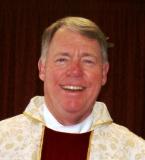
This is the written version of the homily given at Flohr’s Evangelical Lutheran Church (ELCA) in McKnightstown, Pennsylvania on Sunday, June 21, 2026, by Fr. Gene Tucker, Interim Pastor.


“DIVINE MATH”

(Homily texts:  Romans 6: 1b–11 & Matthew 10: 24-39)


One of life’s essential skills is the ability to manage things that are valuable.

For example, we teach our young drivers to be careful operators of our vehicles, so that those vehicles will serve for a long time, avoiding accidents. We teach our children to manage their finances, so that they won’t spend more than they have. Just two examples.

We take steps to protect that which is valuable, being sure to preserve it from loss.

Human assessments of value, and of preserving value, are very different from God’s way of assessing and assigning value to things, including – of course – our value as children of God to God. We could call God’s way of measuring worth and value “Divine Math”.

Divine Math tells us that to lose ourselves is to find ourselves, our truest selves. What?

Shouldn’t I want to “play it safe”, to avoid situations in which I could lose something? Something like my plans for my life? Something like my career, or perhaps my life’s path up to this point? Something like a part of my life that I have declared to God that it is “off limits”?

Yes, precisely. That’s the way God thinks.

To some extent, “Divine Math” is a mystery. The walk of faith is made up of some things that are certain. But other things – from a human point-of-view at least - are mysteries. (It’s worth noting that, in our communion prayer, we say, “Let us affirm the mystery of faith”.)

So, it’s a mystery why someone would leave a highly successful career, in order to be a missionary in some faraway place. The reason: To answer God’s call to serve.

So, it’s a mystery why someone would begin working with a ministry that serves people who are dealing with addictions, or who are homeless, or who are in some sort of distress. The reason: To answer God’s call to serve.

We could say the same thing about those who answer God’s call to enter the ministry, be it a lay ministry or an ordained one. In some cases, answering this sort of a call involves radical changes in one’s life.

Our Lord Jesus Christ admonishes us, as He proclaims God’s assessment of worth. In our Gospel text for this morning, He says, “Whoever finds his life will lose it, and whoever loses his life for my sake will find it/” Divine Math.

We would do well to mention two other examples of Divine Math.

How can it be that dying leads to life?

Think of our Lord’s sacrifice on the cross on Good Friday. His death is the necessary prelude to His rising to new life on Easter Sunday morning. Our Lord couldn’t have risen on Easter Sunday unless He had freely given up His life the Friday before. So we, as Christian believers, are called to take up our cross – or, as St. Paul says in our reading from his letter to the Romans, “Now if we have died with Christ (in Baptism), we know that we will also live with him”. (Romans 6:8)

Divine Math tells us that, to walk the way of the cross, is to find ourselves on the path to true and lasting life, in this life and in the life of the world to come.

This, my friends, is a mystery. It defies our normal way of thinking.

We mentioned baptism a moment ago. Holy Baptism is a death-leading-to-life event. The outward and visible sign of this Sacrament is water. Water can kill, but water is also essential for life to exist. It is, therefore, the perfect sign of the mystery that happens in baptism.

Paul makes an excellent exposition of the meaning of baptism, linking it to Christ’s death, and to His rising again.

Another mystery.

Our Lord’s instructions to His early followers informed them that, unless they were willing to loosen their grip on those things that were of value, they could not be ready to follow God’s call to take up their own cross, in order to follow the Lord.

Those same instructions are given to us today. We are called to loosen our grip on those things that hinder our ability and our willingness to follow the Lord.

If we are willing (with the assistance of the Holy Spirit) to allow God’s call to permeate our minds and our hearts, then we are ready to find our life’s truest meaning, answering God’s call, in whatever fashion and form that call may take.

AMEN. 

Sunday, June 14, 2026

Pentecost 3, Year A (2026)

Exodus 19: 2–8a / Psalm 100 / Romans 5: 1–8 / Matthew 9:35 – 10:23

This is the written version of the homily given at Flohr’s Evangelical Lutheran Church (ELCA) in McKnightstown, Pennsylvania on Sunday, June 14, 2026 by Fr. Gene Tucker, Interim Pastor.


“THE ‘STUFF’ OF THE GOOD NEWS”

(Homily text: Matthew 9:35 – 10:23)

Stuff.

“Stuff” is a word I use a lot. A friend, not too long ago, said to me, “You use the word ‘stuff” a lot. I’m going to get you something with the word ‘stuff’ on it.” He did, and I now have a sweatshirt with a saying on it: “I like stuff”. I get a good many comments when I wear it.

“Stuff” is a wonderfully useful word. “Stuff” can mean good things, or it can mean not-so-good things. “Good stuff” could be something like an object or a gift that you’ve been wanting for a long time. Or, “stuff” could be ordinary things we have to do, like chores….in that case, “stuff” is of the not-so-great variety. An example of this sort of “stuff” would be when someone asks you what you’re going to do this afternoon, you reply that you’re going to be doing “stuff”, meaning that you’re going to tackle that mess that passes for your bedroom or your house. (I realize this is a condition that – in particular – afflicts teenagers.)

This morning, we consider some really “good stuff”, the “stuff” of the Good News of God, made known in the coming of our Lord Jesus Christ.

Matthew relates to us how the Lord sent out His disciples, gifting them with some very good “stuff”, and saying to them that “the kingdom has come near”.

The Lord’s command to go out into the world, carrying the gift of God’s good “stuff”, was accompanied by this encouraging word: “The harvest is plentiful”. Therefore, the Lord says, “Pray that the Lord will send laborers into the harvest”.

The “stuff” of the Gospel (Good News) is made up of the good things that will point as signs to its value: Those who had been harassed and helpless - up until the coming of the Good News – will now have someone to lead and to care for them; the sick will be cured; the dead will come to life again; and the powers of evil will be defeated.

Put another way, when the “good stuff” of the kingdom arrives, changes – for the better – will come as well.

But, the Lord is blunt, warning those who will be the carriers of this “good stuff”, the Gospel, won’t have an easy time of it as they share what God has done: Some will reject the “stuff” of the Good News. Others will be openly hostile. (Perhaps the description of the hardships that those who had been sent out is also a prediction of the conditions facing Matthew and his faith community as Mathew’s Gospel account is being written, perhaps late in the first century.)

You and I today, as Jesus’ messengers in our time and place, have the same set of instructions as those twelve Disciples (who will soon become Apostles[1], as they were sent out into the known world following the Lord’s resurrection and ascension) who were sent to God’s people so long ago.

We have the same great, good gift to bring, the “good stuff” of the Good News of God, made known in Christ.

The Lord’s message we bear still means that life will now have purpose. It means that evil will be defeated. It means that divine healing still works to restore life to the fulness of God’s intent (by the way, we’ve had a divine healing here at Flohr’s not long ago…God be praised!).

Above all, it means that changes, for the better, will come as the “good stuff” of the Gospel is received into the hearts of those who hear it.

Is there any higher calling, any more important purpose, than the instructions we’ve been given, those same instructions given to the Lord’s original band of Disciples? I can’t think of any.

May God empower us to faithfully carry the “good stuff” of the Good News to any and to all whom we meet along life’s pathway.

AMEN.


[1]   The title “Apostle” comes from the Greek words, which mean someone who is sent out. 

Sunday, June 07, 2026

Pentecost 2, Year A (2026)

Hosea 5:15 – 6:6 / Psalm 50: 7–15 / Romans 4: 13–25 / Matthew 9: 9–13, 18–26


This is the written version of the homily given at Flohr’s Evangelical Lutheran Church (ELCA) in McKnightstown, Pennsylvania on June 7, 2026 by Fr. Gene Tucker, Interim Pastor.


“CHANGE???!!!”

(Homily text: Matthew 9: 9–13, 18-26)

Some years ago, there was a comedy show that came out of Canada called “Red Green”. It appeared on Public Television. The setting for “Red Green” was a men’s clubhouse. Each episode featured caricatures of typical “guy” people, like the guy who’s fiddling with an old pickup, or the nerdy guy, or the one who’s creating some sort of a Rube Goldberg device.

Each week’s show began the same way, as the men filed into the men’s clubhouse and sat down on benches. Then, the leader would come in and invite everyone to stand for the Man’s Prayer, which went something like this: “I’m a man, and I can change, if I have to, I guess. Amen”.

Now, let’s shift this a bit, and offer what might be the Christian’s Prayer, which might go something like this: “I’m a Christian believer, and a follower of Jesus. The Lord expects me to change, and will help me to do so. Amen.”

Our appointed Gospel text for this morning conveys to us the accounts of people whose lives were changed as a result of their encounter with Jesus: The disciple Matthew; the tax collectors and sinners that Jesus was hanging around with; the leader of the synagogue whose daughter had died; and the woman who’d had a bleeding disorder for twelve years.

Each one of these people’s lives were radically different after their encounter with the Lord, than they were before their encounter.

It’s worth noticing that Jesus is willing to meet each of these where they are when the Lord encounters them. He doesn’t demand that they do something in order to be worthy of the Lord’s compassion and care. And, it’s worth noting, He’s quite willing to begin a relationship right where He finds each of these.

But, that’s only part of the truth of the matter. Change is an expectation. Change is the evidence of a genuine relationship with God through Christ. True enough, “Come as you are” is correct. But the journey, if it is to be a genuine one, never ends there. We may not continue living in ways that counter God’s design and desires for us.

Today, many churches reach out to the outside world, saying, “Come as you are”.

That approach is true enough. There’s plenty of evidence in Holy Scripture that God is quite willing to start working with us and within us from whatever place He finds us.

We might observe that the pages of the Bible are filled with accounts of people whose lives changed once they’d come into relationship with God. The accounts in the Bible also contain some examples of those who encountered God, but who spurned God’s offer to begin a relationship. We could look at Scripture from this vantage point.

For whatever reason, God gives each of us free will. For some reason, God’ doesn’t want us to be automatons or pieces on the chess board of life. He grants each of us the ability to choose to relate to Him, and to accept – or reject – God’s offer of relationship, a new and fuller life, and a genuine relationship.

Returning to the people we reach about in this morning’s Gospel, we can see that Matthew had the ability to remain as a tax collector, and not to choose to follow Jesus. The tax collectors and sinners could have chosen to remain as they were. The leader of the synagogue could have spurned suggestions that Jesus could help his daughter. The woman with the bleeding disorder could have chosen not to seek healing from the Lord.

You and I face the same juncture: We can choose for God, or not. The choice is ours to make.

AMEN.