Sunday, May 31, 2026

Trinity Sunday, Year A (2026)

Genesis 1: 1 – 2:4a / Psalm 8 / II Corinthians 13: 11–13 / Matthew 28: 16–20


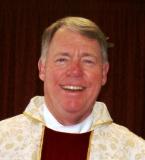
This is the written version of the homily given at Flohr’s Evangelical Lutheran Church (ELCA) in McKnightstown, Pennsylvania on Sunday, May 31, 2026 by Fr. Gene Tucker, Interim Pastor.


“UNDERSTANDING THE FULNESS OF GOD’S NATURE AS FATHER, SON AND SPIRIT”

(Homily texts: Genesis 1: 1 – 2:4a, and Matthew 28: 16-20)

God’s nature is hidden from our human eyes and understanding, except to the extent that God, Himself, has chosen to reveal His nature to us.

It should be noted that God’s self-revelation is a wonderful gift to humankind. 

That said, we human beings have come to understand God’s nature in its fulness as One God in Three Persons – or – as it is usually stated, as Father, Son and Holy Spirit: The Holy Trinity.

Such an understanding of God’s nature didn’t come to full acceptance overnight. Nor did this understanding come quickly. Instead, the process of understanding God’s self-revelation took quite a long time to develop and to be accepted. That’s often the case when God chooses to tell us something about Himself.

Before we explore some of the process by which God pulled back the veil of mystery which surrounds His being, and the process by which human beings came to understand what God had revealed, let’s take a moment to explore why Trinity Sunday occupies the place that it does in the Church Year.

Trinity Sunday is the only Sunday in the year whose theme is theological in nature. (Remember that theology is the field of study and contemplation which attempts to understand God’s nature and God’s acting.) Recall that, as the Church Year unfolds, we anticipate and then celebrate two major events in our Lord Jesus Christ’s life and work: His birth in Bethlehem (celebrated at Christmastime), and then His resurrection (on Easter Sunday). Preceding these two celebrations are two preparatory seasons: Advent (prior to Christmas) and Lent (prior to Easter). Following the Christmastide season is the season of Epiphany, as we give thanks for the spread of the Good News (Gospel) to the non-Jewish world, the Gentiles.

Then, following Eastertide, we have the season after Pentecost, which occupies about half of the yearly calendar. (The season after Pentecost makes use of the color green, signifying growth of the Good News in the world and in our own lives.)

Now then, Trinity Sunday is the culmination of the process of reflection upon God’s gift of His son, Jesus Christ. Tracing our steps backward to Christmas, we celebrate His coming among us as one of us, as He takes on our humanity. Then, at Easter, we celebrate His victory over death. Then, we recall the coming of the Holy Spirit in a unique and powerful way at the feast of Pentecost.

With the coming of the Spirit, we are now aware of the Spirit’s unique and irreplaceable role as God’s guiding and empowering presence. With this awareness, we are equipped to go out into the world, knowing and understanding (as much as we, as human beings are capable of understanding) the nature of the God who calls us into relationship with Him, and who sends us out as His representatives in the world.

All of this reflection on the path that the Church Year places before us, we are now ready to explore the meaning of Trinity Sunday.

Trinity Sunday’s theme is to remind us of the fulness of God’s nature. It won’t do for us as Christian believers to be aware of only part of God’s nature. Instead, we are called to attempt to hold in mind that God’s fulness exists in Three Persons, while being but One God.

We are encouraged to remember that, as we think about one Person of the Trinity, the other two Persons are also and always present. (God cannot be separated into different parts.)

Holding this awareness in our thinking and believing means that we now have all the tools that God intends for us to have in order to be good and effective workers in God’s field in the world. To my thinking, at least, this is the importance of Trinity Sunday.

We’d do well to reflect a bit on the understanding of the Holy Trinity, as it developed over time.

We can begin with our reading from Genesis. In this reading, one can see the presence of the three Persons of the Trinity. Notice that the text begins by saying, “In the beginning, God created the heavens and the earth”. This would be God the Father. Then, the text tells us that God’s Spirit hovered over the waters. Then, a bit later, the text tells us that God spoke, and things began to come into being.[1]

The Christian understanding of God’s nature as One God in Three Persons stems from our Lord Jesus Christ’s teachings about His relationship to God. He uses father and son imagery. Then, with respect to the Spirit, He tells His disciples that He is going to send them another comforter, an Advocate[2], who will lead them into all truth.[3]

In summary, what we have come to believe, as Christian believers, stems from our Lord’s teaching.

What an enormous and valuable gift that teaching is!

God be praised.

AMEN.


[1]   At this juncture, it’d be helpful for us to reading John’s Gospel account, and specifically John 1: 1–18. There, we read that, in the beginning was the Word, and the Word was with God, and the Word was God. Biblical scholars have long noted the similarities between Genesis 1:1 and John 1:1 and following.

[2]   See John 16: 4b–15.

[3]   The Nicene Creed affirms the conviction that the Holy Spirit “proceeds from the Father and the Son”. This phrase, which was added a good many years after the adoption of the Creed, is probably based on the Lord’s teachings, as we read in John, chapter sixteen. The phrase in the Creed continues to constitute a difference of conviction between the Eastern (Orthodox) Church and the Western Church.


Sunday, May 24, 2026

The Feast of Pentecost

Acts 2: 1–21 / Psalm 104: 24–34, 35b / I Corinthians 12: 3b–13 / John 20: 19–23


This is the written version of the homily given at Flohr’s Evangelical Lutheran Church (ELCA) in McKnightstown, Pennsylvania on Sunday, May 24, 2026, by Fr. Gene Tucker, Interim Pastor.


“THE MESSAGE OF THE PENTECOST EVENT: CHANGE!”

(Homily text: Acts 2: 1-21)

Whenever God intervenes in human affairs, one thing is certain:  What happens afterward will be different than what came before God made His presence known.

On this Feast of Pentecost, we are reminded that God came “crashing into” the lives of the Apostles (and perhaps about 120 others)[1] as the Holy Spirit came like a “mighty, rushing wind”, and with “tongues of fire, which appeared above the heads” of those gathered that day.

The Holy Spirit’s descent made it possible for those gathered that day to speak and to be understood in languages that they had not previously been able to either speak.  Talk about change!

Before we explore the changes that the Pentecost event made in the life of the body of believers, that is, the Church, and in the lives of individual believers, let’s remind ourselves about the original meaning and importance of the Feast of Pentecost.

In the Jewish calendar, the Feast of Pentecost was one of three major festivals observed each year, and was celebrated fifty days[2] after the Feast of Passover. It was observed on the first day of the week, and was an ingathering of the first fruits of the harvest. (Remember this aspect of the festival, for – I think – it has a meaning for Christian believers that is similar. We’ll get to that in a moment.)

Now then, we began by saying that whenever God chooses to intervene in human life, change is bound to happen. In the Pentecost event, that change became a reality for the Body of Christ, the Church, and for the individual believers who were members of it.

We will begin by looking at the changes that the Church came to experience.

Notice, first of all, that there were people from all over the known world in Jerusalem at the time of the Holy Spirit’s appearing. That’s because the Feast of Pentecost was one of those three major festivals that devout Jews would feel compelled to attend, if at all possible. So it is that Luke (the writer of the Book of Acts) provides for us a list of the places from which those attending the festival had come from.

We could easily come to the conclusion that God wanted the early Church to know that the great, good things that God had done in raising Jesus Christ to new life on Easter Sunday morning was Good News (Gospel) for the whole world, and not just for people in Jerusalem, or in the region around Jerusalem, Judea, or – for that matter – not for Jews only, but for Gentiles as well. (Notice that Luke tells us that there were Gentile converts to Judaism among the crowd that heard the believers speaking: His term for those people is “proselytes”.)

Talk about change! The idea that God’s goodness was to be received by all people, everywhere, was a challenge to the early Church. As we read through the early chapters of the Book of Acts, we see that Peter had had an encounter with Cornelius[3], a Roman centurion and someone who was known as a “God-fearer”[4]. But Peter is initially reluctant to associate with Gentiles. Eventually, Peter comes to understand that God’s intent is that all people, everywhere, will come into relationship with Him through Jesus Christ. Peter’s understanding echoes his quotation from the Old Testament prophet Joel, made at Pentecost, as Peter says, “…it shall come to pass that everyone who calls upon the name of the Lord shall be saved”.  A bit later in the Acts account, we see that Paul and Barnabas were spreading God’s great, good news throughout the known world, and among Gentiles.

These initiatives created a major crisis in the early Church. The difference of conviction about whether or not Gentiles could come to faith in Christ, and whether or not they had to convert to Judaism in order to do so, came to a head at the Council of Jerusalem, which was held in the year 49 AD.[5]

The Council’s decision was that Gentiles did not have to convert. The Church had come to understand the implications of the Holy Spirit’s intervention at Pentecost.

Notice that it took about twenty years[6] or so for the Church to change its understanding about who it was who could come to faith in Jesus. Change in the Church sometimes takes awhile.

With the decision to allow non-Jews into the Church, the Church began to look forward, not back. The change in perspective is due, directly, to the coming of the Holy Spirit at Pentecost, and to the Spirit’s continuing influence on the early Church.

Individuals in the Church who had come to faith also encountered change as a result of their new relationship with the Lord.

They, too, were to look forward, not back. They, too, were to accept and receive new believers as the faith that they had come to know was now the gift of others, as well. Lives changed, as encounters with God made a new way of living a requirement, for the Lord’s will is that believers will live upright and holy lives.

Individuals in the Church were to lend their gifts to the outpouring of God’s Good News to the world. Just as the original meaning of Pentecost was to celebrate the in-gathering of the first fruits of the harvest, so, too, was the Church to be about the business of gathering in new believers into the kingdom of God. In the process, individual wills, individual desires were to take second place to God’s will and God’s vision for the future.

What does all of this mean for the Church today? What does all of this mean for our local part of the Church, Flohr’s Lutheran?

Perhaps this: First of all, a genuine encounter with the Lord means that we are called to live holy and upright lives. Second of all, it means that we are to proclaim God’s great, good news to those around us. As we do so, we are called to proclaim that Good News (Gospel) by what we do, and – if necessary – by what we say. And, finally, any encounter with God means that change is inevitable, as we submit our own wills and desires to God’s will and God’s desires.

So may these things be.

AMEN.


[1]   It isn’t possible to be sure, judging from Luke’s narrative, exactly how many were present at Pentecost. Luke mentions the original twelve Apostles (see Acts 1:13), where Luke names the Apostles who were present. But then, at Acts 1:15, he mentions 120 persons. In Acts 2:1, he says “they” were all together at Pentecost.

[2]   The word by which we know this festival is derived from the Greek word for “fifty”, Pentecost.

[3]   See Acts, chapter ten, for the account of Peter’s encounter with Cornelius.

[4]   A “God-fearer” was a Gentile who had come to believe in the God of Abraham, Isaac and Jacob. Perhaps some of these Gentiles hadn’t formally converted to Judaism, but were believers, nonetheless.

[5]   Luke describes the events of the Council in Acts, chapter fifteen.

[6]   The Council of Jerusalem took place some twenty years or so after Jesus’ death and resurrection, and after the Pentecost event. 

Sunday, May 17, 2026

Easter 7 (The Sunday after Ascension Day), Year A (2026)

Acts 1: 6–14 / Psalm 68: 1–10, 32–35 / I Peter 4: 12–14; 5: 6–11 / John 17: 1–11


This is the written version of the homily given at Flohr’s Evangelical Lutheran Church (ELCA) in McKnightstown, Pennsylvania on Sunday, May 17, 2026, by Fr. Gene Tucker, Interim Pastor.


“INVITED AND DRAWN INTO THE INNER LIFE OF GOD”

(Homily text: John 17: 1-11)

Life has the ability to offer many blessings. One of the most wonderful things that can bless and support us in our earthly journey is a close and deeply personal relationship with someone. That “someone” might be our marriage partner. Or that “someone” could be a close friend, or perhaps a parent or a grandparent, or perhaps a schoolmate.

Such persons are ones we can share our innermost thoughts, concerns, struggles and desires with. We are able, with such persons, to share anything and everything, all in confidence.

It is just this sort of a relationship that our Lord Jesus Christ describes in this morning’s Gospel reading, which is a portion of what has come to be known as the Lord’s “High Priestly Prayer”. This prayer occupies all of chapter seventeen of John’s Gospel account. We hear just the beginning portion of it this morning.

The prayer concludes John’s extensive account of what happened as Jesus and His disciples celebrated and observed the feast of Passover. In John’s account, chapters thirteen through seventeen tell us about the events that took place on that night before our Lord suffered and died on Good Friday.

John’s unique writing style is evident as the prayer unfolds. In verses one through eleven, Jesus prays for Himself, and for the original band of disciples, as He is about to leave them. Then, in verses twelve through nineteen, John advances the narrative, as Jesus prays for that original band of disciples who will soon become Apostles, as they are sent out into the world carrying the Good News of God, made known in the sending of Jesus Christ. Finally, verses twenty through the end of the chapter, at verse twenty-six, Jesus prays for those who will come to faith through the work of the Apostles. (Yes, that includes you and me!)

John’s writing style has been compared to a series of loops, by which an idea is introduced. Then the idea is advanced a little at a time as the narrative unfolds.

Now then, let’s return to the theme with which we began: The blessing that is ours by virtue of a close and deeply personal relationship with someone.

That “someone”, in the case of the Lord’s High Priestly Prayer, is the Lord Himself. In Jesus’ prayer, we are invited into a close, personal, and a deep love relationship with the fulness of God, as Father, Son and Holy Spirit.

For, you see, Jesus Christ’s coming sheds light on the nature of the Father. His coming also sheds light on the nature of the Spirit.

And we are invited into the inner life of God, into the fulness of God’s identity as the Three-in-One, the Holy Trinity. We are invited into a place where we can share our innermost longings, desires, concerns, challenges, shortcomings and disappointments. At the same time, God, as our trusted companion in the walk of faith, is also that One we can share our celebrations and the high points of our lives with.

What a blessed state, to find ourselves drawn into the inner life of the God of all, that One who – in the final analysis – will be the One whose will and whose love will endure, and will conquer all things.

AMEN. 

Sunday, May 10, 2026

Easter 6, Year A (2026)

Acts 17: 22–31 / Psalm 66: 8–20 / I Peter 3: 13-22 / John 14: 15-21

This is the written version of the homily given at Flohr’s Evangelical Lutheran Church (ELCA) in McKnightstown, Pennsylvania on Sunday, May 10, 2026 by Fr. Gene Tucker, Interim Pastor.


“HOLY BAPTISM: A NEW BEGINNING AND A BARRIER”

(Homily text: I Peter 3: 13–22)

Across the country at this time of year, many young people will be attending Commencement exercises, as they graduate from the schools they’ve been attending. In the process, a chapter in their lives ends, and a new one begins. Though we may not think of it, it might be useful for us to reflect on the basic meaning of the word “commencement”, for it literally means “to begin”.

These young graduates, as they leave the lives they’ve known in whatever setting they’ve grown used to in their academic pursuits, experience the creation of a barrier of sorts in their lives. For many graduates, their commencement exercises will mark the last time they set foot on school grounds or buildings. For others, their time in the institution will form an important chapter in their lives, one that many will look back on with fondness, but – nonetheless – they will move away from their lives in academia as they venture forth into new pursuits. For a few, the friendships and the relationships formed during their school years will survive into the future.

Living life entails the ending of some things, and the beginning of new things.

For example, we leave employment in one place, and pick up employment in another.

We meet and marry someone, leaving our former lives behind, to cite another example.

Holy Baptism is much like the examples we’ve cited above. When we enter the waters of baptism, we set aside our former lives, in order to pick up a new identity as God’s own child, one who enters into a deep, abiding and personal love relationship with the Lord.

The early Church marked this change in a dramatic way. (Some of the early Church’s practice survives in our liturgy today.)

Back in the early centuries of the Church’s existence, when people had come for baptism, they entered the waters of a pond, lake, river or creek. They faced west, and were asked questions of the sort of “Do you renounce Satan and all the powers of evil which seek to separate us from God?” The answer is given, “I renounce them”.

Then, after a series of similar questions, the person to be baptized turned around to face east (toward Jerusalem and the place where our Lord Jesus Christ died and rose again). Then, they were asked to affirm their faith in Christ.

Today, our baptismal liturgy involves three questions which renounce those things that form barriers between us and God. And then, there are three affirmations of our faith in the Lord and our determination to follow Him as Savior and Lord.

St. Peter, writing in his first letter, captures the meaning and the importance of baptism. He compares baptism to the passage of Noah, Noah’s wife, their three sons and their wives, eight persons in all, through the waters of the Great Flood. (The number of persons who were saved from the waters of the flood, eight in all, is important, for in Holy Scripture, the number eight often indicates a new beginning. Our baptismal font, for this same reason, has eight sides, to remind us of the new beginning that baptism represents.)

Water passages of the sort that Noah experienced drive home the dual meanings related to baptism, for water has the ability to kill. But water is also necessary for life to exist.

Baptism captures this double meaning: Passing through the waters means that, as we descend into the waters, we are placing our whole trust, our entire lives, in God’s hands, trusting that He will lift us up out of the waters, in order that we may continue in a new way, a new path, a new chapter in life, living out our part of the love relationship that baptism confirms.

From this day forward, those who are baptized, and especially those who are baptized as infants or very young children, will need guidance and reminders of the claim that baptism establishes on their lives, as they are affirmed as children of God, beloved persons of God’s deliberate creating.

Thanks be to God!

AMEN. 

Sunday, May 03, 2026

Easter 5, Year A (2026)

Acts 7: 55-60 / Psalm 31: 1–5, 15–16 / I Peter 2: 2–10 / John 14: 1–14


This is the written version of the homily given at Flohr’s Evangelical Lutheran Church in McKnightstown, Pennsylvania on Sunday, May 3, 2026 by Fr. Gene Tucker, Interim Pastor.


“THE GOSPEL: USE – OR – MISUSE?”

(Homily text: John 14: 1–14)

We use many things in the course of our daily lives. Things that make life easier, more convenient, or which enable us to do things we would, otherwise, not be able to do.

Most all of these things can be used properly, within the design and the limitations of each.

But they can also be misused, often resulting in damage to the thing itself, or to the people using the thing(s).

Consider, for example, a hammer. It can be used to drive a nail, or to insert something into a place where it’s supposed to go, but won’t. But a hammer can also be misused, used to break things.

Consider the Seven Deadly Sins. Each one of these is rooted in some naturally-occurring desire or need. But they become sins when those naturally-occurring desires or needs are misused. Gluttony is the misuse of our need to eat. Avarice (an old word for “greed”) is the misuse of our need to have our basic needs met. Sloth is the misuse of our need for rest. And so forth with the others.

Even very good things can be misused.

Consider, for example, the Gospel, the Good News of God in Christ.

The Gospel, this very good news, that, too, can be misused.

Which brings us to today’s Gospel text, and – in particular – to Jesus’ statement that He is the Way, the Truth, and the Life (John 14:6). And then, especially, this part of His statement which follows: “No one comes to the Father except through me”.

For Christian believers, this statement is, indeed, very good news. It is life-changing news, it is news that makes all things different and all things new.

But we Christian believers can easily misuse this assurance from the Lord.

We can act as though we have an exclusive claim on this good news. We can use this good news as a club or a hammer to goad and prod unbelievers into faith.

Of course, such an approach doesn’t work very well. In fact, it’s counterproductive. Furthermore, it doesn’t mirror the sorts of ways that our Lord behaved with those who were deemed, in the time of His earthly visitation, to be “notorious sinners”.

We could call such an attitude that seeks to raise ourselves up to some highly-placed position in God’s kingdom “spiritual arrogance”.

How might we be aware of – and guard against – the misuse of such a wonderful thing as God’s offer of love, new life and grace? How might we step back, in order to take a good look at ourselves and how we behave when we speak of the things of God”

Perhaps we might begin with an attitude of humility. After all, God’s offer of love, new life and grace is just that, an offer, a gift. It isn’t something that we either deserve or merit. We have no standing upon which to say that we deserve God’s goodness.

Humility leads us to ask ourselves, “What is it that I might be missing, when I consider God’s will for my life?”. Joined to that question is this one: “In what ways do I fail to show by my life that Jesus Christ dwells within my heart?”.

Realizing that God’s prerogatives mean that He is the One who will, in the final analysis, be the judge of who has found favor in His sight ought to set our priorities straight. Our ability to determine who is – and who isn’t – a child of God is a matter that God, alone, makes. Such a determination is echelons above our human pay grade.

One other thought is worth mentioning…If we have come to a place of faith in God’s promises, then that place that we have come to is due entirely to God’s grace, which has come before us, coming into our hearts and minds often before we are aware of the Holy Spirit’s work to soften our hearts and to prepare our minds to receive God’s truth.[1]

Our prayer then, might be for God to install an attitude of humility and gratitude in our hearts and minds for the goodness of God, which has brought us to the place of faith we find ourselves in this day. And, we ought to pray for the Holy Spirit to continue His cleansing and empowering work, that we might be the image of Christ to all we encounter.

AMEN.


[1]   Such a grace carries a technical term: Prevenient Grace, meaning a grace from God which comes before our awareness of it. (An original meaning of the word “prevent” was to “come before”.)