Sunday, April 12, 2026

Easter 2, Year A (2026)

Acts 2:14a, 22–32 / Psalm 16 / I Peter 1:3–9 / John 20:19–31  


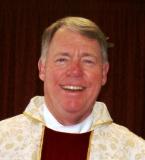
This is the written version of the homily given at Flohr’s Evangelical Lutheran Church (ELCA) in McKnightstown, Pennsylvania on Sunday, April 12, 2026, by Fr. Gene Tucker, Interim Pastor.


“PROOF OF THE RESURRECTION: SEEKING (AND FINDING) THE PROOF WE NEED”

(Homily text: John 20:19–31)

Each year, on the Second Sunday of Easter, we hear the account of our Lord Jesus Christ’s appearance to Thomas (yes, he who has come to be known as “Doubting Thomas”). In a very real sense, it is highly appropriate that we hear this account on this day, for it was on this day, the eighth day[1] after the Lord’s resurrection, that Jesus granted Thomas’ demands to be able to put his finger into the wounds on Jesus’ hands, and to thrust his hand into the Lord’s side.

The importance of this event underscores Thomas’ need, and ours, to know that the Lord really, truly, and in fact, was raised from the dead on Easter Sunday morning. Put another way, Jesus’ resurrected life was – and is – an actual fact, not the product of an ancient people’s religious imaginations, and not a fable promulgated by some highly fanatical followers of a dynamic teacher and leader. (I mention these two possibilities because – as many people contemplate the resurrection event - those who cannot accept it as an actual reality or fact often maintain those two possibilities to explain the biblical accounts.)

The Lord’s gift to Thomas underscores an essential outline of God’s ways of working with human beings. That plan unfolds in this way[2]: 1. A person comes to faith in God’s love, God’s power to change, and, perhaps most importantly, God’s ability to create and to re-create; 2. An encounter with God changes the person, fitting them out for God’s intentions, God’s call and God’s plan for their lives; and 3. The called/changed/outfitted person pursues God’s call and God’s will, putting faith into action.

The truth of this progression, when we think about Thomas’ situation, discloses the truth that, absent an encounter with the risen Lord, Thomas wasn’t prepared/outfitted/ready to do God’s will for his life. If Thomas had tried to do God’s work and will without that life-changing encounter, then he would be trying to do so on his own steam, not on God’s power.

What we’ve just said about Thomas state before his encounter with Jesus is the same truth we can apply to our own lives and our own situations: None of us is truly and completely ready and able to do God’s will for our lives, absent an encounter with the risen Lord, an encounter which leads us to faith in the reality of the Easter event as Holy Scripture informs us.

Thomas got the proof he demanded. Don’t most of us wish that we, too, had the same proof, the same encounter with the risen Lord? I think we do. No wonder that the Lord says to Thomas, “Have you come to believe because you have seen me? Blessed are those who have not seen, and yet have come to believe”. (Personally speaking, I’d like to think there’s an imaginary blank in that statement, one into which my name can be inserted…maybe you feel the same way.)

Absent that sort of physical proof, the demands that Thomas made to be able not only to see the risen Christ, but to touch Him, aren’t available to us today.

How then, do we get the proof we need? After all, faith needs some sort of a foundation in order for us to have something to work with as we come to believe in the reality of God’s power to change, to create, and to make all things new again.

Perhaps the proof is in Thomas’ life, post-Easter, and, as well, in the lives of the others who’d encountered the risen Lord.

Each one of them went out into the known world, carrying the Good News (Gospel) of God’s intervention in human history, made known in the sending of the person of Jesus Christ. In Thomas’ case, tradition tells us that he went as far as the subcontinent of India, carrying the Good News with him.

Each one of the original band of twelve Disciples who would soon become Apostles met a martyr’s death[3]. But even that possibility couldn’t shake their steadfast adherence to the truth that they had witnessed God’s power to preserve them for an eternity in God’s presence.

Today, proof of the reality of the resurrection event can be seen in altered and changed lives, lives which exhibit in some way or another that God’s power to make all things new has taken up residence in someone’s heart and mind.

So then, we pray for the Holy Spirit’s assistance, in order that we may come to believe and to know that Christ truly rose from the grave, a reality that continues to changes lives today.

AMEN.


[1]   Remember that, in the Bible, the number eight represents a new beginning. So the event that took place on this day was, for Thomas, a new beginning.

[2]   God’s way of working with people is much the same plan we can see elsewhere in life. For example, a person feels called to pursue some calling in life. The process of being able to fulfill that calling begins with an encounter with the reality of the calling, some way of knowing what the calling involves. Then, the person assesses their own ability to fulfill the calling. Then, the person receives the training and the skills needed (a new chapter in life, if you will).

[3]   Absent one, traditionally John.

Sunday, April 05, 2026

The Resurrection of our Lord Jesus Christ (Easter), Year A (2026)

Acts 10:34–43 / Psalm 118:1–2, 14–24 / Colossians 3:1–4 / John 20:1–18


This is the written version of the homily given at Flohr’s Evangelical Lutheran Church (ELCA) in McKnightstown, Pennsylvania on Sunday, April 5, 2026 by Fr. Gene Tucker, Interim Pastor.

“EASTER DAY:  BEWILDERMENT TURNED INTO JOY”

(Homily text: John 20:1–18)

It is the first day of the week, and the eleven disciples have greeted the new day with a restless and troubled night, for they are all looking at each other, and wondering if, and when, there might be a knock on the door of the place where they have been in hiding since last Thursday evening.

The knock they fear is one that might be delivered by the officer in charge of a detail of temple police and soldiers, who have come to arrest them, just as they had done to Jesus four days earlier.

They wait, but there is no knock. They are relieved, but only a little.

They know that the temple authorities wouldn’t hesitate to hand each one of them over to Pilate. They shudder at what would happen next.

The sun is beginning to come up, just a little.

Then, there is a knock on the door. It isn’t a loud one, but it’s still a knock. No one moves. They look at one another, fearful of what will happen next.

Then, there is another knock, followed by Mary Magdalene’s voice. Someone goes and opens the door, but only a little, for they are afraid that those who managed to get rid of Jesus the previous Friday may have used Mary to find their way to the eleven.

The minds of those eleven begin to spin….they knew what happened to those who wound up on Roman crosses: They were dead, completely and totally dead. Jesus was dead.

And now they had no idea what would become of the movement that was shaping around His movement.

Mary is almost out of breath. She says she’s been to the tomb, but it is empty. Peter and John bolt out of the room, seemingly unaware that they could be caught on their way to the tomb by the temple authorities. The confirm what Mary said.

Mary returns to the tomb, and a bit later, she returns and says, “I have seen the Lord!”.

Later on that same day, as ten of the eleven huddle in that locked room[1], and as they continue to wonder about the reports that Jesus had risen from the dead, suddenly the Lord appears in the room. He now is free of the limitations that normal human beings experience, for He comes into their midst, and says, “Do you have anything to eat?”[2] He eats in front of them, and invites them to touch Him.

The disciples’ heads continue to spin: That previous Friday, the Lord had seemed like a downtrodden and abused slave, slowly dying a criminal’s death. The sign that hung above His head was a cruel mockery, that sign that said, “The King of the Jews”. There is no glory for this king, only a downward movement into the depths of despair.

It had been quite a week for those first followers of Jesus: He had been hailed as the son of David eight days earlier. But on Thursday evening, He had been betrayed by Judas, and in a few short hours, had been convicted and sentenced to death by Pilate. The week had begun on a high note, but on Friday, it couldn’t have gotten any lower.

The highs and the lows that had happened that week seemed like some out-of-control emotional roller coaster.

Now, on that first day of the week, the eighth day, the Lord’s appearance among His chosen disciples confirms God’s power to create and to re-create. Christ is alive!. Death and hell have been conquered. Satan has been defeated.

The God who raised Jesus from the dead draws back the veil of his nature, showing us that God is one who seeks to love us, to serve us, and to lead us, redeem us, and renew us. All of these divine qualities inform one another.

This is, my friends, the divine mystery: That God is a God of love and mercy, a God of service and of servanthood, but also God of all power, might, majesty and awe.

That such a God would want to be in a personal, intense and loving relationship with each one of us, is another part of that divine and wonderful mystery.

Thanks be to God.

AMEN.


[1]   Remember that John tells us that Thomas was absent on Easter Sunday.

[2]   Luke 24:41 

Friday, April 03, 2026

Good Friday, Year A (2026)

Isaiah 52:13 – 53:12 / Hebrews 10:16–25 / John 18:1 – 19:42


This is the written version of the homily given at Flohr’s Evangelical Lutheran Church (ELCA) in McKnightstown, Pennsylvania on Good Friday, April 3, 2026, by Fr. Gene Tucker, Interim Pastor.


“MAKING SENSE OF GOOD FRIDAY”

(Homily texts: Isaiah 52:13 – 53:12 & John 18:1 – 19:42)

Since the beginning of Holy Week last Sunday, Palm Sunday, we’ve been looking at the events that took place during this most holy time of the year from the perspective of the ways in which our Lord Jesus Christ undertook to be a servant to all, and yet, to be Lord of all.

Now that we’ve arrived at Good Friday, this perspective will serve us well, as we examine our Lord’s death on a Roman cross. For it is in this sort of a death that we see the Lord’s self-emptying love for humanity. And yet, His lordship is also apparent (in more than just the posting of the sign which was placed above His head on the top of the cross, that sign which proclaimed “Jesus of Nazareth, King of the Jews”).

In truth, we cannot count the importance of the Good Friday events without keeping the Easter reality in view, for the events of Good Friday weren’t in that day time and place, all that unusual (victims dying on Roman crosses probably happened quite regularly…it’s even possible to imagine that there may have been regularly-scheduled days for crucifixions to take place). It is the Easter event that makes Good Friday important. The reverse is also true: It is the Good Friday event that makes the Easter event important.

That said, let’s attempt to keep our focus on the Good Friday sequence, and try not look ahead to Easter.

How, then, do we make sense of what happened to our Lord on Good Friday? What makes His death so important (and different from all other deaths of victims on Roman crosses)?

For answers to this question, I think we need to turn to theology to understand what happened to the relationship of God to humankind as the Lord’s lifeblood ebbed away.

Theology (which is, essentially, the study of God’s nature, and God’s interaction with human beings) can shed some light on the importance of Jesus’ death, and the benefits that flow from that death.

With this understanding in mind, let’s consider some of the ways in which the Christian faith has come to understand Good Friday in all of its importance, and in many of the ways in which its ramifications continue to reverberate in our hearts and minds today.

Here are some of the ways Christians have come to regard the importance of Jesus’ death:

Ransom: This is a view that is supported by Holy Scripture, for the word “ransom” appears in the New Testament in connection with Jesus’ sacrifice. (See Matthew 2028, Mark 10:45 and I Corinthians 6:20.)

These days, most people are familiar with the word “ransom” in connection with the word “ransomware”, which is a malicious attack on a computer system whereby someone manages to infect and corrupt a computer system. To free up the system, the attacker demands payment for the system to be unlocked.

In a similar way, Jesus’ death pays the price needed in order to free humanity from bondage to sin.[1]

Jesus’ death as an example:  This approach maintains that Jesus’ willingness to undergo such a horrific death shows us, by example, what true servanthood looks like.[2] (See I Peter 2:21 and I John 2:6 for scriptural support for this approach.)

Jesus’ death as the supreme example of God’s love:  Perhaps stemming from some of the Lord’s comments about the depth of love He has for those who come to Him in faith, this view understands Jesus’ death as the supreme example of the sort of love God has for each of us.[3] (Biblical references which support this view include Romans 5:8, II Corinthians 5:17–19, Philippians 2:5–11 and Colossians 4:24.)

The Penal Substitution Theory: This view maintains that each of us, as sinners, are required to pay the price for our sin. But we have nothing with which to pay the penalty. In our place, Jesus takes up and bears our sins on the cross, paying the penalty that was ours to pay. The Lord is able to do this because He is without sin, and is – therefore – free of the lack of resources with which to pay the penalty that is ours to bear.

A good example of this is the illustration of a person who is brought before a court. The judge pronounces the sentence and the amount of the fine. But the guilty person says they have nothing with which to pay the fine. So the judge steps down from the bench, removes his/her robe, and pays the fine for the convicted person.[4] Our Old Testament reading from Isaiah 52 supports this view.

(Additional scriptural support for this approach may be found in John 11:50-52, Romans 5:8–9, Titus 2:14 and I Peter 3:18.)

Human sin dishonors God, Jesus restores God’s rightful honor:  A view that came into prominence with St. Anselm, Archbishop of Canterbury (1033 – 1109), reflects the feudal society in which he lived. This understanding maintains that human rebelliousness dishonors God. Jesus’ death acknowledges this dishonor and restores a rightful relationship between God and humankind. (Biblical support for this view may be found in John 10:18.)

The examples given here aren’t the only understandings that have come to acceptance as the Church’s life continues through time.

A question which might linger in our own understanding, given the times in which we live, might be to ascertain which of the views outlined above would gain acceptance among people today, and especially among non-believers. My guess would be that many, if not most, people might say that Christ’s example of servanthood, and the example of His love, would be the most widely accepted views.

As we go about sharing the Good News (Gospel) of God in Christ with others, and especially with those we know who have not yet come to faith, it might be good for us to remember what meaning would resonate most readily with others as we share that Good News.

AMEN.


[1] The third century theologian, Origen (c.285 – c.253 AD), maintained this view.

[2]   Peter Abelard (1079 – 1142) was a key proponent of this view.

[3]   Peter Abelard also maintained this view, which, I think, is somewhat like the view that Jesus’ death is the best example we have of servanthood in action.

[4]   The sixteenth century reformer John Calvin (1509 – 1564) maintained this view. 

Thursday, April 02, 2026

Maundy Thursday, Year A (2026)

Exodus 12:1–14 / Psalm 116:1–2, 12–19 / I Corinthians 11:23–26 / John 13:1–17, 31b–35


This is the written version of the homily given at Flohr’s Evangelical Lutheran Church (ELCA) in McKnightstown, Pennsylvania on Thursday, April 2, 2026 by Fr. Gene Tucker, Interim Pastor.


“THE LORD WHO LEADS, ALSO SERVES”

(Homily text: John 13:1–17, 31b–35)

In this Holy Week, 2026, we’re looking at the major events that took place as Jesus made His way into Holy City of Jerusalem on Palm Sunday, and then as the Last Supper took place on Maundy Thursday, and as the Lord dies on Good Friday, and then as He rises from the dead on Easter Sunday; from the perspective of the ways in which our Lord Jesus Christ leads us, but also serves us.

Let’s retrace our steps by returning to the events of Palm Sunday.

On that day, we remarked earlier this week, that the Lord entered Jerusalem, riding on a donkey. No, not a white horse with sword held high, but on a donkey. A donkey – then as now – isn’t regarded as being a creature with much of a high estimation. Donkeys are working animals, used to carrying things. The manner of the Lord’s entry into the Holy City sets the stage (it seems to me) of the servanthood nature of His work for us and among us. But then, last Sunday, we also noted the importance of the greeting that awaited the Lord as He rode along the way into the city. The crowds shouted, “Hosanna to the son of David. Blessed is the one who comes in the name of the Lord”. Notice that the reference to Jesus as the son of David carries with it royal overtones, ones harkening back to the glorious days of King David, 1,000 years earlier. In that way, the crowds affirm (it seems to me) Jesus’ leadership.

Now, with the arrival of Maundy Thursday, we are ready to look at the account of the events that took place at the Last Supper, as we read them in John’s Gospel account.

(John, alone among the Gospel writers, reports on Jesus’ washing of the feet of His disciples. John doesn’t narrate the institution of the Lord’s Supper, as the other writers do, his interests lie elsewhere.)

The significance of the washing of feet might escape our notice, unless we remember how important that action was in the ancient world. The roads of the day, for the most part, were dirt. They were dusty in the dry seasons. Moreover, most people wore sandals of some sort, not shoes. So it was that their feet got dirty. Washing them was a task that was the business of slaves or of servants.[1]

For the Lord to remove His outer garments, and to wrap a towel around Himself, in order to wash His disciples’ feet, was an affront to the usual expectations of the society of the day. We can see this in Peter’s reaction to the Lord’s plan to wash his feet.

Washing feet was a lowly task. One reserved for persons who had either never had their own freedom, or who had lost it.[2]  If the foot-washer wasn’t a slave, but was a servant, we can still see that foot washing was reserved for persons for whom there were very limited possibilities in life. Such persons were at the bottom of the social pecking order.

Jesus places Himself among this bunch of people, somewhere near – or at – the bottom.

But then, it is also the Lord who institutes the Sacrament of His Body and Blood, the Eucharist, the Lord’s Supper, the Mass.

This holy meal supported the Lord’s disciples in that Passover meal, from which the Christian holy meal came forth.

The Lord continues to lead, but also to support, uphold and serve His disciples, in ages past and still today, with His presence in the bread and in the wine.

For to Christian believers, the Lord’s Supper reminds us of the Lord’s suffering and death (the celebration of the Eucharist is – at its heart – a bloodless sacrifice). For we believe and maintain that this holy meal is much more than a simple memorial of what the Lord did, and what He accomplished, in His death on Good Friday. No, for such Christian believers, the Eucharist means that the Lord is really present[3] in the bread and wine. We needn’t understand such a thing totally. The efficacious effects and benefits of this Sacrament aren’t dependent upon our ability to completely understand and grasp what’s going on as the Sacrament is celebrated and received. The Lord has taken care of the meaning, and also the blessing, of His presence among us and within us.

Thank you, therefore, gracious Lord, for leading us into this eternal and ongoing gift, the gift of your very self. Thank you, as well, for supporting and uplifting us, as you serve those who love you and claim you as Lord and Savior.

AMEN.


[1]   The Greek word we find in the New Testament, doulos, can mean either slave, or servant.

[2]   A Roman citizen could lose their citizenship if they’d been captured by bandits and were sold into slavery.

[3]   The idea that the Lord is present in the elements of the Holy Communion, or – as it is often characterized – in, under, around and through the bread and the wine, is often known as the Real Presence of the Lord. It is also known by a technical term, Consubstantiation.