Isaiah 7: 10–16 / Psalm 90: 1–7, 18–18 / Romans 1: 1–7 / Matthew 1: 18–25
This is the written version on the
homily given at Flohr’s Evangelical Lutheran Church (ELCA) in McKnightstown,
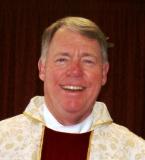
Pennsylvania on Sunday, December 21, 2025, by Fr. Gene Tucker, Interim Pastor.
“PREPARATORY STEPS”
(Homily
text: Matthew 1: 18–25)
Whenever we think about doing
something, or building something, there is a pattern to the process from
conception to the finished task/product that – in most cases – unfolds. It
looks something like this: We conceive of an idea or something that would be
useful to have/do or make use of; we think of what it will take to bring this
concept to reality; we gather the resources we will need to make it happen
(people, raw materials, etc.); and then we create whatever it is we have in
mind. Usually, after it’s all said and
done, we step back to see how well the concept worked out in real life.
That same process is – at its heart –
the process that Matthew describes as he tells us about the work that God had
to do in order to get Joseph ready for the coming of Jesus.
In the mind and heart of God, a concept
arose which had to do with the saving of humankind. This concept is an old one,
for God had been about the business of saving His people for quite a long time
before the birth of Jesus. Consider, for example, Noah and the Great Flood: Essentially,
this is an account of one of God’s saving acts. Or consider the parting of the
Red Sea so that God’s people could pass safely through the waters on their way
to the Promised Land…that is another of God’s saving acts. We could also
mention the return of God’s people from exile in Babylon, which is another of
God’s saving acts. (These are just some examples in Holy Scripture.)
Matthew’s concern is to show the
process by which God brought about the birth of Jesus, from the conception of
that divine idea, to the enlistment of Joseph to assist in that plan, to the
birth of Jesus. Matthew’s concern is to focus on the work God had to do to get
Joseph ready for this event. (Luke’s focus is on the things God had to do to
get Mary ready for the birth…we will hear that account on Christmas Eve.)
As we look closely at the text, we see
that God’s intent is to continue to save His people. Jesus[1] is
the name by which the child will be known, a name which means “God saves”.
Matthew explains the meaning of the holy name, to be sure that his readers and
hearers have the basic premise of God’s plan clearly in view.
What God intended to do in the sending
of Jesus is a continuation of what God had been doing for a very long time.
(See the list, provided above.) God had been about the business of preserving
His people…we could say that one of the attributes of God is that He saves. But
now, God takes a major step, depending not on discernable actions (like
providing a way to survive the flood, as with Noah, or by parting the waters,
as with Moses and God’s people), not depending on the words, testimonies and
warnings of the prophets, but now in the sending of God’s very self. That’s why
Matthew tells us that Jesus will be Immanuel, meaning “God with us”.
In the fulness of time, God chose
Joseph and Mary to be the means by which His plan would become reality. As in
most any plan or conception of something, resources would be needed in order to
make the plan into reality. God needed people to bring about the human side of
this plan to save people…he chose Joseph and Mary.
We will understand what Matthew relates
to us more clearly if we take a moment to understand the customs of courtship,
engagement and marriage in the culture of the time, which differ from our
customs and practices today.
A couple, desiring to be married,
entered into a betrothal, an engagement. This was done with a ceremony, which
became a binding one, one that could be ended only by a divorce. During this
time, the man and the woman were called “husband” and “wife”. However, the
betrothal did not allow for the consummation of the marriage and the
possibility of conceiving children. That stage would wait until the marriage,
itself, took place.
No wonder, then, that Joseph is in a
tough spot. (So is Mary, by the way.) For the traditional culture of the time
forbid conceiving a child except within the context of marriage.[2] In
fact, the Law of Moses prescribed the death penalty for being pregnant without
the benefit of marriage. (Notice Joseph’s compassion for Mary…he decides to
spare Mary from the punishment usually prescribed for violating the Law’s
requirement…he chooses to “divorce her quietly”, which might be a way of saying
that Joseph decided to essentially consign Mary to a state of permanent house
arrest.)
In order for God to prepare Joseph for
his role in God’s plan, some clear message that is unmistakably from God would
be needed. That mechanism was a dream, whereby God tells Joseph that Mary
hasn’t violated the requirements of the Mosaic Law at all...the child she has
conceived is of divine origin.[3]
As part of this plan, as in any plan,
the people involved need to “buy into” the plan. Matthew tells us that Joseph
does so, eventually taking Mary as his wife.
One of the key understandings of
theology, which is (at least in part) the study of God’s nature and God’s ways
of acting, is that for God to be God, He will act in similar ways in our time
as He has done in the past. (Holy Scripture is, at least in part, a record of
God’s actions among human beings in times past…today’s Gospel reading fits
squarely into that understanding.)
God’s acting in our lives fits into the
pattern which we described earlier: For each of us, God has a plan in mind for
our lives. God then informs us in some way of those plans. We are asked to “buy
into” God’s plan. We are then asked to act on God’s plan (which might involve
change, or it might involve some sort of risk).
Perhaps then, we might reflect on the
ways in which God is asking each of us to find out what God’s plan is for our
lives (which might change as time goes along), then to be willing to accept
God’s plan, and then, finally, to do what God has in mind.
To do so is to find our truest and
fullest self.
AMEN.
[1] The Hebrew version of the name is Jeshua.
[2] Our own culture today has lost much of this
sense.
[3] The role of the Holy Spirit, which Matthew tells us, was key to God’s
plan, might be difficult for us who are Christian believers today to understand,
for we understand quite a lot about the Holy Spirit, the Spirit’s work, and so
forth. But it would be well for us to remember that the understandings of the
Spirit, the Spirit’s relationship to the other two Persons of the Holy Trinity,
and so forth, were new concepts for early Christians, such as those who read
and heard Matthew’s Gospel account. In time, as the Church reflected on God’s
actions, it came to the mature understanding of the identity and the work of
the Spirit, and the Spirit’s relationship as part of the Holy Trinity.