Malachi
4: 1–2a / Psalm 98 / II Thessalonians 3: 6–13 / Luke 21: 7–19
This is the written version of the
homily given at Flohr’s Evangelical Lutheran Church (ELCA), McKnightstown, Pennsylvania,
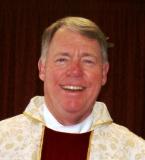
on Sunday, November 16, 2025, by Fr. Gene Tucker, Interim Pastor.
“THE CHRISTIANS’ TASK: BE GOOD AT MULTI-TASKING”
(Homily
texts: II Thessalonians 3: 6-13 and Luke 21: 7-19)
In the busy hustle and bustle of the
world in which we live today, people often say that they have to be good at
multi-tasking. Some say they can do it, and do it well. Others say it doesn’t
work for them, or that they simply can’t manage to do or handle more than one
thing at once. Still others, often those who are observers of the human
condition, maintain that it isn’t at all good for us human beings to be trying
to multi-task at all.
As we look at this morning’s appointed
readings, we might come to the conclusion that we Christian believers are
called to hone our skills, so that we can be good and proficient multi-taskers.
Our task is to focus on the
here-and-the-now of life, but also on God’s great, big and final plans for us
and for the world. Both foci are required of all believers.
A look at our epistle reading, taken
from St. Paul’s second letter to the church in Thessalonica, makes clear that
the everyday work of life is important, while our reading from the Gospel
according to St. Luke turns our eyes toward the great and final things of God.
(Surely, we must be getting close to the season of Advent with readings such as
this! Indeed, that is so, for as each liturgical year comes to an end, our
attention is turned to the double focus of the season of Advent, as we prepare
for our Lord Jesus Christ’s first coming as a babe, born in Bethlehem, but also
to the final and second coming of our Lord at some point in future times.)
The Thessalonian church had its share
of problems and challenges. (Many of the churches that Paul either founded or
had oversight over had one or more problems to deal with.) Apparently, the
Thessalonians were very concerned with the Lord’s second coming. Some
maintained that the Lord had already come (leading some to wonder why they had
been left out of the Lord’s plans), while others wanted to know the details of
that coming: When, how, etc. Still others – as our reading this morning tells
us – were sitting around, gazing at the skies (apparently) and doing little or
nothing.
The focus, then, of our epistle reading
has to do with everyday life, and the importance of everyday tasks, work and
events.
On the other hand, our Gospel reading
turns our attention to future events, and specifically, to the turmoil and
destruction of the city of Jerusalem. This is a deeply troubling reading. But
the Lord’s predictions are meant to not only to inform, and also to provide
comfort. Notice that He says that, despite the troubling description of what is
to come, those who are people of faith will overcome all of those terrible
things, and will gain their souls.
What are we to make of the Lord’s
predictions about Jerusalem’s fate, and about coming hard and perilous times
for those who claim the name of Christ?
Some Christians maintain that the
events described in this morning’s Gospel refer to Jerusalem’s destruction
during the Jewish-Roman War (which lasted from 66 – 71 AD). Others say it
refers to some still-in-the-future event, while others maintain that the Lord’s
descriptions contain traditional biblical language which describes God’s anger
(the mentions of signs in the heavens and great portents qualify for this
understanding).
Perhaps a mature Christian approach to
the Lord’s instruction would be to say that He was describing Jerusalem’s
destruction in 70 AD, but His words might also apply to some future event. And,
we should acknowledge, some of the imagery used can be found elsewhere in
Scripture, where it does seem to describe God’s anger and judgment.
All three approaches are possible. The
exact meaning and applicability of the Lord’s words are wrapped up in the
mystery of God and God’s plans and timetable.
What, then, are we to do, in order to
faithfully live in this life, even as we look forward to the life of the world
to come?
Multi-tasking is the answer, I think.
Paul’s admonitions to the Thessalonians
makes clear that the day-in-and-day-out work of life is important. (It might be
worthwhile mentioning, at this point, that an early Christian heresy, known as
Gnosticism, maintained that this life was nothing more than a mirage, and
wasn’t important. What was important, the Gnostics said, was the spiritual
life. The Church responded forcefully to this severely imbalanced view of life
in God. Rejecting it.)
We Christians are not to be sitting
around, ignoring caring for and improving our own welfare, and also the welfare
of others, looking at the clouds and hoping to see some sign of the Lord’s
appearing. Alas, some Christians today continue to do pretty much the same sort
of thing.
But a focus on this current life,
without an awareness that God has a plan, and that all who come to faith in
Christ are part of that plan, is to practice an imbalance of another sort. That
focus, too, is important.
We live in the in-between times, that
time between the Lord’s first coming as a baby, born in Bethlehem, and His
second coming at some future time in history. As we live in this in-between
time, we are called to work to prepare the soil of this world for the
breaking-in of the Lord’s kingdom in all its fulness, when the Lord returns.
Enable us then, Holy Spirit, to
multi-task, that we may be mature disciples of Jesus Christ.
AMEN.