Wednesday, February 18, 2026

Ash Wednesday, Year A (2026)

Joel 2: 1–2, 12–17 

Psalm 51: 1–17 

II Corinthians 5: 20b – 6:10 

Matthew 6: 1–6, 16–21


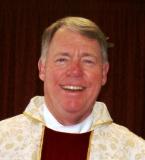
This is the written version of the homily given at Flohr’s Evangelical Lutheran Church (ELCA) in McKnightstown, Pennsylvania on Wednesday, February 18, 2026 by Fr. Gene Tucker, Interim Pastor.


“INTEGRATION & INTEGRITY”

(Homily text: Matthew 6: 1–6, 16–21)

“If you’re going to come and serve here, your insides must match your outsides.” So said my first Bishop.

What he was getting at is the business of integrity.

Sometimes, we can see integrity in a person when they act the same way when no one can see what they are doing, as when they act when others can see what they’re doing. Their actions, done in private or in secret, match their actions in public, to put it another way. The reverse is also true.

A focus of much of our Lord’s ministry had to do with the business of integrity, of matching a person’s outward actions with an inner transformation of the heart and the mind, of allowing the outward actions and observances of God’s ordinances to be fully integrated into the inner heart and mind.

In the Sermon on the Mount, from which today’s Gospel reading is taken, Jesus takes on the obvious disconnect between outward appearance and inner disposition and transformation.

It would be easy to think that the Lord’s comments, heard by the crowd that had gathered around to hear His thoughts, were actually aimed at the scribes and the Pharisees, for in Matthew’s Gospel account, those two groups are mentioned, time and again.

“Beware of practicing your righteousness before other people, in order to be seen by them,” the Lord says.

Sounds very much like the behaviors of the scribes and the Pharisees, whom the Lord described as being “white-washed tombs”,[1] those who look good on the outside, but are, in actuality, full of dead men’s bones inside.

Later on in his Gospel account, Matthew records a series of indictments against the scribes and the Pharisees. It’s worth reading these harsh statements, each of which begins with “Woe to you, scribes and Pharisees…”[2]

What, then, was the problem with the scribes and the Pharisees?

Simply this: They were going through all the motions, observing all the practices that the Law of Moses required, attending worship in the Temple, and attending gatherings in the synagogues where the Law and the Prophets were read each Sabbath day.

However, we get the impression that they had walled off part of themselves to the truths of God, those truths that require “mercy, not sacrifice”.[3]

Here we come to the important part of the purpose of all those outward actions, those requirements of the Law of Moses: Those things that God’s people were required to do were meant to sink into their innermost selves, into their hearts and minds.  Put another way, the outward actions were meant to influence the inner heart and mind.

That’s what the scribes and Pharisees failed to do. It’s as if they had set aside a part of themselves, and were telling God “This part of me is off-limits to you and to your truths”.

Jesus’ warning to the scribes and the Pharisees is also a warning to us.

It’d be easy to simply “go through the motions” of living a Christian life, of regular attendance at worship, of an outward observance of the faith.

But we can – each of us – wall off a part of ourselves to God’s love, God’s truth and God’s deep desire to enter into an intense, inner relationship of love and renewal. For whatever reason, God gave us the freedom to do that.

The Lord’s warning is especially important to those Christians who maintain a liturgical worship heritage, for it’d be easy to concentrate on things like music, the liturgical actions that happen during a Eucharistic celebration, or a building’s beauty. However, those things are all meant to turn our focus to God, to God’s truths and to God’s demand for inner transformation of heart and mind. Each of these aspects of liturgical worship are meant to direct us to God’s majesty, power and love.

This Lenten season, the call comes to us, to each of us, to step back, try to see ourselves as God sees us, and then to take stock of the state of how well and how fully we’ve integrated godly values into the very fiber of our being. Such a journey won’t be easy, and it’s a certainty that we’ll need the help of the Holy Spirit to walk a productive Lenten journey as we make our way to Good Friday, and then to Easter and to new life.

AMEN.


[1]   Matthew 23:27

[2]   Matthew 23: 1-31

[3]  Jesus quotes Hosea 6:6, as Matthew records His comment in Matthew 9:13.


Sunday, February 15, 2026

Last Epiphany (The Transfiguration of Our Lord), Year A (2026)

Exodus 24: 12-18 / Psalm 2 / II Peter 1: 16–21 / Matthew 17: 1–9

This is the written version of the homily given at Flohr’s Evangelical Lutheran Church (ELCA) in McKnightstown, Pennsylvania on Sunday, February 15, 2026 by Fr. Gene Tucker, Interim Pastor 

“REVELATION AND SUSTENANCE”

(Homily texts:  II Peter 1: 16–21 & Matthew 17: 1-9)

This morning, let’s talk about things that inspire us, or perhaps, serve as a revelation, things that sustain us as we go forward in life.

This past week, I’ve spent a good deal of time looking through boxes of old photos, in search of photos from the very early years of one of the tourist railroads I am involved in, the Walkersville Southern Railroad, located near Frederick, Maryland. (As I am fond of saying, “Pray for my wife, please…her husband loves trains!”)

My search was a trip down memory lane, back to the early 1990s, when a small group of railroad enthusiasts began the process of establishing the railroad. Back then, we were able to gain the use of a stretch of track that had been out-of-service for about twenty years. Consequently, it was overgrown, and had to be cleared of vines, vegetation and trees. In addition, this new entity had no locomotives, and no cars.

The photos I was able to retrieve were testimony to the determination of those early participants. It was also an inspiration to think of what has become of those early efforts, for today, the railroad is a thriving entity.

Those members who’ve become part of the railroad’s staff in the years that have followed have been inspired by the successes that followed those initial efforts. The determination of those early members in the effort to establish the railroad serves to inspire a new generation of crew members, sustaining them in their own efforts to build upon the foundations that were laid years ago.

In like manner, Peter, James and John were witnesses to an event that was meant to widen their perspectives, and to strengthen them for the journey that lie ahead: That journey is the Lord’s journey to Jerusalem, to betrayal, suffering, death and resurrection. The event that sustained these three disciples was the Lord’s transfiguration on a mountain, though – at the time – they probably didn’t realize its meaning and importance.

Up until this point in the disciples’ journey with the Lord, they’ve been witnesses to various miracles, like the feeding of large crowds of people, the healing of those with various diseases, and so forth. They’ve witnessed His growing popularity, His compassion for all sorts of people, and His teaching.

But now, as the Lord’s appearance is altered, displaying the unmistakable light of God, and God’s voice, declaring that Jesus is God’s beloved Son, Peter, James and John have a vision of Jesus as being God’s anointed One, the Messiah, the Christ[1]. It is a vision of the Lord’s eternal being, His one-ness with God. It is a vision of God’s great, big picture and intent in the sending of Jesus to take up our humanity.

Moses and Elijah appear with the Lord, signifying that Jesus is the bringer of a new law, a law which succeeds the Law of Moses. Moreover, Elijah’s appearance signifies that the Messiah has come.[2]

No longer will these three who witnessed Jesus’ transfiguration be able to think of Him as merely a superhuman person, one who is possessed of deep thoughts and profound teachings, one who possesses, somehow, the power to heal and to perform miracles. In the wake of the transfiguration, a new understanding, a wider perspective, has been given.

Many years later, St. Peter recalls this event in his Second Letter. In time, and especially after the Lord’s resurrection, the events that took place on the mountain made sense. Perhaps Peter looked back over the years, and saw evidence that the Lord’s true identity had sustained and inspired him to take up the reins of leadership in the early Church confronting with determination and power the challenges that came along.

Revelation and inspiration result in changed lives. That was certainly true of the lives of the Lord’s early disciples, those who would be sent out as Apostles to carry the Good News of God in Christ.

Can we, as the Lord’s disciples today, look back at a time when the Lord has sustained us in some way? Did the Lord sustain us in difficult and trying times? Did the Lord bring us through loss and despair? Were we healed in some way that medical science can’t explain?

All of these might be markers of God’s abiding presence in our lives.

For God’s desire is for us to come to the knowledge that Jesus is Lord of all, far beyond being a memorable figure in history. God’s desire is for us to come to the knowledge, in our heart-of-hearts, that inviting the Lord into our innermost being is God’s deepest and most intense desire.

For then, we will be sustained in whatever lies ahead, for, as St. Paul states so well, “Nothing can separate us from the love of God in Christ Jesus our Lord.” (Romans 8: 38–39)

AMEN.


[1]   The title “Messiah” comes to us from the Hebrew, where it means “anointed”. “Christ” means the same thing, coming from the Greek.

[2]   In the time of Jesus’ earthly ministry, it was widely believed that the Messiah’s coming would be heralded by the return of the Old Testament prophet Elijah. This belief was founded on Malachi 4: 5–6. 

Sunday, February 08, 2026

Epiphany 5, Year A (2026)

Isaiah 58: 1–12 / Psalm 112: 1–9 / I Corinthians 2: 1–16 / Matthew 5: 13–20

This is the homily written for Flohr’s Evangelical Lutheran Church (ELCA) in McKnightstown, Pennsylvania for Sunday, February 8, 2026, by Fr. Gene Tucker, Interim Pastor.  (This sermon was not delivered as sermons usually are, however, as it was a “Stump the Pastor” Sunday, when congregation members ask questions, to which the Pastor responds.)

“A HIGH BAR, BUT ALSO, A LOW ONE”

(Homily text: Matthew 5: 13–20)

In last week’s sermon, we said that the Lord’s teaching, known as the Beatitudes, are – in essence – an outline of the values by which God’s kingdom will be known. We also said that, when a person is baptized, they are enlisting in the Lord’s service, and are expected to adopt the values of God’s kingdom.

So then, the Lord’s teaching, known as the Sermon on the Mount, forms a complete outline of the values by which this new kingdom, this new covenant, will operate.

This morning’s Gospel reading continues our journey through the Sermon on the Mount.

And, we hear the Lord say this morning, “For I tell you, unless your righteousness exceeds that of the scribes and the Pharisees, you will never enter the kingdom of heaven.” (Matthew 5:20)

At first glance, the Lord seems to be setting a very high bar for all of His followers to reach. Surely, such a rigorous standard means that a very difficult path lies in front of all who claim the name of Christ.

But, if we think about it for a moment, we also realize that it is – at the same time – a low (and easily attainable) bar, one that we can master with the Lord’s help, without a lot of difficulty.

Hold onto that thought for a moment, as we turn our attention to a review of what we know about the scribes and the Pharisees.

We will begin with the scribes, who were the experts of the day in the Law of Moses (Torah). They were, then, the lawyers of the day, concerned with the texts of the Torah, and with the application of those texts to everyday situations. They were lay persons.

Likewise, the Pharisees were a lay group (not priests), who were dedicated to the rigorous adherence to the Torah. Their goals were to adopt the rigorous and legalistic observance of the Law in everyday life. It is the Pharisees who grumble about the company that Jesus keeps, as He hangs around with the tax collectors and those other notorious sinners. They are the ones who complain about Jesus’ healing activities on the Sabbath day. These are but two examples.

As an aside, but to note an important facet of Matthew’s concern and focus, it’s worth noting that he seems to be deeply concerned with the behaviors of the scribes and the Pharisees. Indeed, Matthew seems to be locked in debate with the Judaism of that time, 2,000 years ago. Matthew’s account is peppered with references to the scribes and the Pharisees.

Now then, what about the height of the bar that Jesus is setting before His followers?

Indeed, it seems to be a very bar, for He says, “Do not think that I have come to abolish the Law or the Prophets; I have not come to abolish them, but to fulfill them. For until heaven and earth pass away, not an iota, not a dot,[1] will pass from the Law until all is accomplished. Therefore, whoever relaxes one of the least of these commandments, and teaches others to do the same, will be called least in the kingdom of heaven. But whoever does them and teaches them will be called great in the kingdom of heaven”. (Matthew 5: 17–19)

Perhaps these references were aimed at the values and the behaviors of the scribes and the Pharisees, for those were the values we observe were among their best attributes. So, perhaps, we might say that the Lord is setting a high bar, one that the scribes and the Pharisees themselves held in high esteem.

But, there’s another side to what we know about the scribes and the Pharisees, and it is one that tells us that we should be able to avoid the temptation to behave as they did, those many years ago. For us, then, their behaviors and attitudes set a low bar for us, setting before us a valuable lesson.

The problem with the scribes and the Pharisees is that they were concerned with outward appearances. But they neglected the inner transformation that the requirements of the Mosaic Law were designed to bring about.

Consider, for example, Jesus’ condemnation of their behavior. He said, “They (the scribes and the Pharisees) do all their deeds to be seen by others. For they make their phylacteries[2] broad and their fringes[3] long, and they love the place of honor at feasts and the best seats in the synagogues, and greetings in the marketplaces, and being called ‘rabbi’ by others. (Matthew 23: 5–7)[4]

Unless we miss the Lord’s condemnation of the ways of the scribes and the Pharisees, He says this, “The scribes and the Pharisees sit on Moses’ seat, so practice and observe whatever they tell you – but not what they do. For they preach, but do not practice”. (Matthew 23: 2–3)

“They preach, but do not practice”.

Shouldn’t this make a relatively low bar for us to vault over, in succeeding to do what God would have us do?

Well, maybe “yes” in some sense, but also “no” in another.

It might be easy for us to say that we don’t defraud others, or steal from them, or fail to meet their physical needs.

But it is quite another matter for us to do all those things because our innermost beings have been transformed. This outer-to-inner connection goes to the heart of Jesus’ condemnation of the ways of these “blind guides”, the scribes and the Pharisees.

Outward observance, vs. inner transformation, lies at the heart of the great Reformer, Martin Luther’s struggle to come to grips with his own sense of sinfulness. In the time in which he lived, he had scrupulously done all the “stuff” the Church told him was necessary to find favor with God. And yet, he sensed that those outward actions didn’t amount to full acceptance and forgiveness.

In time, and – in particular – his reading of St. Paul’s Letter to the Romans led him to understand that for an inner transformation to take place, God’s grace would have to come into the picture first.[5] Then, through that grace, and through the workings of the Holy Spirit, Luther would find true acceptance and amendment of life.

The lesson for us, it seems, is that God’s intent in providing us with the history of His dealings with humankind is to instruct us in His ways and in His will. We can read and mark those things, taking note of the ways in which those who interacted with God in times past got the ways of God “right”, and the ways they didn’t.

But to allow those lessons and those examples to be grafted into our hearts and minds, well, that high bar makes in necessary for the Holy Spirit to come before us, to soften the soil of our hearts and minds, in order that the seeds of God’s wisdom might grow within.

AMEN.


[1]   These are references to the small strokes in Hebrew script. Iota is also a Greek letter.

[2]   In Exodus 13:9, God’s people are instructed to keep the Passover, so that its observance might be a “memorial between their eyes”. See also Deuteronomy 6:8 and 11:18, which contain similar instructions. The phylacteries were square boxes that were worn on the forehead and also on the arm.

[3]   Fringes refer to the fringes on prayer shawls.

[4]   We will read and consider the Lord’s teachings in chapter 23 of Matthew’s account in late October.

[5]   Theologians assign a title to this sort of grace: Prevenient Grace, meaning that it comes beforehand (the original meaning of the word “prevent” meant to “come before”). 

Sunday, February 01, 2026

Epiphany 4, Year A (2026)

Micah 6: 1–8 / Psalm 15 / I Corinthians 1: 18–31 / Matthew 5: 1–12

This is the written version of the homily given at Flohr’s Evangelical Lutheran Church (ELCA) in McKnightstown, Pennsylvania on Sunday, February 1, 2026 by Fr. Gene Tucker, Interim Pastor.


“INSTILLING KINGDOM VALUES”

(Homily text: Matthew 5: 1–12)

If you follow the sermon blog, you’ll recall that I often use experiences from my time as a member of the U. S. Army Chorus, which is part of the U. S. Army Band, based in Washington, D. C., as sermon material.

As a member of the Chorus, a good part of our repertoire consisted of Army songs, often sung at various military functions. One of them is “Dogface Soldier”.[1] Its lyrics fit well into the Gospel reading for this morning, our Lord’s teaching known as the Beatitudes. Here, in part, are the lyrics:

                I wouldn’t give a bean,[2]

                To be a fancy-pants Marine.

                I’d rather be a Dogface Soldier,

                Like I am.

                I wouldn’t trade my old ODs[3]

                For all the Navy’s dungarees,

                For I’m the walkin’ pride

                Of Uncle Sam.

                On all the posters that I read,

                It says “The Army Builds Men”,[4]

                So they’re tearing me down

                To build me over again…

“Tearing me down to build me over again” refers to the process by which every new member of the armed services undergoes a period of initial training. One of the goals of such training is to remove much of the civilian attitudes that inductees bring with them, in order to replace those values with military ones.

As we read over our Lord’s teaching, known as the Beatitudes, perhaps His goal is to lay out the values that belong to God’s kingdom, so that those who enter the kingdom know what will be those values that God will seek to instill in each new disciple’s heart.

God’s values are counter-cultural. They differ from the attitudes of the ways of the world when it often ignores God’s values.

Consider, for example, one difference between the two: Jesus said, “Blessed are the meek, for they shall inherit the earth”. The world’s version of this same saying might go something like this: “Blessed are the meek, for they shall inherit the earth, six feet of it”.

The point of this second way of behaving is to confirm the truth that – by the world’s values and behavior - the strong will run over and defeat the weak and the downtrodden.

Each of the Lord’s teachings reflect this same truth: That God’s ways and God’s expectations are radically different from the ways of the world.

Each new disciple who comes into the Lord’s service is expected to mirror these godly values. By so doing, the ways of the world, which often lead to destruction and alienation, are exposed for being the dead-end road that they are.

Each day, as we awaken and face the challenges and the duties of the day, we are called to put before ourselves God’s values and God’s ways. We have a choice to make, either to act the way that the world acts, or to re-enlist ourselves in God’s service.

An old saying serves us well, as we consider this choice: “Always preach the Gospel. If necessary, use words.”

AMEN.


[1]   Dogface Soldier was composed early in World War II, and it was originally a song for the Army’s Third Division.

[2]   The title “Beatitudes” comes from the Latin word for “blessed”.

[3]   ODs were Olive Drab uniforms, now long gone from the Army’s uniforms.

[4]   The language reflects the Army’s experience in World War II, when the great majority of soldiers were men. Today, however, many women serve ably and well in military service.