Jeremiah 28: 5–9 / Psalm 89: 1–4, 15–18 / Romans 6: 12–23 / Matthew 10: 40–42
This is the homily written for Flohr’s
Evangelical Lutheran Church (ELCA) in McKnightstown, Pennsylvania, for Sunday, June
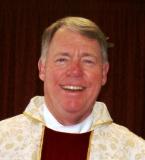
28, 2026, by Fr. Gene Tucker, Interim Pastor.
“GOD’S WILL AND GOD’S VOICE ARE OFTEN MEDIATED”
(Homily texts: Jeremiah 28: 5–9 and Matthew 10: 40-42)
As
Christian believers, who seek to follow the Lord’s leading, to know God’s will,
and to know when God is telling us something, it is important for us to know
something about the various ways that God communicates His mind and will to us.
Oftentimes,
God’s voice and God’s will are mediated in some way.
That
is to say, God usually speaks to us indirectly. To say that God’s will and
God’s voice are mediated, we mean that God often uses some intermediary means
to do so. (At this point, we should acknowledge that God can, and does, speak
to us directly. The action of the Holy Spirit is one such way.)
Let’s
explore some of the ways that God lets us know His mind and His will.
We
could begin with an obvious way in which God speaks to us: In the pages of Holy
Scripture. The Bible is, from one perspective at least, the record of God’s
dealing with human beings down through time. The mistakes that people have
made, the successes that have happened, the good, the bad and the downright
ugly, all of it is in the pages of sacred Scripture. (I think that’s one way
that what the Bible has to tell us is really true in the fullest sense of that
word, for it doesn’t attempt to hide or sugar-coat the ugly truths of human
behavior….it’s all there in the text.)
God’s
truths are often expressed in stories, in poems, and in the texts of hymns.
Sometimes, when we read a story or a poem, or when we sing a hymn, the truths
contained in these various ways of expressing God’s truths will touch our minds
and our hearts. Poems, stories and hymn texts can offer an inspired way to see
truths that we know from other perspectives. Seeing divine truths from another
perspective is much like picking up a fine piece of cut glass and holding it up
to the light. As we turn the glass, the light beams shimmer and shine in
differing aspects. The same process can happen with poems, hymn texts and
stories.
Another
way that we discern God’s voice and God’s will is through the voice of others.
Sometimes, in conversation with another believer, something that is said can
strike us with the gleam of God’s truth. Of course, oftentimes the assistance
of the Holy Spirit enables us to know that what we’ve heard is God’s truth.
Sermons
can be a vehicle for expressing God’s truth. The preacher’s task, it has been
said, is to “Afflict the comfortable and to comfort the afflicted”. Here we
come to the prophetic nature of preaching. That is to say, good preaching
doesn’t just seek to assure us of things we already know and believe, it is,
indeed, that, if it is effective preaching. But preaching that is faithful to
God’s call to point toward God’s truth also involves challenge, the sort of
challenge that encourages us to look beyond our current situation and
surroundings, in order that we might see what else about God’s voice and God’s
will we are missing, or have overlooked. The preacher’s task is to have the
Bible in one hand, and the newspaper in the other. This is a way of saying that
the good preaching seeks to find ways to apply God’s truth to the daily
situations we encounter in our time, place and culture.
Finally,
we should talk about prophets and prophecy, since our reading from Jeremiah has
to do with the work of prophets, and since – in our Gospel reading for this
morning - our Lord mentions that a prophet will, by no means, lose his (her)
reward.
Quite
often, when we think about prophecy, we think of it in terms of foretelling
future events. Prophecy can, indeed, deal with events that have not yet come to
pass.
But
prophecy also has to do with God’s truth, or – more properly – speaking God’s
truth, and especially in situations where people don’t necessarily want to hear
God’s truth. (That would summarize the prophet Jeremiah’s situation quite
accurately.)
Jeremiah’s
assessment of the truthful and faithful nature of speaking God’s truth is that,
when a prophet’s pronouncements bear fruit, then the prophet has been faithful
to the voice of God.
A
situation I encountered some years ago will illustrate this point: A person I
met said that the (Holy) Spirit had predicted a set of events in their life
that would take place in the future. The details were explicit. But none of the
events that the individual predicted ever came to be. So, one wonders, what
spirit was the person listening to (or thinking that they were listening to)?
Perhaps
the challenge for us as believers is to realize that, since God often speaks to
us indirectly, it is the challenge we must take up to actually and accurately
discern God’s voice and God’s will from other voices and other ways of thinking.
One way to approach this challenge is to ask whether or not the voice we are
hearing is consistent with the revealed truths we find on Holy Scripture, or in
the traditions of the Church. If what we are hearing isn’t consistent with
those sources of authority, then, chances are, what we’re hearing isn’t God,
but ourselves.
So
come, Holy Spirit, assist us to know God’s will and to hear God’s voice when
God speaks to us.
AMEN.