Zechariah 9: 9–12 / Psalm 145: 8–14 / Romans 7: 15–25a / Matthew 11: 16–19, 25–30
This is the written version of the
homily give at Flohr’s Evangelical Lutheran Church in McKnightstown, Pennsylvania
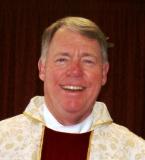
on Sunday, July 5, 20206 by Fr. Gene Tucker, Interim Pastor
“I CAN SEE IT FROM HERE, BUT I’M NOT THERE YET”
(Homily texts: Romans 7: 15–25a)
Let’s
ask ourselves some questions.
First
of all, do I have a perfect past in my life, from the beginning up until now?
Secondly,
do I have a forgiven past? That is to say, has God forgiven me for the ways in
which I’ve fallen short of His perfect will for me?
Now
then, I think the answer to the first question must surely be, “No”, none of us
has a perfect past. I know for certain that I do not have a perfect past. In
some ways or another, either big and noticeable ways, or in small and seemingly
insignificant ways, all of us have managed to miss the mark (a classic
definition of sin, by the way). We haven’t attained the heights of God’s
perfection. It matters now whether our failings are – by human standards and
human reckonings – big or small. In God’s eyes, all are failures.
The
answer to the second question can surely be “Yes”, we can have a forgiven past,
if we are willing to concede our own failings, and to ask for that forgiveness.
Something happens when we come face-to-face with ourselves, and when we seek
God’s forgiveness, and ask for God’s help to amend our lives and to endeavor to
live – with the help of the Holy Spirit – a life that is pleasing to God.
Before
we take a close look at St. Paul’s admission of his own spiritual condition, as
we read it in our epistle reading for this morning, from his Letter to the
Romans, chapter seven, we ought to note that Christians, in times past and even
today, have wrestled with the issue of perfection. More properly, we ought to
note that some Christians maintain that we can – with God’s help – attain to
perfection in this life. In the area where we ministered for seven years, there
was a clergy colleague who maintained we could, actually, attain to perfection
in this life. When I heard what he thought, I went home and said, “What planet
is he living on?” As we look back into Christian history, others have
maintained that perfection is attainable. Of course, we ought to note that such
attitudes are possible only when we close our eyes to the things in human
nature we don’t want to see. If we do that, then things look pretty good. (So
then, St. Augustine of Hippo’s assessment of the human condition is right on
the mark. For he said that we human beings are so easily fooled.)
Paul,
in the admission of his own spiritual condition that we hear this morning, says
that his eyes are wide open to the entire scope of his life and his behavior.
He says that he knows what God’s perfect will is, but he also says he can’t
attain that level of perfection. He says there is a war going on inside of hum:
His earthly and human characteristics are engaged in battle with his awareness
of God’s will.
Isn’t
this admission refreshing? Refreshing in the sense that such a hero of the
faith as the Apostle Paul admits that he, along with the rest of us, wrestle
with our fallen nature and God’s nature, which has been implanted within us at
our baptisms.
Turns
out, we’re all in the same spiritual boat, it seems.
Why is
this so?
I
think the answer lies in the origins of our sinful desires.
To see
this more clearly, consider some of the Seven Deadly Sins.
Each
of these are misuses of some naturally-occurring need within our natures, needs
which ensure our wellbeing, and even our survival.
For
example, avarice (an older word for “greed”) stems from our need to have enough
of our basic needs met in order to ensure our survival.
For
another example, gluttony is the misuse of our need to eat.
You
see the pattern.
Well,
of course, the reality is that these basic needs aren’t going to go away. We
will continue to have our basic needs met. We will continue to have a need to
eat. (Just to cite two examples.)
We
are, therefore, between those things that – if misused – will ensure that we
miss the mark of God’s holiness and righteousness, and God’s holy nature and
God’s holy will.
That
condition will continue so long as we are in this life.
What
are we to do, then?
Perhaps
the answer would be that, whenever we are tempted to forget God’s will and
God’s ways, we might pray for God to intervene, to place Himself and His will
between us and our temptations.
If we
do that, then perhaps it’ll be easier for us to turn away from those things
which separate us from God when they come around again, as they surely will. We
get stronger, we get more proficient in saying “No” to those sorts of things.
Be sure of this, however: We will continue to need the assistance of the Holy
Spirit to be able to refine away those things that do not bring honor to God.
In the
course of this life, whenever we experience a victory over sin, then we can
join our voices to Paul’s and give glory to our Lord Jesus Christ, whose own
victory over sin and death gives us the hope of victories over those same
things.
AMEN.