Jeremiah 31: 31–34 / Psalm 46 / Romans 3: 19–28 / John 8: 31–36
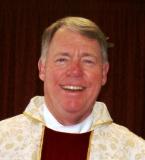
This is the written version of the homily given at Flohr’s Evangelical Lutheran Church (ELCA) in McKnightstown, Pennsylvania on October 25, 2026 by Fr. Gene Tucker, Interim Pastor.
“THE CHURCH’S OUTWARD APPEARANCE & ITS INNER REALITY”
(Homily text: John 8: 31-36)
On the
Eve of All Saints’ Day, October 31st, in the year 1517, a German monk by the
name of Martin Luther nailed a series of talking points to the door of the
castle church in the city of Wittenburg. We might think that Luther’s posting
of these “95 Theses” was an unusual event. It was not. It was customary, among
the college in that city and among its teachers in the seminary, to post such
things. The posting was, essentially, an invitation to a discussion of various
topics of interest.
Luther
had a lot on his mind. He had a lot he wanted to talk about …. ninety-five
topics, in fact.
His
was a troubled spirit, for he was burdened by a growing reality that the Church
he was a part of was failing to accurately mirror the teachings of the Lord it
proclaimed (at least, publicly) it claimed to be following.
Before
we look at the specifics of the burdens that were growing in Luther’s heart, we
would do well to remind ourselves of the tenor of the times in which Luther
lived.
The
Church in the West was governed and led by the Bishop of Rome, better known as
the Pope.
To
Rome, vast amounts of wealth went. (One estimate was that, in England, the
Church was siphoning off close to one-quarter to one-third of the nation’s
annual economic output. Much of this fundraising was done through the selling
of Indulgences by which, the Church claimed, it could pardon time spent in
Purgatory.)
In
Europe generally, the spirit of the Renaissance was flourishing. This movement
lifted up the human spirit and the human person. The old attitudes and ways of
the medieval period were fading away. It was a time of growing national
awareness. In Germany, this took the form of the growing power of the various
German princes. In Luther’s case, that powerful prince was the Elector of
Saxony. In England, it was King Henry VIII. Furthermore, another German, Gutenberg,
had invented the process of printing with moveable type. Printing this way
meant that pamphlets, newspapers, and yes, the Bible itself, could be printed
in large quantities. (The invention of printing in this way is similar in
impact to the development of the internet in our own time.)
Now
then, what were Luther’s main concerns? Perhaps these:
·
A
growing chasm between the Church’s visible and outward appearance, and its
inner spiritual reality. Church offices (such as Bishops and Archbishops) were
sold (for money) to high-ranking persons, without regard to their spiritual
qualifications for such offices.
The
Church either tolerated wars between various areas under its control, or it
actively took part in them.
The
Church was in love with money, worldly power and prestige. (When I was in
seminary, I heard a phrase that describes this well: “Whenever the Church gets
in bed with the State, it’s always a bad thing”.)
Many
of the Church’s clergy lived sinful lives.
·
The
Church was failing to meet the spiritual and physical needs of the people in
its care.
Its
worship services were in Latin, a language, that – even then – few people
understood.
The
common people received the Sacrament of Holy Communion (the Mass) only very
infrequently.
In
many of the larger churches and cathedrals, a wall separated the area where the
common people were from the clergy, who sat in the area close to the altar.
Consequently, the common people – many of them – had never witnessed a
celebration of Holy Communion.
This situation weighed on Luther
heavily. In particular, he felt no sense of forgiveness for his own
shortcomings and sins. All of the Church’s rites failed to meet with a sense in
his mind and heart that God was looking with favor and forgiveness upon his
spiritual condition. (It didn’t help that the Church’s emphasis was on a
person’s unworthiness and sinfulness, a useful took for selling Indulgences, by
the way…there was little or no sense of celebrating God’s goodness and God’s
mercy.)
Yes, as he began to read the Holy
Scriptures, and – in particular – St. Paul’s Letter to the Romans, he realized
that the Church had it all wrong. St. Paul affirms the central truth that all
of us – each and every one of us – has fallen short of God’s high standard of
morality and unblemished living. Yet, Paul says, God’s mercy can overcome all
of those conditions, and God’s mercy is received through Faith, it is God’s
free gift (Grace) which provides the basis for God’s forgiveness, and this
divine Grace is received by those who come in Faith to receive it.
Eventually, we’ve come to understand
that there are three phrases which sum up Luther’s position: Scripture alone –
Grace alone – Faith alone. (Or, in Latin: Sola Scriptura – Sola Grazia –
Sola Fide.)
With the posting of the “95 Theses”,
what we now know as the Protestant Reformation was underway. Their posting on
October 31, 1517 generally marks the beginning of the Reformation.
Luther’s intent was not to abolish the
Western Church and replace it with something else. Instead, Luther wanted the
Church to amend is wayward ways.
But the Church would have little
interest in such changes, not in the sixteenth century. Moreover, in that day
and time, the Church could find some very persuasive means to convince those
who would “buck the system” in the way that Luther was doing to change their
minds. Bluntly put, Luther’s life was in danger. Enter the Prince Elector of
Saxony, who became Luther’s protector.
For the next twenty-nine years, Luther
worked to change the Church’s ways. He didn’t want the movement he had started
to result in a separation in the Church. (Luther, by the way, did not want the
Church that eventually emerged from the Reformation to carry his name…he
preferred that it would be called the “Evangelical Church”.) He translated the
Bible into the German language (and, in the process, did a lot to bring about
that language’s development).
We would do well to remind ourselves of
some of the Reformation’s core values:
·
Holy
Scripture as the source of God’s will and God’s intentions, both for the Church
and for the people in it, and for the people in the world. The Bible is,
therefore, the Church’s anchor.
·
Worship
services are to be in a language that people can understand.
·
Lay
persons should have a much more active role in the Church. They should be able
to read the Bible for themselves in a language they understand, and they should
receive the Sacrament of Holy Communion regularly.
In the
wake of the Reformation, much has changed, and much of that change has been for
the good. Consider, for example, that the part of the Church that is headed by
the Pope (now appropriately known as the Roman Catholic Church) conducts its
services in languages that its people can understand. Also, the Roman Church
now encourages its people to read the Bible in their own language. And, it
encourages its lay people to be more active in the Church’s worship life and in
its governance.
Going
forward, perhaps we might pray that the Holy Spirit will continue to encourage
the various pasts of God’s Church to be more unified in common witness to our
Lord Jesus Christ, and also that the Church will remain true to its founding
principles, as they are found in Holy Scripture.
AMEN.