Hosea 5:15 – 6:6 / Psalm 50: 7–15 / Romans 4: 13–25 / Matthew 9: 9–13, 18–26
This is the written version of the
homily given at Flohr’s Evangelical Lutheran Church (ELCA) in McKnightstown,
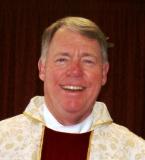
Pennsylvania on June 7, 2026 by Fr. Gene Tucker, Interim Pastor.
“CHANGE???!!!”
(Homily text: Matthew 9: 9–13, 18-26)
Some
years ago, there was a comedy show that came out of Canada called “Red Green”.
It appeared on Public Television. The setting for “Red Green” was a men’s
clubhouse. Each episode featured caricatures of typical “guy” people, like the
guy who’s fiddling with an old pickup, or the nerdy guy, or the one who’s
creating some sort of a Rube Goldberg device.
Each
week’s show began the same way, as the men filed into the men’s clubhouse and
sat down on benches. Then, the leader would come in and invite everyone to
stand for the Man’s Prayer, which went something like this: “I’m a man, and I
can change, if I have to, I guess. Amen”.
Now,
let’s shift this a bit, and offer what might be the Christian’s Prayer, which
might go something like this: “I’m a Christian believer, and a follower of
Jesus. The Lord expects me to change, and will help me to do so. Amen.”
Our
appointed Gospel text for this morning conveys to us the accounts of people
whose lives were changed as a result of their encounter with Jesus: The
disciple Matthew; the tax collectors and sinners that Jesus was hanging around
with; the leader of the synagogue whose daughter had died; and the woman who’d
had a bleeding disorder for twelve years.
Each
one of these people’s lives were radically different after their encounter with
the Lord, than they were before their encounter.
It’s
worth noticing that Jesus is willing to meet each of these where they are when
the Lord encounters them. He doesn’t demand that they do something in order to
be worthy of the Lord’s compassion and care. And, it’s worth noting, He’s quite
willing to begin a relationship right where He finds each of these.
But,
that’s only part of the truth of the matter. Change is an expectation. Change
is the evidence of a genuine relationship with God through Christ. True enough,
“Come as you are” is correct. But the journey, if it is to be a genuine one,
never ends there. We may not continue living in ways that counter God’s design
and desires for us.
Today,
many churches reach out to the outside world, saying, “Come as you are”.
That
approach is true enough. There’s plenty of evidence in Holy Scripture that God
is quite willing to start working with us and within us from whatever place He
finds us.
We
might observe that the pages of the Bible are filled with accounts of people
whose lives changed once they’d come into relationship with God. The accounts
in the Bible also contain some examples of those who encountered God, but who
spurned God’s offer to begin a relationship. We could look at Scripture from
this vantage point.
For
whatever reason, God gives each of us free will. For some reason, God’ doesn’t
want us to be automatons or pieces on the chess board of life. He grants each
of us the ability to choose to relate to Him, and to accept – or reject – God’s
offer of relationship, a new and fuller life, and a genuine relationship.
Returning
to the people we reach about in this morning’s Gospel, we can see that Matthew
had the ability to remain as a tax collector, and not to choose to follow
Jesus. The tax collectors and sinners could have chosen to remain as they were.
The leader of the synagogue could have spurned suggestions that Jesus could
help his daughter. The woman with the bleeding disorder could have chosen not
to seek healing from the Lord.
You
and I face the same juncture: We can choose for God, or not. The choice is ours
to make.
AMEN.