Jeremiah 20: 7–13 / Psalm 69: 7–18 / Romans 6: 1b–11 / Matthew 10: 24–39
This is the written version of the
homily given at Flohr’s Evangelical Lutheran Church (ELCA) in McKnightstown, Pennsylvania
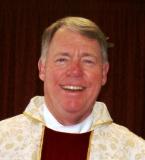
on Sunday, June 21, 2026, by Fr. Gene Tucker, Interim Pastor.
“DIVINE MATH”
(Homily texts: Romans 6: 1b–11 & Matthew 10: 24-39)
One of
life’s essential skills is the ability to manage things that are valuable.
For
example, we teach our young drivers to be careful operators of our vehicles, so
that those vehicles will serve for a long time, avoiding accidents. We teach
our children to manage their finances, so that they won’t spend more than they
have. Just two examples.
We
take steps to protect that which is valuable, being sure to preserve it from
loss.
Human
assessments of value, and of preserving value, are very different from God’s
way of assessing and assigning value to things, including – of course – our
value as children of God to God. We could call God’s way of measuring worth and
value “Divine Math”.
Divine
Math tells us that to lose ourselves is to find ourselves, our truest selves.
What?
Shouldn’t
I want to “play it safe”, to avoid situations in which I could lose something?
Something like my plans for my life? Something like my career, or perhaps my
life’s path up to this point? Something like a part of my life that I have
declared to God that it is “off limits”?
Yes,
precisely. That’s the way God thinks.
To
some extent, “Divine Math” is a mystery. The walk of faith is made up of some
things that are certain. But other things – from a human point-of-view at least
- are mysteries. (It’s worth noting that, in our communion prayer, we say, “Let
us affirm the mystery of faith”.)
So,
it’s a mystery why someone would leave a highly successful career, in order to
be a missionary in some faraway place. The reason: To answer God’s call to
serve.
So,
it’s a mystery why someone would begin working with a ministry that serves
people who are dealing with addictions, or who are homeless, or who are in some
sort of distress. The reason: To answer God’s call to serve.
We
could say the same thing about those who answer God’s call to enter the
ministry, be it a lay ministry or an ordained one. In some cases, answering
this sort of a call involves radical changes in one’s life.
Our
Lord Jesus Christ admonishes us, as He proclaims God’s assessment of worth. In
our Gospel text for this morning, He says, “Whoever finds his life will lose
it, and whoever loses his life for my sake will find it/” Divine Math.
We
would do well to mention two other examples of Divine Math.
How
can it be that dying leads to life?
Think
of our Lord’s sacrifice on the cross on Good Friday. His death is the necessary
prelude to His rising to new life on Easter Sunday morning. Our Lord couldn’t
have risen on Easter Sunday unless He had freely given up His life the Friday
before. So we, as Christian believers, are called to take up our cross – or, as
St. Paul says in our reading from his letter to the Romans, “Now if we have
died with Christ (in Baptism), we know that we will also live with him”.
(Romans 6:8)
Divine
Math tells us that, to walk the way of the cross, is to find ourselves on the
path to true and lasting life, in this life and in the life of the world to
come.
This,
my friends, is a mystery. It defies our normal way of thinking.
We
mentioned baptism a moment ago. Holy Baptism is a death-leading-to-life event.
The outward and visible sign of this Sacrament is water. Water can kill, but
water is also essential for life to exist. It is, therefore, the perfect sign
of the mystery that happens in baptism.
Paul
makes an excellent exposition of the meaning of baptism, linking it to Christ’s
death, and to His rising again.
Another
mystery.
Our
Lord’s instructions to His early followers informed them that, unless they were
willing to loosen their grip on those things that were of value, they could not
be ready to follow God’s call to take up their own cross, in order to follow
the Lord.
Those
same instructions are given to us today. We are called to loosen our grip on
those things that hinder our ability and our willingness to follow the Lord.
If we
are willing (with the assistance of the Holy Spirit) to allow God’s call to
permeate our minds and our hearts, then we are ready to find our life’s truest
meaning, answering God’s call, in whatever fashion and form that call may take.
AMEN.