Acts 2: 1–21 / Psalm 104: 24–34, 35b / I Corinthians 12: 3b–13 / John 20: 19–23
This is the written version of the
homily given at Flohr’s Evangelical Lutheran Church (ELCA) in McKnightstown,
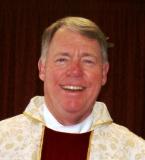
Pennsylvania on Sunday, May 24, 2026, by Fr. Gene Tucker, Interim Pastor.
“THE MESSAGE OF THE PENTECOST EVENT: CHANGE!”
(Homily text: Acts 2: 1-21)
Whenever
God intervenes in human affairs, one thing is certain: What happens afterward will be different than
what came before God made His presence known.
On
this Feast of Pentecost, we are reminded that God came “crashing into” the
lives of the Apostles (and perhaps about 120 others)[1] as
the Holy Spirit came like a “mighty, rushing wind”, and with “tongues of fire,
which appeared above the heads” of those gathered that day.
The
Holy Spirit’s descent made it possible for those gathered that day to speak and
to be understood in languages that they had not previously been able to either
speak. Talk about change!
Before
we explore the changes that the Pentecost event made in the life of the body of
believers, that is, the Church, and in the lives of individual believers, let’s
remind ourselves about the original meaning and importance of the Feast of
Pentecost.
In the
Jewish calendar, the Feast of Pentecost was one of three major festivals
observed each year, and was celebrated fifty days[2] after the Feast of Passover. It was observed on the first day of the week, and
was an ingathering of the first fruits of the harvest. (Remember this aspect of
the festival, for – I think – it has a meaning for Christian believers that is
similar. We’ll get to that in a moment.)
Now
then, we began by saying that whenever God chooses to intervene in human life,
change is bound to happen. In the Pentecost event, that change became a reality
for the Body of Christ, the Church, and for the individual believers who were
members of it.
We
will begin by looking at the changes that the Church came to experience.
Notice,
first of all, that there were people from all over the known world in Jerusalem
at the time of the Holy Spirit’s appearing. That’s because the Feast of
Pentecost was one of those three major festivals that devout Jews would feel
compelled to attend, if at all possible. So it is that Luke (the writer of the
Book of Acts) provides for us a list of the places from which those attending
the festival had come from.
We
could easily come to the conclusion that God wanted the early Church to know
that the great, good things that God had done in raising Jesus Christ to new
life on Easter Sunday morning was Good News (Gospel) for the whole world, and
not just for people in Jerusalem, or in the region around Jerusalem, Judea, or
– for that matter – not for Jews only, but for Gentiles as well. (Notice that
Luke tells us that there were Gentile converts to Judaism among the crowd that
heard the believers speaking: His term for those people is “proselytes”.)
Talk
about change! The idea that God’s goodness was to be received by all people,
everywhere, was a challenge to the early Church. As we read through the early
chapters of the Book of Acts, we see that Peter had had an encounter with
Cornelius[3], a
Roman centurion and someone who was known as a “God-fearer”[4]. But
Peter is initially reluctant to associate with Gentiles. Eventually, Peter
comes to understand that God’s intent is that all people, everywhere, will come
into relationship with Him through Jesus Christ. Peter’s understanding echoes
his quotation from the Old Testament prophet Joel, made at Pentecost, as Peter
says, “…it shall come to pass that everyone who calls upon the name of the Lord
shall be saved”. A bit later in the Acts
account, we see that Paul and Barnabas were spreading God’s great, good news
throughout the known world, and among Gentiles.
These
initiatives created a major crisis in the early Church. The difference of
conviction about whether or not Gentiles could come to faith in Christ, and
whether or not they had to convert to Judaism in order to do so, came to a head
at the Council of Jerusalem, which was held in the year 49 AD.[5]
The
Council’s decision was that Gentiles did not have to convert. The Church had
come to understand the implications of the Holy Spirit’s intervention at
Pentecost.
Notice
that it took about twenty years[6] or
so for the Church to change its understanding about who it was who could come
to faith in Jesus. Change in the Church sometimes takes awhile.
With
the decision to allow non-Jews into the Church, the Church began to look
forward, not back. The change in perspective is due, directly, to the coming of
the Holy Spirit at Pentecost, and to the Spirit’s continuing influence on the
early Church.
Individuals
in the Church who had come to faith also encountered change as a result of
their new relationship with the Lord.
They,
too, were to look forward, not back. They, too, were to accept and receive new
believers as the faith that they had come to know was now the gift of others,
as well. Lives changed, as encounters with God made a new way of living a
requirement, for the Lord’s will is that believers will live upright and holy
lives.
Individuals
in the Church were to lend their gifts to the outpouring of God’s Good News to
the world. Just as the original meaning of Pentecost was to celebrate the
in-gathering of the first fruits of the harvest, so, too, was the Church to be
about the business of gathering in new believers into the kingdom of God. In
the process, individual wills, individual desires were to take second place to
God’s will and God’s vision for the future.
What
does all of this mean for the Church today? What does all of this mean for our
local part of the Church, Flohr’s Lutheran?
Perhaps
this: First of all, a genuine encounter with the Lord means that we are called
to live holy and upright lives. Second of all, it means that we are to proclaim
God’s great, good news to those around us. As we do so, we are called to
proclaim that Good News (Gospel) by what we do, and – if necessary – by what we
say. And, finally, any encounter with God means that change is inevitable, as
we submit our own wills and desires to God’s will and God’s desires.
So may
these things be.
AMEN.
[1] It isn’t possible to be sure, judging from Luke’s narrative, exactly how
many were present at Pentecost. Luke mentions the original twelve Apostles (see
Acts 1:13), where Luke names the Apostles who were present. But then, at Acts
1:15, he mentions 120 persons. In Acts 2:1, he says “they” were all together at
Pentecost.
[2] The word by which we know this festival is derived from the Greek word
for “fifty”, Pentecost.
[3] See Acts, chapter ten, for the account of Peter’s encounter with
Cornelius.
[4] A “God-fearer” was a Gentile who had come to believe in the God of
Abraham, Isaac and Jacob. Perhaps some of these Gentiles hadn’t formally
converted to Judaism, but were believers, nonetheless.
[5] Luke describes the events of the Council in Acts, chapter fifteen.
[6] The Council of Jerusalem took place some twenty years or so after Jesus’ death and resurrection, and after the Pentecost event.