Genesis 1: 1 – 2:4a / Psalm 8 / II Corinthians 13: 11–13 / Matthew 28: 16–20
This is the written version of the homily
given at Flohr’s Evangelical Lutheran Church (ELCA) in McKnightstown,
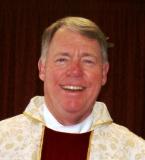
Pennsylvania on Sunday, May 31, 2026 by Fr. Gene Tucker, Interim Pastor.
“UNDERSTANDING THE FULNESS OF GOD’S NATURE AS FATHER, SON AND
SPIRIT”
(Homily texts: Genesis 1: 1 – 2:4a, and
Matthew 28: 16-20)
God’s
nature is hidden from our human eyes and understanding, except to the extent
that God, Himself, has chosen to reveal His nature to us.
It
should be noted that God’s self-revelation is a wonderful gift to humankind.
That
said, we human beings have come to understand God’s nature in its fulness as
One God in Three Persons – or – as it is usually stated, as Father, Son and
Holy Spirit: The Holy Trinity.
Such
an understanding of God’s nature didn’t come to full acceptance overnight. Nor
did this understanding come quickly. Instead, the process of understanding
God’s self-revelation took quite a long time to develop and to be accepted.
That’s often the case when God chooses to tell us something about Himself.
Before
we explore some of the process by which God pulled back the veil of mystery
which surrounds His being, and the process by which human beings came to
understand what God had revealed, let’s take a moment to explore why Trinity
Sunday occupies the place that it does in the Church Year.
Trinity
Sunday is the only Sunday in the year whose theme is theological in nature.
(Remember that theology is the field of study and contemplation which attempts
to understand God’s nature and God’s acting.) Recall that, as the Church Year
unfolds, we anticipate and then celebrate two major events in our Lord Jesus
Christ’s life and work: His birth in Bethlehem (celebrated at Christmastime),
and then His resurrection (on Easter Sunday). Preceding these two celebrations
are two preparatory seasons: Advent (prior to Christmas) and Lent (prior to
Easter). Following the Christmastide season is the season of Epiphany, as we give
thanks for the spread of the Good News (Gospel) to the non-Jewish world, the
Gentiles.
Then,
following Eastertide, we have the season after Pentecost, which occupies about
half of the yearly calendar. (The season after Pentecost makes use of the color
green, signifying growth of the Good News in the world and in our own lives.)
Now
then, Trinity Sunday is the culmination of the process of reflection upon God’s
gift of His son, Jesus Christ. Tracing our steps backward to Christmas, we
celebrate His coming among us as one of us, as He takes on our humanity. Then,
at Easter, we celebrate His victory over death. Then, we recall the coming of
the Holy Spirit in a unique and powerful way at the feast of Pentecost.
With
the coming of the Spirit, we are now aware of the Spirit’s unique and
irreplaceable role as God’s guiding and empowering presence. With this
awareness, we are equipped to go out into the world, knowing and understanding
(as much as we, as human beings are capable of understanding) the nature of the
God who calls us into relationship with Him, and who sends us out as His
representatives in the world.
All of
this reflection on the path that the Church Year places before us, we are now
ready to explore the meaning of Trinity Sunday.
Trinity
Sunday’s theme is to remind us of the fulness of God’s nature. It won’t do for
us as Christian believers to be aware of only part of God’s nature. Instead, we
are called to attempt to hold in mind that God’s fulness exists in Three
Persons, while being but One God.
We are
encouraged to remember that, as we think about one Person of the Trinity, the
other two Persons are also and always present. (God cannot be separated into
different parts.)
Holding
this awareness in our thinking and believing means that we now have all the
tools that God intends for us to have in order to be good and effective workers
in God’s field in the world. To my thinking, at least, this is the importance
of Trinity Sunday.
We’d
do well to reflect a bit on the understanding of the Holy Trinity, as it
developed over time.
We can
begin with our reading from Genesis. In this reading, one can see the presence
of the three Persons of the Trinity. Notice that the text begins by saying, “In
the beginning, God created the heavens and the earth”. This would be God the
Father. Then, the text tells us that God’s Spirit hovered over the waters.
Then, a bit later, the text tells us that God spoke, and things began to come
into being.[1]
The Christian understanding of God’s nature as One God in Three Persons stems from our Lord Jesus Christ’s teachings about His relationship to God. He uses father and son imagery. Then, with respect to the Spirit, He tells His disciples that He is going to send them another comforter, an Advocate[2], who will lead them into all truth.[3]
In
summary, what we have come to believe, as Christian believers, stems from our
Lord’s teaching.
What
an enormous and valuable gift that teaching is!
God be
praised.
AMEN.
[1] At this juncture, it’d be helpful for us to reading John’s Gospel
account, and specifically John 1: 1–18. There, we read that, in the beginning
was the Word, and the Word was with God, and the Word was God. Biblical
scholars have long noted the similarities between Genesis 1:1 and John 1:1 and
following.
[2] See John 16: 4b–15.
[3] The Nicene Creed affirms the conviction that
the Holy Spirit “proceeds from the Father and the Son”. This phrase, which was
added a good many years after the adoption of the Creed, is probably based on
the Lord’s teachings, as we read in John, chapter sixteen. The phrase in the
Creed continues to constitute a difference of conviction between the Eastern
(Orthodox) Church and the Western Church.