Ezekiel 18: 1–4, 25-32 / Psalm 25: 1–9 / Philippians 2: 1–13 / Matthew 21: 23–32
This is the written version of the
homily given at Flohr’s Evangelical Lutheran Church (ELCA) in McKnightstown,
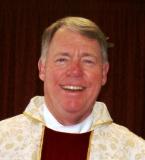
Pennsylvania on Sunday, September 27, 2026 by Fr. Gene Tucker, Interim Pastor.
“A MYSTERY OF FAITH: TO LOSE IS TO GAIN”
(Homily text: Matthew 21: 23–32)
Just a
few minutes from now, as part of our Communion liturgy, we will affirm the
Mystery of Faith, saying, “Christ has died, Christ is risen, Christ will come
again”.
Another
mystery of faith, not part of our worship, but an indispensable reality of our
walk of faith, is this principle: In order to gain God’s favor, we must be
willing to lose our own sense of self-worth, importance and status.
We’ll
pick this theme up again in a moment.
Before
we do, let’s remind ourselves of the setting of this morning’s appointed Gospel
text, from Matthew, chapter twenty-one.
At the
beginning of chapter twenty-one, Matthew describes Jesus’ triumphal entry into
the Holy City of Jerusalem, on Palm Sunday. Then, we read that He drove the
money-changers out of the Temple (see Matthew 21: 12–13).[1] This
action set up the confrontations with the authorities that would culmination in
Jesus’ death on Good Friday.
Then,
the Lord curses a fig tree that bore no fruit on His way back into the city
(see 21: 18–22). The meaning of this may have to do with the unfruitful ways of
God’s people 2,000 years ago, and the importance of the Lord’s disciples to
have faith, which will bring about success and fruitful work in God’s name.
This
brings us to today’s confrontation.
The
chief priests and the elders of the people approach Jesus, and demand to know
by what authority He is teaching. The subtext here is to challenge His learning
and background. Elsewhere in the Gospel accounts, we read statements like,
“Isn’t this Joseph’s son (meaning, the son of a common laborer, a carpenter)?”
And also, “Where did this man get all this (learning)?”
Jesus
sees through their intent, posing a question to them, instead of answering
their question. He asks, “The baptism of John, where did it come from?”
Matthew
tells us that they discussed their response among themselves (perhaps they
stepped aside to do so).
Their
quandary in crafting an answer tells us a lot about their values and their
concept of themselves. They ponder the answer, noting that if they say that
John’s baptism was of heavenly origin, then Jesus will ask them why they didn’t
believe and accept John’s message. On the other hand, they think, if we say
that John’s baptism was of human origin, then they realize that they will incur
the wrath of the people, who regarded John as a prophet. So, they say to Jesus,
“We do not know”.
It’s
obvious that the chief priests and the elder of the people valued their place
in society, their prestige and their power. They are afraid of losing those
perks of being of the priestly caste of the prominent leaders of the people.
They seem
to be more concerned with those things than they are of the possibility that
someone’s work and message could actually be the hand of God at work among
them.
How
could the chief priests and the elders have missed an important lesson, which
is found throughout the sacred writings of Moses[2]? It
is that message which says that God hates haughty and proud people who are
unwilling to lose their own sense of self-importance.
Following
the non-answer given by the chief priests and the elders, Jesus tells a
parable, now known as the Parable of the Two Sons. In the parable, two sons are
described: One initially refuses to go work in the vineyard, but later on, he
reconsiders and goes. The other one give lip service to his father, agreeing to
go, but doesn’t.[3]
Then,
Jesus tells the chief priests and the elders that the tax collectors and the
prostitutes will go into the kingdom of God before them, because they saw God’s
hand at work in John’s ministry.
The
difference between the chief priests and the elders and the tax collectors and
the prostitutes is that the latter group has little-to-nothing to lose. They
have no prestige[4].
They had no standing in society. They were to be shunned and to be looked down
upon.
Those
who have little-to-nothing to begin with have little to lose when God’s call
comes along. If we think about it, those who think they have a lot (a prominent
place in society, many possessions, for example) must overcome their warped
sense of self-importance in order to enter the kingdom of God. No wonder that
Jesus says that it will be more difficult for a rich person to enter the
kingdom than it is for a camel to thread the eye of a needle.
In
truth, each and every one of us is – in God’s sight – entirely without the
ability to vaunt ourselves into acceptance with God. By our own merits, we have
no standing with God.
So
then, to lose any sense of self-importance that may lie in our hearts and minds
is the beginning of a rich and fruitful relationship with God.
If we
think about it, that’s the essential meaning of Holy Baptism, for in Baptism,
we are admitting that we cannot save ourselves, and that we are dependent upon
God’s mercy and love to accept us, and to begin to rework within us our own
warped sense of self.
AMEN.
[1] The motivation for Jesus’ actions may lie in the practices that were
going on in the Temple: The coinage that circulated at that time was Roman
coinage, which bore the image of the emperor. As such, it was forbidden to be
used for the buying of animals that were part of the sacrifices which were
required by the Law of Moses (Torah). So the Temple used special coinage. The
problem was that the rate of exchange between Roman and Temple coinage was
governed by the chief priests. They were benefitting (and getting rich) off of
this practice. In other words, they had a monopoly and a racket going.
[2] The chief priests accepted only the writings attributed to Moses
(Genesis, Exodus, Leviticus, Numbers and Deuteronomy) as being scripture.
[3] Parables place something that people will generally know alongside some
truth. This parable might place the tale of the two sons alongside the
attitudes of the chief priests and the elders, when compared to the Gentiles
who had come to faith in Jesus, and who were members of the church where
Matthew was (quite likely) active.
[4] Tax collectors were especially hated in that day and time, because they were often Jews who were collaborating with the Roman occupation by collecting taxes on behalf of the Romans.