Jeremiah 15: 15–21 / Psalm 26: 1–8 / Romans 12: 9–21 / Matthew 16: 21–28
This is the written version of the
homily given at Flohr’s Evangelical Lutheran Church (ELCA) in McKnightstown,
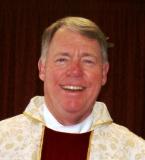
Pennsylvania on Sunday, August 30, 2026, by Fr. Gene Tucker, Interim Pastor.
“GOD’S WAY IS HIGHER THAN OURS; GOD’S WAY IS BETTER THAN OURS”
(Homily text: Matthew 16: 21-28)
Wouldn’t
it be wonderful if, when we are driving somewhere, that there’d be no work
zones, or accident sites, or detours? Yes, indeed … perhaps most of us would
really like such a situation.
Wouldn’t
it be wonderful if the things we use worked perfectly all the time (stuff like
our vehicles, for example)? Indeed, that’d be pretty terrific, most of us would
agree.
Wouldn’t
it be wonderful if life’s plan unfolded smoothly, with no wrinkles, challenges
or setbacks? Indeed, that’d be a blessing.
Of
course, the truthful answer to each of these questions above is that there will
be challenges, disappointments, and changes of plan as we make our way through
life. But, we can be assured that, if we are attentive to God’s involvement in our
lives, then, in the final analysis, all will be well. God’s walk with us,
day-by-day, doesn’t mean that life will be without its ups and downs. But it
does mean that we aren’t making this journey alone, and it does mean that we
have a strong ally on our journey.
But I
digress a little.
This
morning, we hear, in our Gospel reading, Jesus’ rebuke of Peter, those
well-known words, “Get behind me, Satan! You are a hindrance to me. For you are
not setting your mind on the things of God, but on the things of man”.[1]
The
Lord’s harsh words were spoken in response to Peter’s outburst, in which he
said that the Lord must not go to Jerusalem, suffer and die, and be raised on
the third day to new life.
Peter’s
walk of faith is a lot like those road detours, accident sites and work zones
we began this sermon with, for Peter’s journey of faith had just had some
really smooth sailing, as he acknowledged Jesus to be the Son of the living
God.[2] The
road ahead for Peter seemed to be wide open, as he had come to the realization
of Jesus’ true identity.
But
then, Peter stumbles. We could characterize Peter’s thinking this way: “No,
Lord, you cannot go to Jerusalem You cannot confront the chief priests and the
others in charge there, for we know how such confrontations end: You will be
killed. No, Lord, you can’t do this”. Of course, I’m paraphrasing, but that is
the gist of Peter’s objection.
Each
one of Jesus’ disciples knew the “lay of the land” in the society in which they
lived. They knew how an encounter, a confrontation, with those in charge in
Jerusalem would unfold.
They
also knew exactly the meaning of what Jesus would say next” “If anyone would
come after me, let him take up his cross and follow me”. It would be easy to
imagine that each and every one of the Lord’s original band of followers had
seen the uprights for crosses at road intersections across the land, stark and
silent reminders of the fates for those who stepped out-of-line. They knew
exactly what “taking up one’s cross” meant.
It must have been a chilling thought.
But,
in the wider view of things, God’s plan is the plan that unfolded, even though
that plan didn’t seem to make much sense at the time. That plan involved the
path of confrontation, the path of suffering, the patch of death, but also the
path of resurrection, new life, and Good News for the entire world.
For,
if we think about it, if Peter’s view of the proper unfolding of things would
have been the way things actually unfolded, then it’s possible that we would
know Jesus today as a great, historical figure, one whose message touched many,
one whose message brought hope and meaning to thousands. We would know Jesus as
one of the great teachers of his – or any – age.
But
instead, we know Jesus as the risen Christ, the King of kings and Lord of
lords, that one who died, but who rose from the dead on the third day. We know
Jesus, the Christ, the Son of the living God, as the One who assures us that He
will be with us until the close of the age.[3]
Turns
out that God’s plan was a whole lot better, a whole lot greater, than whatever
Peter could have imagined.
Thanks
be to God.
AMEN.
[1] Matthew 16:23b
[2] See Matthew 16:18.
[3] Matthew 28:20