Exodus 12:1–14 / Psalm 116:1–2, 12–19 / I Corinthians 11:23–26 / John 13:1–17, 31b–35
This is the written version of the
homily given at Flohr’s Evangelical Lutheran Church (ELCA) in McKnightstown,
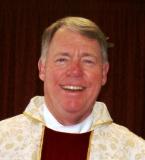
Pennsylvania on Thursday, April 2, 2026 by Fr. Gene Tucker, Interim Pastor.
“THE LORD WHO LEADS, ALSO SERVES”
(Homily
text: John 13:1–17, 31b–35)
In this Holy Week, 2026, we’re looking
at the major events that took place as Jesus made His way into Holy City of
Jerusalem on Palm Sunday, and then as the Last Supper took place on Maundy
Thursday, and as the Lord dies on Good Friday, and then as He rises from the
dead on Easter Sunday; from the perspective of the ways in which our Lord Jesus
Christ leads us, but also serves us.
Let’s retrace our steps by returning to
the events of Palm Sunday.
On that day, we remarked earlier this
week, that the Lord entered Jerusalem, riding on a donkey. No, not a white
horse with sword held high, but on a donkey. A donkey – then as now – isn’t
regarded as being a creature with much of a high estimation. Donkeys are
working animals, used to carrying things. The manner of the Lord’s entry into
the Holy City sets the stage (it seems to me) of the servanthood nature of His
work for us and among us. But then, last Sunday, we also noted the importance
of the greeting that awaited the Lord as He rode along the way into the city.
The crowds shouted, “Hosanna to the son of David. Blessed is the one who comes
in the name of the Lord”. Notice that the reference to Jesus as the son of
David carries with it royal overtones, ones harkening back to the glorious days
of King David, 1,000 years earlier. In that way, the crowds affirm (it seems to
me) Jesus’ leadership.
Now, with the arrival of Maundy
Thursday, we are ready to look at the account of the events that took place at
the Last Supper, as we read them in John’s Gospel account.
(John, alone among the Gospel writers,
reports on Jesus’ washing of the feet of His disciples. John doesn’t narrate
the institution of the Lord’s Supper, as the other writers do, his interests
lie elsewhere.)
The significance of the washing of feet
might escape our notice, unless we remember how important that action was in
the ancient world. The roads of the day, for the most part, were dirt. They
were dusty in the dry seasons. Moreover, most people wore sandals of some sort,
not shoes. So it was that their feet got dirty. Washing them was a task that
was the business of slaves or of servants.[1]
For the Lord to remove His outer
garments, and to wrap a towel around Himself, in order to wash His disciples’
feet, was an affront to the usual expectations of the society of the day. We
can see this in Peter’s reaction to the Lord’s plan to wash his feet.
Washing feet was a lowly task. One
reserved for persons who had either never had their own freedom, or who had
lost it.[2] If the foot-washer wasn’t a slave, but was a
servant, we can still see that foot washing was reserved for persons for whom
there were very limited possibilities in life. Such persons were at the bottom
of the social pecking order.
Jesus places Himself among this bunch
of people, somewhere near – or at – the bottom.
But then, it is also the Lord who
institutes the Sacrament of His Body and Blood, the Eucharist, the Lord’s
Supper, the Mass.
This holy meal supported the Lord’s
disciples in that Passover meal, from which the Christian holy meal came forth.
The Lord continues to lead, but also to
support, uphold and serve His disciples, in ages past and still today, with His
presence in the bread and in the wine.
For to Christian believers, the Lord’s
Supper reminds us of the Lord’s suffering and death (the celebration of the
Eucharist is – at its heart – a bloodless sacrifice). For we believe and
maintain that this holy meal is much more than a simple memorial of what the
Lord did, and what He accomplished, in His death on Good Friday. No, for such
Christian believers, the Eucharist means that the Lord is really present[3] in
the bread and wine. We needn’t understand such a thing totally. The efficacious
effects and benefits of this Sacrament aren’t dependent upon our ability to
completely understand and grasp what’s going on as the Sacrament is celebrated
and received. The Lord has taken care of the meaning, and also the blessing, of
His presence among us and within us.
Thank you, therefore, gracious Lord,
for leading us into this eternal and ongoing gift, the gift of your very self.
Thank you, as well, for supporting and uplifting us, as you serve those who
love you and claim you as Lord and Savior.
AMEN.
[1] The Greek word we find in the New Testament, doulos, can mean
either slave, or servant.
[2] A Roman citizen could lose their citizenship if they’d been captured by
bandits and were sold into slavery.
[3] The idea that the Lord is present in the elements of the Holy Communion, or – as it is often characterized – in, under, around and through the bread and the wine, is often known as the Real Presence of the Lord. It is also known by a technical term, Consubstantiation.