Matthew 21:1–11 / Isaiah 50:4–9a / Psalm 31:9–16 / Philippians 2:5–11 / Matthew 26:14 – 27:66
This is the written version of the
homily given at Flohr’s Evangelical Lutheran Church (ELCA) in McKnightstown,
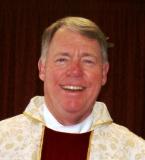
Pennsylvania on Sunday, March 29, 2026 by Fr. Gene Tucker, Interim Pastor.
“FOLLOWING A SERVANT-LEADER, BEING A SERVANT-LEADER”
(Homily
texts: Philippians 2:5–11, Matthew 21:1–11 & Matthew 26:14 – 27:66)
This morning, we stand at the beginning
of Holy Week.
One way to look at the sequence of
events that took place during this pivotal week in our Christian faith is to
see the reality of servant-leadership unfold.
This might require some explanation:
The servant aspect that is
present in events of this week has to do with the ways in which the Lord was
willing to empty Himself, in order to descend to the state of serving His
Father, and to serving you and me.
On Palm Sunday, our Lord Jesus Christ
came riding into Jerusalem on a donkey. A donkey, then as now, was a pretty
lowly animal. Notice that it is this lowly creature, a beast of burden, that is
the means of entry into the Holy City. Absent is the white horse, with its
rider carrying a sword in his right hand.
Our Lord’s servanthood reaches its
lowest point on Good Friday, as Jesus hangs on a cross, suffering a humiliating
death that was reserved for conquered peoples and for slaves. Crucifixion
involves the loss of all things: One’s dignity, one’s possessions, often one’s
family and friends; and – eventually and painfully – one’s life.
On the other hand, the Lord’s leadership
is also present:
Notice that it is a royal welcome (of a
sort) that greets Jesus as He enters the Holy City, Jerusalem: “Hosanna to the
son of David”, the crowds cry out. That greeting carries with it royal
overtones, remembrances of the glorious past of God’s people at the time, a
thousand years before, when King David reigned. Moreover, palm branches and
people’s cloaks are spread before this significant figure who rides into town
on a donkey.
That royal aspect of the events of this
week will continue as a sign is hung over Jesus’ bead, as He hangs on the
cross, a sign that reads, “Jesus of Nazareth, the King of the Jews”. Indeed,
this is a perverse aspect of the Lord’s kingship, the leadership that is
displayed by this condemned man, dying slowly at Calvary.
But then, the Lord leads the way into
new life, into a resurrection life, into the reality of hope for a better
tomorrow and a more fulfilling today in those who will become His followers. He
is raised from the dead, fully alive again on Easter Sunday morning.
It’s worth noting that our reading from
St. Paul’s Letter to the Philippians captures both the servant aspect of what
we know about Jesus Christ, but also what we know about the Lord’s leadership
and kingship over all. (Some biblical scholars think that Philippians 2:5 – 11
may have been the text of an early Christian hymn.)
The example our Lord Jesus Christ sets
for us, and His command to us to emulate His example, entails being a servant,
but also being a leader.
Each one of us is called to put God’s
priorities, and God’s truth foremost in our minds and hearts. We are also
called to make ourselves open to God’s call to serve in the Lord’s name, and to
care for, to love, and to support others, just as our Lord did during His
earthly ministry. To do this, each one of us is called to discover within
ourselves just what leadership qualities, what skills we are endowed with. No
skill, no ability is too insignificant for God’s work in the world. Each and
every way that we put the Lord’s example into action qualifies as ministry, a
ministry that is laid upon each of us, and not just on clergy.
At the heart of our faith lies a
seeming contradiction: To ascend higher in God’s love and in God’s work first
means being willing to empty ourselves, so that God can fill us up with wisdom,
insight to see what God intends for us to do, and the strength to act on those
insights and discoveries.
Our Lord is a lord who says to us, “Do
as I do”, not simply “Do as I say”.
AMEN.