Isaiah 2: 1-5 / Psalm 122 / Romans 13: 11–14 / Matthew 24:36 - 44
This is the written version of the
homily given at Flohr’s Evangelical Lutheran Church (ELCA), McKnightstown,
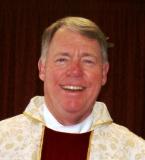
Pennsylvania on Sunday, November 30, 2025, by Fr. Gene Tucker, Interim Pastor.
“ARE WE THERE YET?”
(Homily
texts: Isaiah 2: 1–5, and Matthew 24: 36–44)
Perhaps you’ve had this experience, if
you are the parent or caregiver for younger members of a household…Everyone
gets in the car, and you are off on a trip, whether it’s a short one, or a
longer one. And one of the first things that the younger persons in the car
ask, is “Are we there yet?”.
If your experience is anything like
mine, that question gets asked early in the trip, perhaps as early as five
minutes into the journey.
There is an eagerness to the question,
reflecting a desire to reach the destination, to arrive at whatever enjoyable
and wonderful things are to be experienced there. (In my own life, that
destination – which I remember fondly and clearly – was our trips to see my
grandparents.)
Christians are called to be eager.
Christians are to earnestly want to arrive at the destination that God has in
mind for all humanity. Christians are encouraged to want that time when God’s
reign is complete, total and all-encompassing, a time like that envisioned by
the Old Testament prophet Isaiah, some 2,800 years ago.
For, you see, we Christian believers
are on a journey. We are on our way to that time when the Lord Jesus Christ
will return again in power and great glory. (This is one of the themes and the
concentrations of the season of Advent, which begins today.) Our Gospel reading from Matthew’s account
describes this time and some of the markers of its coming.
The other theme and focus of the Advent
season is our preparation to welcome Jesus as a baby, born in Bethlehem.
It is clear that we live in between the
Lord’s first coming, and His final coming.
Now, there’s a challenge for us who
have come to faith: We are to be busy helping God to bring that blessed time of
peace, of the knowledge and love of God, into being.
We have work to do!
We are called to demonstrate to the
world what this coming time looks like, so that when it comes in its fullness, people
everywhere will know that God’s plans for the world have been accomplished.
How do we do that? How do we perform
the works that God calls us to do as we enter the waters of Holy Baptism, are
clothed with Christ, and are raised to a new life in a resurrection like His?[1]
Perhaps a good bit of advice is
this: Always preach the Gospel; if
necessary, use words.
This simple truth reflects the idea
that the Christian faith is usually caught, not taught. Put
another way, people who do not yet know the Lord personally are more likely to
come to faith if they experience a Christian believer who exhibits the signs of
a lively and intense personal faith, dwelling in their innermost beings.
This means, then, that how we behave,
how we love others (especially those whose views differ from ours) and how our
lives are marked with a generosity that tells the world that we have,
ourselves, received a great gift from God the Father in the person and work of
Jesus Christ, and that – in gratitude – we are generous with our support of
others, our care for those in need, and in our willingness to walk alongside
those who struggle in life in some way or another.
In one sense, these markers should be
easy to do, for in almost every way, they differ from the attitudes and the
behaviors of the unbelieving world which surrounds us. For that world is a
cold, hostile and difficult place to be.
But we are on a journey, to a different
and wonderful destination. Our hearts overflow with eagerness to arrive as
citizens of God’s kingdom. As Christian believers, we encourage others to join
in the journey, knowing that, as our lives are completely different as a result
of having come to faith in the Lord, so, too, will those who join us in this
journey will come to experience life in a totally new, wonderful and different
way.
Thanks be to God!
AMEN.
[1] See Romans 6: 3–9.