Sunday, September 13, 2026

Pentecost 16, Year A (2026)

Genesis 50: 15–21 / Psalm 103: 1–13 / Romans 14: 1–12 / Matthew 18: 21–35

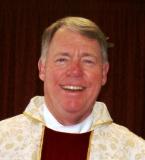
This is the written version of the homily given at Flohr’s Evangelical Lutheran Church (ELCA) in McKnightstown, Pennsylvania on Sunday, September 13, 2026 by Fr. Gene Tucker, Interim Pastor.


“LEAKS: GOOD ONES AND NOT-SO-GOOD ONES”

(Homily text: Matthew 18: 21-35)


We begin this morning with a bit of humor…

It’s Sunday morning, and in the local Pentecostal church, the service is nearing an end. The altar call is given, and a man steps forward. Raising his arms, he begins to cry out, “Lord, just fill me up, just fill me up!” The man continues in this same way for a good while, and then stops to catch his breath, whereupon a lady in the front row says, “Yes, Lord, fill him up, ‘cause he sure does leak!”.

So then, let’s consider the matter of leaks, those sorts of leaks that are good and desirable, and which are the sorts that are good and necessary for a faithful walk with God, those sorts of leaks that we’d be better off if we didn’t lose what good things God would like us to have and to retain, and those sorts of leaks that we must make use of, if we are to be good followers of Jesus.

Three examples, demonstrating both sorts, come to mind…

If we think about it, and if we are honest with ourselves, all of us leak when it comes to the things of God. That is to say, we forget the things we have learned, or the things we have come to know. So, we need refreshers. We need God to fill us up again, in order to fill up the voids in our faith life that must be filled. That would be a good example of the less-than-optimal sort of filling up that each of us require, now and again. And, by the way, that’s one reason we gather in church Sunday by Sunday, because we need reminders, we need a godly boost to bolster our walk with God.

Just as bad is a condition in which we are unwilling to let the less-than-desirable aspects of our human nature to deliberately leak out of us, so that God can refill those spaces with His wisdom, insights and love.

And then, there’s those sorts of leaks that can work either for our good, or can threaten to impair our relationship with the Lord. I’m thinking here of the ability to share the good things of God that He wants to give us, and which we receive if we are willing to turn around and share those same good things with others.

This last point brings us to the matter of receiving and giving forgiveness, and to the Lord’s Parable of the Unforgiving Servant, which is our appointed Gospel text for this morning.

Matthew places this teaching right after the teaching about how the Church, and its members, are to resolve injurious behaviors in the Church. (This was our appointed Gospel text for last Sunday). Perhaps the context of today’s parable is important for our understanding of its importance.

Recall that, in the teaching we heard last Sunday, the Lord instructs an individual member of the body of Christ who’s been the recipient of bad behavior to approach the one who’s caused the problem, going one-on-one. If this doesn’t resolve the matter, then the Lord says that the injured party is to take one or two others as witnesses. If this next step doesn’t set the matter to rest, then the whole Church is to resolve the matter. Concluding the teaching is this instruction from the Lord: “Whatever you bind on earth will be bound in heaven, and whatever you loose on earth will be loosed in heaven.”

Peter, apparently thinking about this last comment, asks the Lord, “How many times should I forgive a sister or brother?” He then posits the answer as being “seven times”. No, the Lord says, not seven times, but seventy-seven times. Or – in other words – a limitless number.

Then we hear the Parable of the Unforgiving Servant.

Jesus spins out a tale in which a servant owes his master a very large sum of money. But the servant is unable to pay the debt, so the master forgives the debt. Leaving the master’s presence, the servant encounters a fellow servant who owes him a very small sum. The forgiven servant obviously forgets the blessing he’s just received in the forgiveness of his debt, for he grabs his fellow servant and demands payment.

The parable is told in hyperbolic terms, meaning that the Lord deliberately exaggerates the sums of money involved in order to provoke our response.

We are told that, unless we are willing to offer forgiveness to others, our Heavenly Father won’t be generous with us.

Here we come to the matter of leakages.

If we are unwilling to deliberately allow God’s goodness, God’s love, and God’s forgiveness to flow out of our innermost being, then there’s no space for God to refill. The truth is that we control the valve which regulates the outward flow. Surely, this is a mystery: Why would God allow us the freedom to choose to be generous with that which flows out of us? I don’t know the answer, but I do know that’s how it works.

We could characterize this truth by saying that, if we want to receive, we’ll need to be willing to also give. (I’ve heard that somewhere, have you?) Or, in order to get, we’re gonna have to be willing to give.

Where the matter of giving and receiving forgiveness is concerned, Matthew provides us with today’s parable. But he also provides us with the Lord’s Prayer, which reminds us that we want God to forgive us, just as we are willing to forgive others. Then, to be sure we’ve gotten the message, Matthew tells us plainly that, unless we are willing to forgive others, God will not forgive us (see Matthew 6: 14–15). (Matthew is fond of repeating himself – his Gospel accounts contain many examples where a teaching appears twice.)

Our prayer then might be that the Lord will fill us up, to the extent that we’ve created space for Him to do so.

AMEN. 

Sunday, September 06, 2026

Pentecost 15, Year A (2026)

Ezekiel 33: 7–11 / Psalm 119: 33–40 / Romans 13: 8–14 / Matthew 18: 15-20


This is the written version of the homily given at Flohr’s Evangelical Lutheran Church (ELCA) in McKnightstown, Pennsylvania, on Sunday, September 6, 2026 by Fr. Gene Tucker, Interim Pastor.


“’SOCIAL GREASE’: AN ESSENTIAL TOOL TO ASSIST IN THE CHURCH’S WITNESS AND MISSION”

(Homily text: Matthew 18: 15-20)


Let’s think about grease this morning. (Yes, I know, this could be a messy subject!) Or, to be more precise, something we could call “Social Grease”.

Social Grease consists of those things that make it possible for human beings to live with, and to associate with, each other. Just as grease, when applied to a piece of machinery, makes it possible for that mechanical device to function more smoothly, so to does “Social Grease” reduce friction between people.

So, for example, we could say that having the ability to say “please” or “thank you” would constitute two forms of “Social Grease”.

Another example might be the ability to say “could you help me”.

Still another would be “I’m sorry”.

This last example leads us to today’s Gospel text, in which our Lord Jesus Christ lays out the means by which disagreements and tensions between members of the church are to be addressed. (It’s worth noting that our text this morning is unique to Matthew … none of the other two Synoptic Gospels[1] record this teaching.)

We should begin our examination of this teaching by noting some aspects of the text.

To begin with, notice that the final decision about the fate of the offender lies with the (entire) congregation. Apparently, the church that Matthew found himself in later on in his work had no clergy at all. That local church operated by what we would later call “congregational polity”, meaning that the local congregation handled its own affairs and made its decisions by agreement or consensus of its members.

Next, we should notice the progression of the action to be taken whenever someone in the congregation does something that is hurtful or offensive. The matter is to be dealt with one-on-one, with the injured person confronting the offender alone. If that doesn’t solve the problem, then the injured party is to bring two or three others as witnesses. This is in keeping with the Law of Moses (Torah), which required legal proceedings to be decided on the basis of two or three witnesses.[2] Then, the Lord says, if this second step doesn’t resolve the matter, then the entire congregation must weigh in on the matter. The wisdom of this approach helps to ensure that the disagreement is to be resolved in the smallest possible context. For Christian believers, this means that someone who’s been the recipient of hurtful actions is not to go around the congregation, spreading their convictions among the membership.

We might – at this point – pause to remember why this bit of the Lord’s wisdom is so critical to the church’s life, witness and mission.

We should be realists about the human condition, for the blunt truth is that, from time-to-time each one of us has the capability of doing or saying things that injure others. In some cases, the things one can say or do are so damaging that the church’s unity is threatened. The church’s witness to the wider (unbelieving) world is imperiled. I believe it’s this sort of very serious stuff that the Lord has in mind.

St. Paul reminds the early Church, which was composed (more often than not) by people who had come out of a pagan culture and lifestyle, that now that they had come into relationship with the Lord, a new way of believing and a new way of acting is necessary. Paul’s letters are sprinkled with admonitions which remind these early believers that being a Christian believer means that life is now different. Paul often goes on to say that the Church’s unity affects its mission and its witness.

For small congregations, frequent use of the “Social Greases” that are available to us human beings is essential to the church’s unity. Small churches oftentimes can fall into factions, one group harboring ill will or animosity against others, sometimes over something that had happened a long time ago. Larger churches have as a resource, larger groups of people, whose presence can buffer the strains that can develop here and there. Not so with small churches. Newcomers and visitors to the congregation can sense the tensions that are present in the membership. Sometimes, that means that visitors will decide to continue to shop around for a church elsewhere.

This morning’s Gospel text seeks to make use of the “Social Grease” of the words “I’m sorry”. (To my way of thinking, being able to say “I’m sorry” is one of four basic forms of “Social Grease” that enable us to get along with others as we make our way through life.)

One final thought is, perhaps, worth noting:

This bit of the Lord’s teaching is couched in between the Parable of the Lost Sheep (beforehand - see Matthew 18: 10–14), and the Lord’s admonition that we are to be ready to offer forgiveness to others in generous amounts (Matthew 18:21 and following) as the Lord tells His Parable of the Unforgiving Servant.

Perhaps the wider context of what precedes and what follows this morning’s appointed text can remind us that the God’s intent is to seek out the lost and the forgotten. And, in addition, we – as the Lord’s followers – are to be ready to forgive others again and again.

If this guess is correct, then perhaps what the Lord is telling us to do whenever we encounter someone who doesn’t seem to want to acknowledge their transgressions, is to continue to seek them out, in order that our continued engagement might prompt a change of heart. After all, when the Lord tells us that we are to treat unrepentant persons like “tax collectors and Gentiles”, we ought to remember that it was exactly those sorts of people that He went out of his way to reach with the Good News of God.

AMEN.


[1]   The three Synoptic Gospels are Matthew, Mark and Luke.

[2]   In accordance with the provisions of Deuteronomy 19:15. 

Sunday, August 30, 2026

Pentecost 14, Year A (2026)

Jeremiah 15: 15–21 / Psalm 26: 1–8 / Romans 12: 9–21 / Matthew 16: 21–28


This is the written version of the homily given at Flohr’s Evangelical Lutheran Church (ELCA) in McKnightstown, Pennsylvania on Sunday, August 30, 2026, by Fr. Gene Tucker, Interim Pastor.


“GOD’S WAY IS HIGHER THAN OURS; GOD’S WAY IS BETTER THAN OURS”

(Homily text: Matthew 16: 21-28)

Wouldn’t it be wonderful if, when we are driving somewhere, that there’d be no work zones, or accident sites, or detours? Yes, indeed … perhaps most of us would really like such a situation.

Wouldn’t it be wonderful if the things we use worked perfectly all the time (stuff like our vehicles, for example)? Indeed, that’d be pretty terrific, most of us would agree.

Wouldn’t it be wonderful if life’s plan unfolded smoothly, with no wrinkles, challenges or setbacks? Indeed, that’d be a blessing.

Of course, the truthful answer to each of these questions above is that there will be challenges, disappointments, and changes of plan as we make our way through life. But, we can be assured that, if we are attentive to God’s involvement in our lives, then, in the final analysis, all will be well. God’s walk with us, day-by-day, doesn’t mean that life will be without its ups and downs. But it does mean that we aren’t making this journey alone, and it does mean that we have a strong ally on our journey.

But I digress a little.

This morning, we hear, in our Gospel reading, Jesus’ rebuke of Peter, those well-known words, “Get behind me, Satan! You are a hindrance to me. For you are not setting your mind on the things of God, but on the things of man”.[1]

The Lord’s harsh words were spoken in response to Peter’s outburst, in which he said that the Lord must not go to Jerusalem, suffer and die, and be raised on the third day to new life.

Peter’s walk of faith is a lot like those road detours, accident sites and work zones we began this sermon with, for Peter’s journey of faith had just had some really smooth sailing, as he acknowledged Jesus to be the Son of the living God.[2] The road ahead for Peter seemed to be wide open, as he had come to the realization of Jesus’ true identity.

But then, Peter stumbles. We could characterize Peter’s thinking this way: “No, Lord, you cannot go to Jerusalem You cannot confront the chief priests and the others in charge there, for we know how such confrontations end: You will be killed. No, Lord, you can’t do this”. Of course, I’m paraphrasing, but that is the gist of Peter’s objection.

Each one of Jesus’ disciples knew the “lay of the land” in the society in which they lived. They knew how an encounter, a confrontation, with those in charge in Jerusalem would unfold.

They also knew exactly the meaning of what Jesus would say next” “If anyone would come after me, let him take up his cross and follow me”. It would be easy to imagine that each and every one of the Lord’s original band of followers had seen the uprights for crosses at road intersections across the land, stark and silent reminders of the fates for those who stepped out-of-line. They knew exactly what “taking up one’s cross” meant.  It must have been a chilling thought.

But, in the wider view of things, God’s plan is the plan that unfolded, even though that plan didn’t seem to make much sense at the time. That plan involved the path of confrontation, the path of suffering, the patch of death, but also the path of resurrection, new life, and Good News for the entire world.

For, if we think about it, if Peter’s view of the proper unfolding of things would have been the way things actually unfolded, then it’s possible that we would know Jesus today as a great, historical figure, one whose message touched many, one whose message brought hope and meaning to thousands. We would know Jesus as one of the great teachers of his – or any – age.

But instead, we know Jesus as the risen Christ, the King of kings and Lord of lords, that one who died, but who rose from the dead on the third day. We know Jesus, the Christ, the Son of the living God, as the One who assures us that He will be with us until the close of the age.[3]

Turns out that God’s plan was a whole lot better, a whole lot greater, than whatever Peter could have imagined.

Thanks be to God.

AMEN.


[1]   Matthew 16:23b

[2]   See Matthew 16:18.

[3]   Matthew 28:20

Sunday, August 16, 2026

Pentecost 12, Year A (2026)

Isaiah 56: 1, 8-10 / Psalm 67 / Romans 11: 1–2a, 29–32 / Matthew 15: 10-28


This is the written version of the homily given at Flohr’s Evangelical Lutheran Church (ELCA) in McKnightstown, Pennsylvania, on Sunday, August 16, 2026 by Fr. Gene Tucker, Interim Pastor.


“FAITH: AN ESSENTIAL TOOL FOR GOD’S WILL AND GOD’S WORK TO BE DONE”

(Homily text: Matthew 15: 10-28)


Ever think of just how critical faith is? Many times in the Gospel accounts, we read Jesus’ words which say (in one way or another) “Your faith has made you well”.

This morning, in our Gospel reading, Jesus tells the Canaanite woman, “Woman, great is your faith!”.

In some essential, but perhaps mysterious way, having faith is a key part of our relating to God. Somehow, having faith that God can do something, or fix something, or bring healing and wholeness (either to relationships, or to health, or to other things) is a part of allowing things to happen.

Put another way, faith is our part, our work, in doing God’s will, or in allowing God’s will to be done and in allowing God’s ways to be known.

We might think of having faith as a tool, which allows things to happen. More on that in a moment.

First, though, let’s look at our Gospel text for this morning…

We might notice that there are two choices in what to actually read this morning. One choice is to read verses ten through twenty-eight. The other choice is to read only verses twenty-one through twenty-eight. If we read only the latter verses, we hear only Jesus’ encounter with the Canaanite woman. If we read all of the verses, then we hear Jesus’ condemnation of the ways and the behaviors of the Pharisees. I believe that, if we read all of the passage, we see a marked difference where the matter of faith is considered.

Now then, with this background in view, let’s look at the passage in its entirety.

Notice that Jesus criticizes the Pharisees for the simple reason that they are concentrating on the wrong things…they are concerned with outward actions, outward appearances. It is in verse twenty that we hear Lord identify the specific practices that were so important to the Pharisees: Washing of hands prior to eating.[1]

The Pharisees’ neglect of the disposition of the heart also has to do with a lack of faith in what God is able to do. Therein lies the contrast with the Canaanite woman, whose encounter with Jesus forms the second part of our reading this morning.

The contrast between the Pharisees, who were proud of their heritage as children of Abraham, contrasts with the identity and heritage of the Canaanite woman, who is a descendent of the peoples who lived in the Holy Land prior to the coming of the Israelites under the leadership of Joshua, some 1,500 years prior to Jesus’ earthly ministry. Put another way, it is the Pharisees who should have known about faith, and who should have known how important having faith is in the equation between God’s ability to act and our human ability to believe in God’s power. It is the Canaanite woman who offers us a surprise where the exercise of faith is concerned.

As the encounter between Jesus and this Gentile woman unfolds, we find that the disciples are asking Jesus to tell the woman to go away. But this woman is determined to see the Lord, and she has faith that He can grant her request.

But there’s a test of her faith involved in the encounter, or – at least I think so.

At the first, Jesus says that He was sent only to the lost sheep of Israel.[2]

Then He adds that it isn’t right to throw the children’s food to the dogs.

If we consider the attitudes of God’s chosen people 2,000 years ago, we can better understand the implications of this statement: To the Jews, dogs were unclean animals (perhaps because of their eating habits). Jews, at that time, often insulted Gentiles by calling them “dogs”. So Jesus’ comment seems – at least on the surface – to be a put down of the Canaanite woman. He is essentially saying that she is unclean. But the term that Jesus uses is different than “dog’. He tells her that it isn’t right to throw the children’s food to the puppy dogs[3], animals of the sort that might be part of a human household.

But the Canaanite woman is determined. She is also quick on her feet and in her response: She turns the Lord’s comment into a truth (based on the idea of a puppy dog being part of a household[4]), and she says that even the puppy dogs look to eat the crumbs that fall from their master’s table.[5]

Now then, let’s return to a comparison of the attitudes of the Pharisees, contrasted with that of the Canaanite woman.

The Pharisees were a barren bunch, unable to produce food for the kingdom of God. Why? Because they had no faith. They had faith only in the outward actions of people. The Canaanite woman had faith that the Lord could help her, and she had it in abundance.

Perhaps we’re on firm ground if we believe that, absent a declaration of faith in the Lord’s ability to help the Canaanite woman, there would have been no deliverance for her daughter.

We come then, to the conclusion that faith is a tool that God gives us, a tool He expects us to make use of. God has the ability to answer our needs and our requests (but, notice: God’s will and God’s wisdom far outshine our own abilities to see what is best for us!), But we have work to do, and part of that work consists of our faith, our belief in God’s ability to act, to create, to re-create, to bring healing and wholeness where there is a lack of these things.

Somehow, when we pick up the tool of faith, good things – God things – happen.

AMEN.


[1]   Perhaps the Lord’s point here isn’t the hygienic reasons for washing one’s hands prior to eating (which is a good idea), but rather, the concern for outward actions, to the neglect of the inner disposition of the heart.

[2]  Here we come to a mystery concerning the Lord’s identity as being fully human, and yet fully divine, neither aspect of His identity being confused with the other, and neither identity being separated from the other, at the same time...talk about a mystery! Anyway, some scholars believe that the Lord’s human aspect grew in its awareness and maturity, just as any human being would. If this is so, then perhaps – this line of thinking goes – the encounter with the Canaanite woman may have been a significant event in Jesus’ growing awareness of the ministry and the mission that God had sent Him to accomplish. I’ll let you live with that mystery.

[3]   The Greek word is kynarion, meaning, literally, “little dog”.

[4]   My thought, anyway.

[5]   A question to ponder: Did the saying about “Crumbs falling from the master’s table” circulate in the ancient world? We also hear this same phrase in Jesus’ Parable of the Rich Man and Lazarus (see Luke 16: 19–31). Another mystery to ponder.


Sunday, August 09, 2026

Pentecost 11, Year A (2026)

I Kings 19: 9–18 / Psalm 85: 8–13 / Romans 10: 5–15 / Matthew 14: 22–33  


This is the written version of the homily given at Flohr’s Evangelical Lutheran Church (ELCA) in McKnightstown, Pennsylvania on Sunday, August 9, 2026, by Fr. Gene Tucker, Interim Pastor.  


“SHOWING US WHERE THE ROCKS ARE”

(Homily text: Matthew 14: 22-33)


Let’s begin this morning with a bit of humor…

There were three ministers in a community who were very good friends and also were very good colleagues in ministry together. One day, one of the three proposed to the other two that it might be nice if they would rent a boat and go fishing together. Since they all had Mondays off, they chose a date and headed off to the country club.

The weather was quite nice for the occasion, and the three began their quest for fish. But the fish weren’t cooperating very well, and by midday, the sun was beating down on the three pretty hard.

So one of them said he was going to go into the club and get something to drink. Over the side of the boat he went, whereupon he seemed to walk along the top of the water. Sitting under the awning at the club, he began to enjoy his libation.

Not long afterward, the second of the three also said he was thirsty, and over the side of the boat he went. He, too, seemed to walk along over the top of the water. Reaching the club, he joined the first one.

The lone occupant of the boat, now seeing the other two in under the awning, enjoying some refreshment, determined that if the other two could manage to leave the boat and make their way to the shore, then he, too, could manage the same. So over the side of the boat he went. But immediately, he began to flounder in the water. The first one, seeing this unfold, calmly put his drink down and said to his colleague at the table, “Do you think we ought to show him where the rocks are?”

This bit of humor fits well with this morning’s Gospel reading. For in it, we read that Jesus walked on the water as the stormy seas were churning in the Sea of Galilee. If we consider the theological point of the account, we come to the conclusion that it is meant to tell us something about the powers that were at work in Jesus, powers that God alone possesses, powers over the created order. Recalling our Gospel reading from last week, the account of the feeding of the crowd of some 5,000 people, the basic theological truth is the same: Jesus has power over the creation.

Now, hold onto that thought as I offer a memory from an event that took place earlier this week …

Earlier this week, I conducted a memorial service for a former director of the U.S. Army Chorus, a group that I was a member of, at the Old Post Chapel on Ft. Myer, Virginia, which is adjacent to Arlington Cemetery. The former director’s two daughters were there, and they reminded me of a concert I had done with their father, many years before. I recalled the concert quite well, and shared a humorous aspect of what happened when we sang together, something I don’t think they knew about their dad.

Sharing that memory with them, sent my mind back to those days in my life. They weren’t entirely good memories. There was much turmoil and uncertainty back then.

But from the perspective of many years now, I can see that the Lord was present and was active in those troubling years. I didn’t know it at the time, but those difficult times didn’t have the final say in the direction of my life. No, God was at work, and one-by-one, one difficulty after another was overcome.

Looking back, I can say that, absent God’s presence and God’s ability to guide, to support, to create, to deal with a challenge, and then to work out the details of the next one, I’m not sure I would have made it through those trying times.

Now then, perhaps each of us could ask a question of ourselves, as we look back over the years of our lives: “When was it that the Lord showed us where the rocks were?”.

For surely, we all have need of the Lord’s support at various times as life unfolds.

Perhaps the Lord shows up when we don’t know what will happen next, or how we will face the events that seem to be headed our way

Perhaps deep loss comes our way.

Perhaps we seem to face so many challenges and so many difficult choices that we are paralyzed by the multitude of problems that seem to lie in our path.

Perhaps other ideas arise in our minds, and perhaps they are our own personal experiences and challenges.

It’s been said that we Christians are a “resurrection people”. That is to say, we worship, love and adore a God who creates, a God who brings order out of disorder, a God who is a God of new beginnings.

Perhaps it’d be helpful to remember those wonderful qualities that God possesses, and which He makes available to us, often at times when we can’t see His hand at work in the things that surround or beset us.

For, as St. Paul reminds us in chapter eight of his letter to the early churches in Rome, “nothing can separate us from the love of God in Christ Jesus”. (Romans 8:39)

Thanks be to God.

AMEN. 

Sunday, August 02, 2026

Pentecost 10, Year A (2026)

Isaiah 55: 1–5 / Psalm 145: 8–9, 14–21 / Romans 9: 1–5 / Matthew 14: 13–21


This is the written version of the homily given at Flohr’s Evangelical Lutheran Church (ELCA) in McKnightstown, Pennsylvania on Sunday, August 2, 2026 by Fr. Gene Tucker, Interim Pastor.


“MIRACLES AND MYSTERIES”

(Homily text: Matthew 14: 13–21)

This morning, we hear the account of one of our Lord’s most well-known miracles, the feeding of a very large crowd of people (the Gospel writers tell us that it was composed of about 5,000 men, not counting women and children).

This miracle must have[1] been very important to the early Church, for all four Gospel writers relate this incident to us. In addition, Matthew records yet another miraculous feeding of a crowd of about 4,000 in chapter 15: 32–39.[2]

People over time have struggled to understand this event. Some can’t grasp the idea that Jesus did, just as the Gospel writers tell us that He did, actually multiply the loaves and the fishes so that all in the crowd were fed. The account tells us that the Lord’s work was so generous that twelve baskets of leftover food was gathered up. Some who cannot believe the account as it is presented to us maintain that people actually brought food for themselves, which they produced once the five loaves and two fish were presented. Other ideas for the actual events that unfolded have also been presented.

However, the importance of the account isn’t just the feeding of the crowd. The deeper meaning has to do with telling us something about Jesus’ identity as Son of God. The multiplication of the loaves and fishes is meant to steer us to the reality that Jesus has at His disposal all the creative abilities of God. Recall that, in the creation account in Genesis, God spoke and something came into being, something that didn’t exist beforehand. The miraculous feeding of that many people is of the same sort of stuff: The Lord created something out of almost nothing.

Now, just for the record, I accept as truth the accounts as they appear before us. I believe (and see through the eyes of faith) that Jesus actually did make use of those loaves and fish to feed a very large crowd of people.

That said, I also understand that this is a miracle, something that stands outside of our normal, everyday experience. In addition, it is also a mystery (at least to some degree) as to how the Lord actually multiplied the food.

If we think about it, much of our experience of God is the stuff of miracles. It is also the stuff of mysteries. For the purposes of this sermon, I am defining a mystery as something that we know works, we just don’t know how exactly.)

Let’s survey some of our experiences of God, looking for the miraculous aspects of it, and looking for the aspects that defy explanation.

We could begin with the starting point of our walk of faith with God. Why is it that it begins with our own self-emptying? What I mean is this: If we do not get to the point of saying something like, “Lord, help me, for I cannot help myself”, then the journey has gotten off on the wrong foot. For the requirement to begin from a point of utter helplessness, only to lead to a productive and wonderful walk with God that brings with it such meaning and depth is a mystery. Why should it begin that way? We don’t know. But what we do know is that the most wonderful and meaningful life in God begins this way. A mystery, but also a miracle.

As I reflect on this previous point, I am reminded that a complete self-emptying is the essential meaning of baptism. And, we ought to acknowledge, that as life unfolds, we will face continuing occasions in which we will have to admit our own helplessness. Another mystery, and also a miracle that God works in such a way as this.

Why is it that faith is so often a component in bringing God’s will into being? Think of the many times that the Lord told someone, “Your faith has made you well”. Faith is our response to God’s moving. But faith, if we, ourselves, try to make it happen, is usually just a counterfeit version of the real thing. For faith to arise within us, it seems as though the Holy Spirit will have to enter our hearts and minds in order to stir up the soil of our hearts and our minds so that faith can take root. Another miracle, that it happens at all, and a mystery as to why is works this way. But it often does, or – should I say – it happens this way more often than not.

We might back up a bit and wonder just why it is that God is willing to relate to us human beings at all. After all, if we’re honest about ourselves and the nature of the human race, we’re often cantankerous, often fickle, often undependable…think of the heroes in the Bible: Most of them have “clay feet” of some sort or another. Almost all of them had pimples. Almost all of them had warts. But God chose to relate to these sorts of people, and even chose to work through (and sometimes around) them. Another miracle, another mystery.

Then we could talk about God’s generosity. Why is it that God is so generous with us human beings? We surely don’t deserve it, but God’s nature, it seems, is to be generous. And not only that, God is also loving. Another mystery, and a miracle that blesses us throughout life.

One final example we might cite is the way in which God enters into a situation. Sometimes, He simply shows up. At other times, He barges in as He did with St. Paul on the road to Damascus. At still other times, He patiently waits (I think of the verse from the Book of Revelation, which reads, “Behold, I stand at the door and knock. If anyone hears my voice and opens the door, I will come in to them and eat with them, and they with me”[3]).

Perhaps, as we reflect on our life’s journey, and our walk with God, we can see other examples of God’s working, in miraculous and mysterious ways, ways we can’t fully understand, oftentimes, but ways that we know actually work.

For the God we love, worship, obey and walk with throughout life is a God of miracles, and a God who often works in mysterious ways.

Thanks be to God.

AMEN.


[1]   In biblical times, it was common to count only the men. Today, of course, we would include the women and children.

[2]   Mark also records the feeding of the 4,000, while Luke and John do not.

[3]   Revelation 3:20 

Sunday, July 26, 2026

Pentecost 9, Year A (2026)

I Kings 3: 5–12 / Psalm 86: 11–17 / Romans 8: 26–39 / Matthew 13: 31–33, 44–52


This is the written version of the homily given at Flohr’s Evangelical Lutheran Church (ELCA) in McKnightstown, Pennsylvania on Sunday, July 26, 2026, by Fr. Gene Tucker, Interim Pastor.


“LOOKING FOR THE KINGDOM, AND DISCOVERING ITS RICHES”

(Homily texts:  I Kings 3: 5–12, and Matthew 13: 31-33, 44-52)

Some years ago, there was a one-man show which traveled the country, entitled, “Defending the Caveman”.

The set for this show resembled something from the old television show which featured Fred Flintstone. The actor was also dressed in a costume that could have come from the same show.

The audience at the show laughed, usually one half at a time: The men would laugh at something, and then it was the women’s turn to do the same.

One subject from the show had to do with shopping habits, which – the actor maintained – differ from men to women.

The actor told the audience that the reason why men shop differently from women is attributable to ancient habits, which stem from the days of the cavemen.

So, for example, during the days of the cavemen, the actor said, the man would venture out from the cave, alone, his trusty spear in hand, to find and stalk the game that would be that evening’s dinner. Once the hunt was over, the man would drag his quarry back to the cave, whereupon it was the woman’s job to prepare it for dinner. This habit of singular focus on one thing leads men, in our own time, to go to the store in search of one, specific item. Once that item had been found, the search and the shopping were over. (And, the actor added, men will often go to the store again, seeking one, specific item.)

By contrast, the women, in the days of the cavemen, were back in the cave. Once the man was off to the hunt, the women would gather in a group, and they would venture forth from the cave in search of berries with which to adorn that evening’s dinner table. Together, the women would find berries, which they touched, smelled, and looked at, all the while comparing their observations one with another. This habit is the basis for women’s shopping habits today, for they venture forth to the stores in groups, where they look at the merchandise, feel it, look at it, and compare their observations, one with another.

The humorous aspects of these ideas aside, there’s are two pieces of wisdom in the scenario described above. (Recall that the ancient King Solomon prayed for wisdom, as we hear in our Old Testament lesson this morning.)  I think there’s some useful truths for us to consider as we think about our Lord’s parables about the nature of the Kingdom of Heaven.[1]

One useful truth for us to remember about the kingdom is that it is often small in nature, and sometimes hard to notice when it appears. Indeed, our Lord said, once, that people would know that the kingdom “was near”.[2] Some of the very brief parables we hear this morning ask us to consider that the kingdom is often seemingly hidden.

Perhaps we think of the kingdom, and its presence among us in grand and overpowering terms. Perhaps we equate the kingdom with the end of time, or – in Matthew’s terms – the end of the ages. That time when God’s will and God’s way will be in total control. Certainly, such a vision is never far from Matthew’s consciousness.

The Holy Scriptures affirm this vision of the kingdom, that time when God’s peace will reign over all things. That time when the “lion will lie down with the lamb”,[3] that time when “nations won’t learn war anymore.”[4]

But, in the meantime, the kingdom is among us.

It’s our job to look for its coming, like the caveman hunter who’s searching for his quarry.

It’s also our job to help God bring the kingdom into being. By the way we believe, by the way we act, by the things we say, our job is to demonstrate what the kingdom looks like, so that when the kingdom comes near, people will be able recognize it.

The other useful thing to glean from the account of the cavemen is to look carefully and closely at the nature of the kingdom. What, exactly, does the kingdom look like from the point of view of the Bible? What do we read there about the kingdom? What does Holy Scripture have to say about the citizens of the kingdom, and their relationship to the King? For it would be easy to look away from the pages of the Bible, risking the possibility that some concept of the kingdom that arises in our own minds will displace the description of the kingdom we find in the pages of sacred Scripture.

In the hustle and the bustle of daily living, it’d be easy to miss seeing the evidence of the kingdom that is among us whenever its appearing is known.

We would do well to seek out the kingdom with all the energy and focus we can muster. We would also do well to examine, and then re-examine, the true nature of the kingdom.

To do both of these things, we will need to help of the Holy Spirit.

AMEN.


[1]   Matthew’s usual term for the kingdom is “Kingdom of Heaven”.

[2]   Luke 10:9

[3]   Isaiah 11:6

[4]   Isaiah 2:4 

Sunday, July 19, 2026

Pentecost 8, Year A (2026)

Isaiah 44: 6–8 / Psalm 86: 11–17 / Romans 8: 12–25 / Matthew 13: 24–30, 36–43


This is the written version of the homily give at Flohr’s Evangelical Lutheran Church (ELCA) in McKnightstown, Pennsylvania on Sunday, July 19, 2026 by Fr. Gene Tucker, Interim Pastor


“IT’S NOT A PERFECT WORLD”

(Homily text:  Matthew 13: 24–30, 36-43)

Recently, I was driving down a two-lane road with a double yellow line in the middle. A vehicle was tailgating me, almost to the point of making contact. (Apparently driving at the speed limit wasn’t good enough for them.) Then, suddenly, the vehicle pulls into the opposing lane, passing me in a No Passing Zone, and reaching a speed fifteen to twenty miles an hour above the speed limit. For good measure, as the passer speeds by, an arm appears out of the window…you can guess what happens next. As the vehicle passes by. my passenger in the right front seat, points energetically at the lawless driver and exclaims, “Smite the evildoer!”.

Indeed. “Smite all evildoers” who venture out onto the roads.

Wouldn’t it be a wonderful world if everyone obeyed the rules of the road? Wouldn’t it be a wonderful world if everyone drove courteously? Wouldn’t it be a wonderful world if there was no such thing as an aggressive driver?

Indeed it would be. Banish all those workers of roadway mischief, I say.

Wouldn’t be a wonderful world if everyone was attuned to the things of God? Wouldn’t it be a wonderful world if everyone sought out the mind of God? Wouldn’t it be a wonderful world if all causes of evil were banished?

Indeed, it would be a wonderful world. In fact, that is a vision of heaven: Eden restored.

Those who have sought the mind of God, down through time, have dreamed of such a world and such a state of relating to God.

The reality of what confronts us, day in and day out, is something else altogether: We live in a world where human beings, many of them, do not seek the things of God. We live in a world where people do bad things to one another, who seek to advance their welfare at the expense of others, like the speeding vehicle in that No Passing Zone.

Down through time, in the Old Testament period, as well as in the New Testament period, the response of many seekers after God has been to lament this state of affairs. Read the Psalms, and before long, those Psalms which ask God to punish evildoers will come across our vision.

God’s people, at certain times, have opted to withdraw from the wickedness of the unbelieving world in which we live.

Consider, for example, the beginnings of the monastic movement in the fourth century, as the Church ceased to be a hidden reality in society, only to become the official religion of the Roman Empire. As it did so, many who came into the Church continued to behave just as they had before they came into the Church. In response, some Christians were prompted to withdraw from society into cloistered communities of prayer, in order to preserve the soul of the Church.

In our own country, many attempts at creating a perfect, Christian world were attempted. Not far from us were the Ephrata Cloisters, for example. We also had the Shakers, and many other utopian, Christian communities.

Our Lord’s teaching, heard in the Parable of the Wheat and the Tares this morning, directs us in a different direction.[1]

Jesus tells us that we, as Christian believers, are to be present and active in a corrupt world that is in rebellion against God. We are not to be plucked up and removed from such a world and such a place.

To be truthful, perhaps many of us aren’t comfortable with such an idea, of the good in the world existing right alongside the bad.

But Jesus tells us that our presence, as God’s people in the world, brings value to that world. We are in the world to make a difference.

Which brings us to the work before the Church.

To the Church has been given the truths of the Kingdom of Heaven. The Church has value, to God and to the world around us, only to the extent that it maintains and adheres to those truths. Otherwise, it could begin to resemble the weeds in the field.

In our own time, this is, perhaps, the most critical issue before God’s people, the Church.

The question before us is: To what extent should the Church be influenced by the beliefs and practices of the secular society in which it finds itself? After all, the Church in various times and in various societal settings, has accommodated some aspects of the society in which it was situated. This is an old pattern, discernable down through time.

Perhaps the operating principle for the Church might be this one: The Church’s purpose is to introduce God to people, and to introduce people to God, and to nurture that relationship. Therefore, anything which dilutes the effectiveness of that central purpose must not be allowed to compromise the Church’s witness to the world.

Our purpose, as God’s people, is to show by what we do and by what we say what a godly life looks like. When we do this, then we bring value to the world, inviting others we come into contact with into such a relationship with the Lord.

Now, finally, for all those who long for God’s will and God’s way to prevail over all causes of evil and all ways that are in rebellion against God, Jesus assures us that the time will come when God will have the last, final and victorious word. In the meantime, we Christian believers are to labor in the world to prepare God’s way to that final, perfect state.

Thanks be to God.

AMEN.


[1]   It’s worth noting that the Lord provides an explicit explanation of the meaning and application of the parable, as was the case with last week’s parable, the Parable of the Sower. Perhaps the Lord wanted His disciples to understand the importance of this teaching clearly.