Sunday, March 15, 2026

Lent 4, Year A (2026)

I Samuel 16:1-13 / Psalm 23 / Ephesians 5:8–14 / John 9:1–41

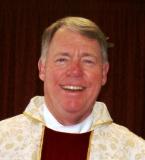
This is the written version of the homily given at Flohr’s Evangelical Lutheran Church (ELCA) in McKnightstown, Pennsylvania on Sunday, March 15, 2026 by Fr. Gene Tucker, Interim Pastor.


“THE PROSPERITY GOSPEL: AN ANCIENT VERSION”

(Homily text: John 9:1–41)

Let’s begin, this morning, by asking ourselves this question: What is it that we most want from God? Closely connected to that question is this one: “What is it that God most wants to give us?”

(Take a few moments to explore those two questions.)

This morning’s Gospel text places before us the miraculous healing of a man born blind. Before we explore the implications of Jesus’ action in giving the man his sight, let’s look at the motivations that seem to have been common in the time of Jesus’ earthly ministry. Perhaps we can learn a lot from the attitudes that were commonplace 2,000 years ago.

And, we might explore the question with which we began, as we look at the culture of the time, exploring what answers people might have supplied, back then, to the question of “What is it that we most want from God”, and, as well, the other question: “What is it that God most wants to give us?”.

The first clue to the attitudes that many people harbored can be found in the question that Jesus’ disciples ask, as they discover this man, who had never been able to see. They say, “Who sinned, this man, or his parents, that he was born blind?”.

On its surface, the disciples’ question is firmly anchored in biblical truth, for the Ten Commandments contain the one which tells us to honor our fathers and our mothers.[1] Attached as a sort-of addenda to another commandment is this warning: “(God says) I will visit the iniquity of the fathers on the children to the third and fourth generation of those who hate me…”.[2]  The disciples’ question seems to relate to that warning found in Exodus.

But their question points in another direction: They want to know if the man’s condition is due to some grievous sin on his part, or perhaps some major misdeed that his parents committed.

As we dig a little deeper, we can see that the disciples probably believed – along with many others in that day and time - that if a person was ill, sick, lame or blind, then their condition must stem from God’s judgment for some failing or another. The same beliefs would also apply to someone who was poor, or who had suffered loss of some sort.

Turn this supposition around, and the converse (most likely) was also thought to be true: If a person was healthy, wealthy or in some other way seemed to be thriving, then their condition must be due to God’s favor, which had been showered on that person because they had done all the “right stuff”.

I think we’re on solid ground in thinking that all of these suppositions were present in the disciples’ question about the reality of sin, either on the part of the blind man, or on the part of his parents. The Gospel accounts – in general - seem to support such conclusions: Do the right thing, and life will be good to you, because God has blessed the ones who do the right things.

As the account unfolds, and as the Pharisees become involved, they, too, seem to harbor the same attitudes about God’s goodness that were implied in the disciples’ question. They declare that Jesus cannot exercise the power of God because He had healed the man on the Sabbath day. To them, profaning the Sabbath in the way that Jesus had done (by their understandings) meant that Jesus was outside of God’s sphere of influence.

Put another way, God does not, and will not, act through someone who stands outside of God’s goodness.

Essentially, the disciples’ question, and the attitudes of the Pharisees, all point to an understanding that reduces a relationship with God to a bargain. We could characterize it this way: If God’s people are faithful, doing the acceptable things (to the Pharisees, doing the outward actions the Law of Moses required), then God will bestow all sorts of good things on those faithful people.

We might think that such attitudes were commonplace only during the time of our Lord’s sojourn among us.

On the contrary, such attitudes exist today, and can be found among some who claim our Lord’s name. Today’s version of this sort of bargain-making with God is known as the Prosperity Gospel.

The Prosperity Gospel claims that those who do the “right stuff” will inherit good things from God. Most of those “good things” turn out to be material blessings: Money, nice cars, big houses, etc.  We could add health to the list, and favorable relationships in our families. (Feel free to add your own categories.)

Of course, the Prosperity Gospel is a heresy, pure and simple. (Just to be clear, a heresy is – as the Greek word from which it is drawn – a choice (the Greek word means “to choose”) to proclaim part of the truth, but not all of it.)

At this point, let’s return to the two questions with which we began.

What is it that we most want from God – or, better yet – what we should most want from God?

What is it that God most wants to give us?

The answers are found in this morning’s Gospel.

The blind man receives his sight. That, in and of itself, is a great blessing. But his healing points to a deeper reality: His healing is the result of God’s ability to create, and to re-create.

Jesus then gives the man something else: A personal relationship. The man comes to believe in Jesus as the Son of Man.

A cursory reading of the Old Testament, disproves the notions of the Pharisees and those like them who believed that God only wanted to give his chosen ones “good things”. Time and again, God’s chosen people suffered hardships of various kinds…sometimes, the hardships that came their way were the direct result of their own disobedience, but not always. God didn’t spare them from those things. But God was with them in their troubles, often correcting them when they went astray, but always finding ways to redeem and to save His people.

What then, is it that God most wants to give us? Himself!

What is it, then, that we should most want from God? Himself!

AMEN.


[1]  See Exodus 20:12.

[2]  See Exodus 20:5b. 

Sunday, March 08, 2026

Lent 3, Year A (2026)

Exodus 17: 1–7 / Psalm 95 / Romans 5: 1–11 / John 4: 5–42


This is the written version of the homily composed for Flohr’s Evangelical Lutheran Church (ELCA) in McKnightstown, Pennsylvania for Sunday, March 8, 2026, by Fr. Gene Tucker, Interim Pastor.


“JESUS: TABOO-BREAKER & BRIDGE-BUILDER”

(Homily text: John 4: 5-42)

Notable people, down through time, are often known for some courageous action they took during their lifetimes. One of the qualities that history regards as being especially noteworthy is the ability to challenge accepted beliefs, and especially beliefs that had lost their worthwhile purpose, or were wrong to begin with. Another quality that we regard highly is the ability to bridge gaps between individuals or between peoples and nations.

Jesus’ actions during His earthly ministry fit into both categories, for Jesus was (is) a taboo-breaker. He was (is) also a bridge-builder.

We have excellent examples of both qualities in our Gospel text for this morning, which relates Jesus’ interaction with an un-named woman in the Samaritan city of Sychar.

We might begin with Jesus’ taboo-breaking actions:

Avoiding Samaria and avoiding Samaritans:  This is the first taboo that Jesus deliberately challenges. Observant Jews, 2,000 years ago, avoided going through the region of Samaria entirely. If they had to go to Jerusalem for one of the major festivals from the region of Galilee, which is located in the northern part of the Holy Land, they would take a long detour around Samaria, going east and then south down through the Jordan Valley, or else they would go along the Mediterranean seacoast, and then eastward to the Holy City.

The reason for this avoidance has its roots some eight hundred years earlier. To understand the commonly-held mindset during the time of our Lord’s ministry, we need to back up to examine history. In the year 722 BC, the Assyrian army conquered the region of Samaria (then known as the Northern Kingdom of Israel). Once the conquest was complete, the Assyrians deported much of the population, and then they re-populated the area with people from other places. The result was a people of mixed racial and ethnic heritage.

That was the basis for the hatred that Jews – back in that time – bore toward the Samaritans. To observant Jews, Samaritans were racially impure.

But notice that John tells us that Jesus deliberately chose to go through Samaria. (John also tells his audience that Jesus had nothing to do with Samaritans, underscoring the radical nature of Jesus’ behavior.)

Men and women in the society of that time: This aspect of Jesus’ actions might surprise us, but in the society of the time, it wasn’t customary for a man to address a woman whom he did not know in public.

In the context of accepted social behavior in that society, the Samaritan woman seems a bit surprised that Jesus, who was a Jew, is speaking with her.

Another taboo is challenged.

The woman’s history: During the course of the back-and-forth with the Samaritan woman, the topic of her husband comes up. The Samaritan woman says, “I have no husband”, to which Jesus replies that she, indeed, has spoken the truth, for the fact is that she has had five husbands, and the man with whom she is currently living, isn’t her husband.

(Over the years, there’s been a lot of speculation about the woman’s place in the community of Sychar…did she come to draw water from the well at midday because she was somewhat of a pariah? Was she someone who’s “checkered past” was notorious to the point that people avoided her? We don’t know the answers to those questions, but it seems possible that that was the case.)

If, indeed, the woman’s lifestyle and marital history was an impediment to her acceptability, Jesus shows no willingness to ignore her. Nor does he castigate her for her past. (Now, at this point, we need to be careful, I think, for it’s possible that the woman has had five husbands due to the simple fact that each of her husbands had died. John doesn’t elaborate on the nature of her history.) The fact of her marital history aside, it’s also worth noting that Jesus didn’t castigate the woman for her living arrangements with a man to whom she wasn’t married.

Another taboo is broken.

The place where worship is to take place:  The last off-limits subject that passes between the Lord and the Samaritan woman is the subject of where proper worship is to take place.

Jesus’ declaration of the truth of the woman’s history and her current living arrangements (Jesus’ ability to know things that only God would know is a common theme in John’s Gospel account) leads the woman to open the topic of the coming of Messiah.

As part of this part of the conversation, she asks Jesus to resolve a longstanding dispute between Jews and Samaritans: That dispute had to do with the proper place for the holy mountain which was regarded as the dwelling place of God. Was that proper place to be in Jerusalem, or was it to be on Mt. Gerazim, the holy place for Samaritans?

Jesus affirms the centrality of the place that Jews would occupy in God’s plan for the salvation of humankind. But then, he upsets the accepted beliefs of the time, telling the woman that, going forward, it wouldn’t be on any particular holy mountain where the proper place for the worship of God would take place. Instead, the worship of God would take place in the depths of the human heart. No special place would figure into such worship.

The taboo of place-worship is now broken.

Tallying up the taboos that Jesus has shattered, we come to four of them.

Now, let’s turn our attention to the other aspect of this encounter: Jesus’ ability to build bridges across societal and other divides.

As Jesus deliberately ignores the taboos of the age, in the process, Hs is reaching out to someone who would, otherwise, be unreachable.

As a result, the Samaritan woman’s life is forever changed. Moreover, she becomes a far more effective evangelist for the coming kingdom of God than Jesus’ own disciples are in this situation.

If we notice the foundations for the taboos that existed between the Jews of the time, 2,000 years ago, and the Samaritans, we find that the basis for the deep hatred of the Samaritans was based on some secondary aspect of who the Samaritans were. Their racial history was something that was secondary to their identity as God’s specific creation. The woman’s identity as a woman was secondary to her identity as a child of God. Her marital history and her current living arrangements didn’t erase her value (in God’s sight) as someone God could love. The Samaritans’ regard for Mt. Gerazim was eclipsed by Jesus’ declaration that holy mountains didn’t matter anymore…the only altar that God wanted to erect was in the human heart.

We, today, are the Lord’s ambassadors, God’s evangelists. As we go about sharing the Good News of God in Christ, we will encounter people in all sorts of conditions and situations. We will need the Holy Spirit’s influence and guidance to be able to look beyond the secondary aspect of those we encounter to see their value as God’s creation. For each person is God’s specific and intentional creation. The Lord seeks to be in relationship with each one of these. The divine intention is to initiate a deep, personal and enduring relationship, whereby the Lord takes up residence in the human heart. And the purpose of this indwelling presence is to change lives, much as the Samaritan woman’s life was forever changed as she met the Lord by the well in Sychar.

AMEN. 

Saturday, March 07, 2026

For a Funeral

Romans 8: 38–39 / Psalm 46 / John 14: 1–6

This is the written version of the homily given at St. John Evangelical Lutheran Church (ELCA), Fairfield, Pennsylvania, on Saturday, March 7, 2026 by Fr. Gene Tucker, on the occasion of the funeral for Robert E. Kerstetter, Jr.


“WHAT LIES AHEAD?”

(Homily text: John 14: 1–6)

The weather in south-central Pennsylvania in early March can often involve significant occurrences of fog. Sometimes, the fog can be quite thick, making driving and walking (as in along a road, for example) a hazardous undertaking.

In such situations, it’s important for us to know – for our own safety, but also for the safety and the welfare of others – what lies ahead of us.

Knowing what lies ahead is a good way to look at our Gospel reading for this funeral service this morning, but also as we think back over the events of this week, as Bob Kerstetter’s earthly journey came to an end…Those early disciples of Jesus wanted to know what lay ahead. We, also, want to know what lies ahead as we think about Bob’s continuing life and our life in this world, now that he has entered into eternity and into God’s presence.

Let’s begin by looking at our Gospel text, from John’s Gospel account, chapter fourteen.

John devotes five chapters[1] of the Gospel which hears his name to the events that took place during the Last Supper.

In our Gospel text this morning, Jesus tells His disciples that He is about to go away. But He says that His purpose is to go to prepare a place for them, a place in which they may be with Him.

In response, Thomas says, “but we don’t know the way (to where you are going)”.

Jesus then says that He is going ahead of them, to be the way to the Father.

Most likely, at the time Jesus said these words, they didn’t make much sense to Thomas, or to the other disciples who heard them. In time, however, and especially after Jesus’ resurrection on Easter Sunday morning, they made perfect sense, for in the Easter events, they understood that God’s power to create and to re-create were at work in Jesus’ new life.

After Easter, which is the central truth of the Christian faith, the way ahead was clear.

On Tuesday of this week, Bob Kerstetter’s life came to an end. Someone’s passing is never an easy occurrence to accept.

In the wake of someone’s death, we want to ask, and we want to know, “What lies ahead (for that person, and for us)”.

The answer is to be found in God’s ability, God’s power to create and to re-create.

As Bob’s life came to an end, a new life, a new life much like Jesus’ new life, began in all its fullness.

That new life was God’s guarantee back when Bob was baptized, for – as St. Paul tells us in Romans, chapter, six -  we are buried in baptism in a death like Christ’s, and we are raised to a new life like His.

To be sure. Bob didn’t receive that new life immediately upon baptism. He had a life to live in this world before entering into that new life.

Along the way, Bob made it clear that his heart was a heart that longed to know the heart of God.

I’ll cite but one example, which I heard from the family when we met to plan this service earlier this week…

Bob was a teacher for thirty years, teaching fifth graders. One of Bob’s particular gifts was the ability to identify a student who was at the margins of the class. Bob took that student and folded them into the fulness and the life of the class, sometimes to the point of making that student the center of the class.

Come to think of it, that’s just what our Lord did: He reached across the divides in society that existed 2,000 years ago, bridging the gaps between people. He restored them to the community and to fullness of life in the process. Bob had a good mentor in Jesus Christ, as he lived out the values of the Christian faith.

Having received the promises of God in baptism, Bob’s life assures us that he sought to work out his faith, and to cultivate a lively and personal faith with the Lord.

Knowing that he did these things assures us of the way ahead, for now, Bob can hear God say, “Well done, good and faithful servant, enter into the eternal rest promised to all the saints”.

AMEN.


[1]   Chapters thirteen through seventeen 

Sunday, March 01, 2026

Lent 2, Year A (2026)

Genesis 12: 1–4a

Psalm 121

Romans 4: 1–5, 13–17

John 3: 1–17


This is the written version of the homily given at Flohr’s Evangelical Lutheran Church (ELCA) in McKnightstown, Pennsylvania on Sunday, March 1, 2026 by Fr. Gene Tucker, Interim Pastor.

“ABOUT THAT ‘LEAP OF FAITH’”

(Homily texts:  Genesis 12: 1–4a, and John 3: 1–17)

A curious tale is told of a tightrope walker, many years ago, who walked across a tightrope that had been strung across Niagara Falls. The tightrope walker pushed a wheelbarrow across the falls, and then back again. Watching him do this were members of the British royal family. When the tightrope walker returned from the second trip across the falls, he looked at the royals and asked, “Do you believe I can do this?”. They answered, “Yes”. Then he said, “Would any of you like to get in the wheelbarrow?”.

Talk about a leap of faith!

If we’ve given any thought to that phrase, the “leap of faith”, we might know exactly why we describe any sort of acting on what we believe. For taking action on one’s beliefs and convictions involves moving from what we know (as in the tightrope walker, making his way to and fro on the tightrope) to what we don’t yet know (as in “Would any of you like to get into the wheelbarrow”).

Both our Old Testament and our Gospel readings that we hear this morning have to do with a leap of faith.

For Abram, it is God’s call to go out from the land and the people that he knew, to follow God’s command to go to a place that God “will show you”.

For Nicodemus, the leap of faith has to do with knowing what Jesus had done, and knowing that He was “sent from God”. For Nicodemus says, “No one could do the signs you are doing unless God was with him”. But Nicodemus doesn’t seem to be able understand or to grasp the spiritual realities that Jesus had come to make known.

Before we look at the conversation between Nicodemus and the Lord, let’s look at God’s command to Abram.

Notice that implicit in God’s command to leave all that he had known, in order to go to a new place that God would show him, probably began with some sort of assurance that the commend Abram was hearing was really from God. Somehow, Abram came to know that, and then came to the point of obeying that command. God’s command also carried with it the need for Abram to continue to rely on God’s leading in order to arrive at the place where God had in mind. Abram didn’t have a destination. He didn’t have a roadmap. He had no GPS system to guide him. Abram had to check in with God periodically to know if he was going in the right direction, and also to know if the place he had arrived at was where God had in mind as his destination.

Now, let’s turn our attention to Nicodemus.

(It’s fascinating to wonder about Nicodemus. We know from John 19:39 that Nicodemus had come to assist Joseph of Arimathea in anointing Jesus’ body after His death on the cross on Good Friday evening. So the question lingers: Did Nicodemus become a disciple of the Lord? Or was he doing his best to try to address a grievous wrong in Jesus’ death. We’ll have to wait until we see the Lord face-to-face to know the answer to that question.)

I am always a bit amused by Nicodemus’ opening comments to the Lord.  He leads with his best foot, saying, “Rabbi” (a term that – in Hebrew – means “teacher”, or – more properly “my teacher”). If Nicodemus had had the good fortune to be a graduate of the Dale Carnegie Course (OK, I’m dating myself…the Dale Carnegie Course – which didn’t exist 2,000 years ago - was designed for people who worked in business to better their skills…its motto was “How to Win Friends and Influence People”), he would surely have been one of its star graduates, for Nicodemus is trying to get off to a good start with the Lord.

In his greeting to the Lord, Nicodemus is obviously trying to win Jesus’ trust and to foster a good influence with the Lord. From there, Nicodemus affirms what he knows about Jesus and Jesus’ ministry and work. He confirms that God is with Jesus in His work, for “no one could do the things you are doing unless God was with him”. Also, notice that Nicodemus affirms the signs that Jesus was doing.

That is the extent of what Nicodemus knows. He knows that God is involved in what Jesus has been doing.

From this point on in the conversation, Jesus and Nicodemus seem to be operating on different levels.

Instead of confirming what Nicodemus had said about Jesus and His work, Jesus begins to talk about being “born again” or “born from above”. (The Greek can mean either one.)

Nicodemus can’t take that leap of faith. He responds literally, asking, “Is it possible for someone to enter their mother’s womb and be born a second time?”. Nicodemus’ response typifies the mindset that was common among God’s people 2,000 years ago: The literal meaning, and those things we can see, were the reality that God’s people, back then, focused on. Little else beyond that was of value.

Nicodemus wonders about this response, saying, “How can these things be?”.

Now, Jesus clarifies His meaning, saying that He is talking about heavenly things, not earthly things.

Knowing about heavenly things means a couple of things: 1.  Heavenly things are things known to God, things beyond our normal, everyday experience; and 2. Knowing about heavenly things means that are dependent on God to lead us into those things. In much the same way that Abram had to rely on God’s leading to know that he was going in the right direction, and to know that he had arrived at the destination God had in mind, we, too, must continue to ask God for direction, leading and insights.

In this holy season of Lent, perhaps we might ask the Holy Spirit to show us the things we do not currently know. Perhaps we could ask for the ability to come to believe and to know the things that, up to this point in our lives, require a leap of faith.

AMEN.