Isaiah 9:1–4 / Psalm 27:1, 4–9 / I Corinthians 1:10–18 / Matthew 4:12–23
This is the written version of the homily
meant to be given at Flohr’s Evangelical Lutheran Church (ELCA) in
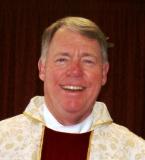
McKnightstown, Pennsylvania on January 25, 2026 by Fr. Gene Tucker, Interim
Pastor.
“ANYTHING YOU CAN DO (IN THE CHURCH), I CAN DO BETTER”
(Homily
text: I Corinthians 1:10–18)
“Anything you can do, I can do better…”
Perhaps you will remember this wonderful song from the 1946 Broadway musical
“Annie, Get Your Gun”. The song is from the very creative mind of Irving
Berlin.
We could make use of this song to
describe the situation that St. Paul faced in dealing with the early church in
the town of Corinth…It might go something like this: “Anything you can do in
the church, I can do better…I can do anything better than you.”
Considering the many problems that Paul
faced with those early Corinthian Christians, we could adapt the lyrics of the
song to include things like “I’m better than you”, or “I observe the Lord’s
Supper better than you”, or perhaps “I am better at anything (like engaging in
moral failures) than you”.
Each of the problems we’ve alluded to
in the previous paragraph were among the challenges that Paul faced in Corinth.
I encourage you to sit down and read the entire letter.
We know that there were at least three
letters between Paul and the Corinthian congregations (we have only two), and
some biblical scholars think there may have been as many as five letters that
flowed between Paul and the congregation. (Isn’t it fascinating to wonder what
those other letters might have said?)
Our sojourn with Paul’s first letter to
the Corinthians began last week, with the introduction to the letter[1],
containing the traditional form of a Greek letter written in the first century.
Paul greets the congregation, gives thanks for its existence and for the grace
of God given to it. Those two items were in the prescribed form of a letter
written in the first century.
But then, beginning with our appointed
reading for this Sunday, in verse 10, Paul gets right to the point of the
letter: The Corinthian church is plagued with “party spirit”.
One faction in the Corinthian church
claims to be following Paul, while another claims Apollos (one of Paul’s fellow
workers), while still others, perhaps wanting to claim the ecclesiastical high
ground, claim to be following Peter. Still others seem to be attempting to say
“Anything you (others) can do, we can do better”, for they claim that they are
following Christ.
(This “party spirit” will manifest
itself in the congregation’s observance of the Lord’s Supper…see chapter eleven
of the letter for what was happening when the congregation came together to
receive the Lord’s body and blood in Communion.)
The Holy Spirit’s wisdom is at work in
the realization that the problems that the early Church faced would surface
again in the Church’s life as time went along. Party spirit is evident in
various places in the Church’s history. The Spirit led the Church to recognize
that God was speaking in unique ways in the writings that came to be included in
Holy Scripture. These early letters, each of one them written to deal with
specific situations and problems, serve to warn the Church down through time,
and even today, of the pitfalls that can lay in the Church’s walk with God.
The root problem of the Corinthian
church, or of any church today, when “party spirit” arises, is spiritual
arrogance. Spiritual arrogance can manifest itself in an attitude that
celebrates human values like the size of a church or congregation. Celebrating
the number of people involved in a church or in a congregation means that we
are measuring success by human values, equating success with numbers.
Another way we can see spiritual
arrogance is in attitudes whereby a church or a congregation maintains that it
is the only entity that maintains God’s truth. This is an attitude of
triumphalism. It’s a variation on the theme of “anything you can do…”.
But, as we will read in next Sunday’s
appointed reading from First Corinthians, Paul has to remind the Corinthian
Christians that God’s ways are different from ours…God chooses to exalt the
lowly in heart, the meek and those who are weak in the world’s eyes, to come
into a genuine relationship.
My first Bishop once wisely said this:
“The Church must always be asking itself, ‘What is it that we are missing?’, ‘What
is it that we’ve gotten wrong?’.”
Asking those questions, and seeking to
step back and look at ourselves honestly, can provide the Holy Spirit with the
means to inform us about our true spiritual health, and, therefore, the
Church’s health, by extension.
The Corinthian church’s challenges and failures
must surely vexed Paul’s heart. But as is so often the case, those woes, and
the solutions to them, are gifts to Christians down through time and even
today, for we are called to be aware of the ways in which the Church can lose
its way.
Come then, Holy Spirit, and enable us
to see ourselves in God’s light, that the light of Christ may shine through the
Church in our time.
AMEN.
[1] I Corinthians 1:1-9